
How To
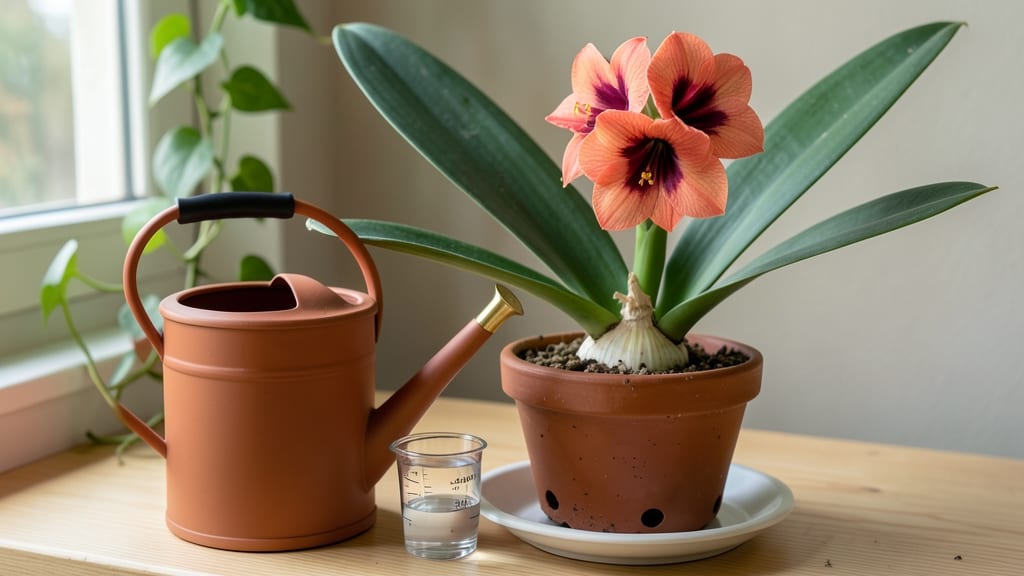
Watering your amaryllis 🌸 the right way is the key to those showstopping winter blooms—too much or too little, and you’ll miss out on the flowers entirely.
Struggling to keep your amaryllis blooming year after year? The secret isn’t just sunlight—it’s mastering the perfect watering routine. Overwater or underwater, and you risk losing those stunning flowers for good.
Most gardeners get it wrong by either drowning the bulb or letting it dry out completely. The trick is keeping the top 1-2 inches of soil dry between waterings, adjusting for seasons like dormancy when the plant slows down.
Below, I’ll break down the exact watering schedule, how to tell if you’re over- or underwatering, and the best methods (like bottom watering) to keep your amaryllis thriving without guesswork.
The 1-2 inch dry soil rule: exact watering schedule for amaryllis blooms
Amaryllis bulbs thrive on a precise watering routine—too much or too little water can stunt blooms or even kill your plant. The 1-2 inch dry soil rule is your golden ticket to consistent, show-stopping flowers.
This method ensures roots get oxygen while staying hydrated, preventing both root rot and stress-induced dormancy. Unlike thirsty houseplants, amaryllis stores water in its bulb, so infrequent deep watering is key.
Think of your amaryllis like a succulent’s cousin—it prefers to dry out slightly between waterings. The 1-2 inch rule means sticking your finger 1-2 inches deep into the soil. If it feels dry at that depth, it’s time to water.
For potted amaryllis, this usually translates to every 7-10 days in spring/summer, but adjust based on your home’s humidity and pot size. Larger pots retain moisture longer, while small containers may need watering every 5-7 days.
| Season | Watering Frequency | Soil Check Depth | Visual Cues |
|---|---|---|---|
| Spring (March-May) | Every 7-10 days | 1-2 inches dry | Bright green leaves, bud formation |
| Summer (June-August) | Every 10-14 days | 1-2 inches dry | Mature foliage, no buds |
| Fall (September-November) | Every 3-4 weeks | Top 1 inch dry | Yellowing leaves, bud swell |
| Winter (December-February) | Monthly (light misting) | Top ½ inch dry | Dormant bulb, no leaves |
The 1-2 inch rule works best with well-draining soil—a mix of potting soil, perlite, and sand (or coconut coir) prevents waterlogging. I use a terracotta pot for my amaryllis because it wicks away excess moisture faster than plastic.
Pro tip: Bottom watering (placing the pot in a tray of water for 10-15 minutes) gives you more control over moisture levels and reduces the risk of fungal diseases like root rot.
Seasonal adjustments are critical. In spring and summer, when your amaryllis is actively growing, stick to the 1-2 inch rule but water more frequently if your home is dry or the pot is small. During fall and winter, reduce watering as the bulb enters dormancy.
By late autumn, I cut back to every 3-4 weeks and barely mist the soil in winter. Overwatering during dormancy is the #1 killer of amaryllis bulbs—trust the soil, not the calendar.
Visual cues are your best friend when applying the 1-2 inch rule. Healthy amaryllis leaves are thick and upright, while underwatered plants show wrinkled or drooping foliage. Overwatered amaryllis, on the other hand, develop yellowing leaves and mushy stems.
If you see wilting within hours of watering, your soil may be too compacted or lack drainage. In this case, repot your bulb into a fresh, airy mix and adjust your watering frequency.
For potted amaryllis, size matters. A 6-inch pot with one bulb may need watering every 5-7 days in summer, while a 12-inch pot with three bulbs can go 10-14 days between waterings. Always check the soil depth—don’t rely on a schedule.
I keep a small moisture meter handy (they’re under $10!) to avoid guesswork. If the meter reads "dry" at 1-2 inches, water thoroughly until it drains from the bottom.
Morning is the best time to water amaryllis. Watering in the early morning (before 10 AM) gives excess moisture time to evaporate, reducing fungal risks. Avoid watering at night, as damp foliage can attract pests like aphids or snails. When watering, aim for the soil, not the leaves.
Use room-temperature water to avoid shocking the roots. I fill a watering can and pour slowly until water runs out the drainage holes—never let your amaryllis sit in standing water.
If your amaryllis is in ground soil (uncommon but possible in warm climates), the 1-2 inch rule still applies, but adjust for soil type. Sandy soil drains faster, so you may need to water every 5-7 days, while clay soil can go 10-14 days between waterings.
Mulch around the base with straw or wood chips
Signs of overwatering vs underwatering: how to save a stressed amaryllis
Your amaryllis might look stunning when blooming, but subtle watering mistakes can turn its leaves yellow or make its stems droop. The key is recognizing the visual cues that reveal whether your plant is thirsty or drowning. Overwatering and underwatering share similar symptoms, but the fixes couldn’t be more different!
Start by checking the soil moisture. Stick your finger 1-2 inches deep—if it feels damp, hold off on watering. If it’s bone-dry, your amaryllis is begging for hydration. The bulb’s health is your best indicator: a firm, dry bulb means underwatering; a soft, mushy one signals overwatering.
Overwatering vs Underwatering: Quick Fixes
Overwatering
- Yellow leaves (bottom first)
- Mushy bulbs (squishy to touch)
- Drooping stems (even after watering)
- Fungal spots (black/moldy areas)
Underwatering
- Dry, crispy leaves (brown edges)
- Wrinkled bulbs (shrunken appearance)
- Drooping foliage (recovers after water)
- No new growth (stunted blooms)
If your amaryllis leaves turn yellow but stay firm, it’s likely underwatered. Water thoroughly until you see drainage, then reduce frequency to every 7-10 days. For mushy bulbs, act fast—remove the plant, trim any soft spots with sterile scissors, and replant in cactus/succulent mix for better drainage.
Seasonal changes complicate things! During winter dormancy (Dec-Feb), reduce watering to once a month. In spring/summer, increase to weekly but ensure pots have drainage holes. A moisture meter ($10 at garden centers) takes the guesswork out of soil checks.
Pro tip: Place your amaryllis pot in a saucer with pebbles. Fill the saucer with water and let the pot absorb moisture—this mimics natural rainfall and prevents root rot. Empty excess water after 15 minutes to avoid sitting in water.
Remember, amaryllis bulbs store water, so they’re more resilient than you think. The goal is consistency: never let them sit in soggy soil, but don’t wait until the leaves wilt to water. With these fixes, your amaryllis will bounce back—and next winter, you’ll have showstopping blooms again! 🌸