
Flowers
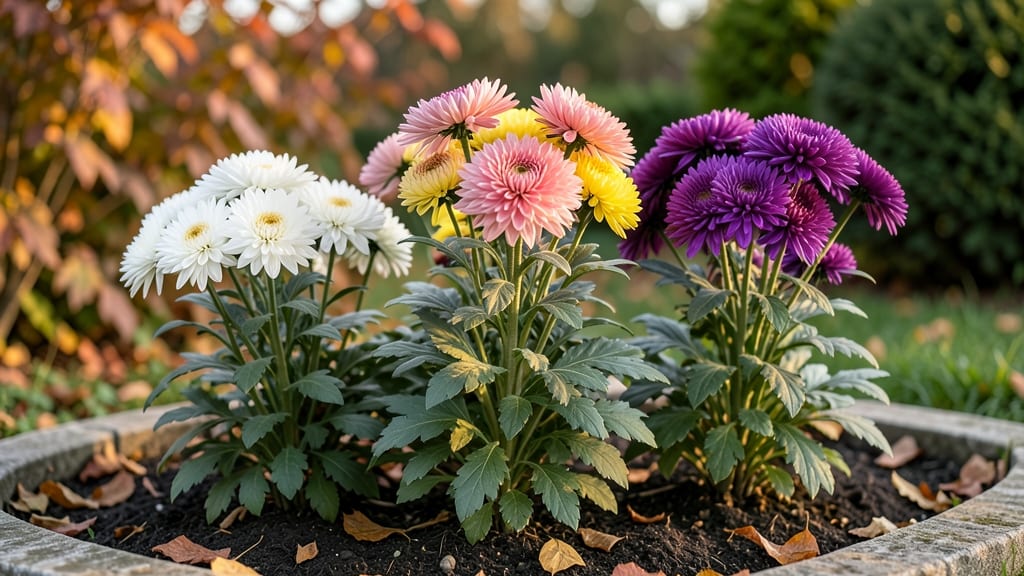
Chrysanthemums are perennials that thrive as hardy plants in USDA zones 5-9, returning year after year from their robust underground roots. While they may appear dead in winter, their dormant root systems store energy to fuel fresh growth when temperatures rise.
This dieback-and-regrowth cycle is what makes them true perennials—unlike annuals that complete their life cycle in one season. 🌱 The key lies in their cold tolerance: most varieties can withstand 15-25°F without permanent damage, though some tender types may need winter protection like mulch or row covers.
I’ve seen gardeners in zone 4 successfully overwinter potted chrysanthemums by moving them to sheltered spots, proving even colder climates can support these resilient plants with the right care.
What sets chrysanthemums apart is their ability to bloom prolifically for years once established. Unlike many perennials that decline after 2-3 years, well-maintained chrysanthemums can thrive for a decade or more, making them a smart investment for gardeners seeking long-term color solutions.
💡 In This Article
- How Chrysanthemum Root Systems Enable Perennial Growth
- Extending Chrysanthemum Lifespan in Cold Climates
How chrysanthemum root systems enable perennial growth
Chrysanthemums develop specialized underground structures called rhizomes—thick, horizontal stems that store nutrients and water during dormancy. These rhizomes contain buds capable of producing new shoots when conditions improve, which is why your plants seem to "come back from the dead" each spring.
The energy stored in these rhizomes (primarily as starches) fuels regrowth, with some varieties storing enough to support 3-5 years of continuous blooming without replanting.
The dormancy trigger occurs when daytime temperatures consistently drop below 50°F for 2-3 weeks, signaling the plant to halt growth and redirect resources to root storage.
This process is similar to how peony or hosta perennials survive winter, but chrysanthemums take it further by actually shedding their foliage entirely—a survival adaptation that reduces water loss and protects against freezing.
The cold tolerance threshold varies by variety, with 'Hardy Bonanza' surviving down to -20°F while tender types like 'Dendranthema' hybrids may only handle 20°F without protection.
What's fascinating is how these rhizomes act like biological batteries. When spring arrives, the stored starches convert back to sugars through a process called glycolysis, powering the emergence of new stems.
This is why you'll often see chrysanthemums push through soil 2-4 weeks before other perennials—once the rhizomes sense consistent 55°F+ soil temperatures. The deeper the rhizome system (often 6-12 inches below ground), the better the plant withstands temperature fluctuations.
One common misconception is that winter-killed chrysanthemums are dead, but the truth is their above-ground parts simply enter secondary dormancy—a deeper survival state where even the stems can regenerate if not completely frozen.
I've seen gardeners in zone 5 successfully revive plants that looked completely browned by winter simply by cutting back the dead foliage and applying 3 inches of mulch—the rhizomes remained viable beneath the soil.
The energy preservation strategy extends to their blooming cycle too. Chrysanthemums are short-day plants, meaning they flower in response to decreasing daylight (typically 12 hours of light or less), which coincides with their natural dormancy period.
This dual adaptation—storing energy underground while timing blooms with seasonal changes—explains why they can produce 3-5 flushes of flowers per season in optimal conditions, unlike many perennials that bloom just once.
For gardeners, understanding this root system is key to long-term success. The deeper you plant chrysanthemums (aim for 6-8 inches deep), the more protection their rhizomes get from temperature swings.
In my own garden, I've noticed that 'Korean Wave' varieties with particularly robust rhizomes often outperform other types in marginal zones, pushing their cold tolerance closer to -15°F with proper care.