
Plants
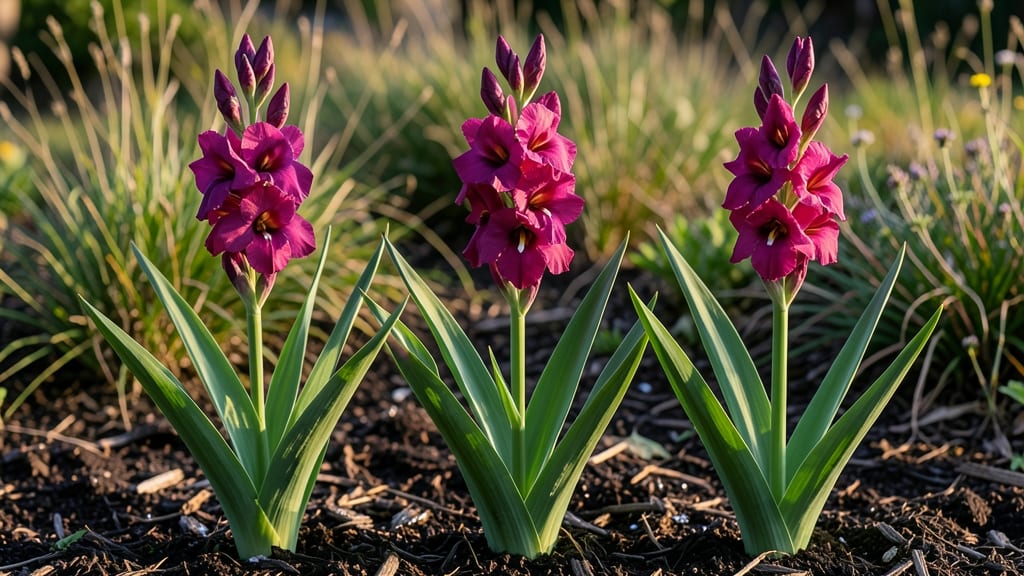
Gladiolus aren't true perennials in most climates—they act like seasonal bulbs, dying back to the ground each winter before regrowing from their corms when spring warmth returns.
This behavior stems from their underground corm structure, which stores energy like a natural battery. Unlike hardy perennials that survive winter above ground, gladiolus corms enter dormancy when temperatures drop below 50°F, then restart growth when soil warms to 60°F+. 🌱 The key difference?
True perennials regenerate from roots or rhizomes, while gladiolus rely entirely on their corms—making them more vulnerable to frost damage if left unprotected.
In my experience, treating them as annuals (digging and storing corms) extends their lifespan dramatically. Many gardeners mistakenly assume they'll return year after year like daylilies, but without proper winter care, their corms often fail to regrow.
The secret lies in soil prep—amending with compost before replanting gives them the energy boost they need for that first critical growth spurt.
💡 In This Article
- Why Gladiolus Act Like Perennials Despite Being Seasonal
- How to Extend Gladiolus Lifespan as a Gardener’s Favorite
Why gladiolus act like perennials despite being seasonal
The secret lies in their unique corm structure—a thick, bulb-like storage organ that functions like a natural battery. Unlike true perennials that rely on roots or rhizomes to survive winter, gladiolus corms store starches and nutrients underground, allowing them to "hibernate" when temperatures drop below 50°F.
This dormancy isn't true winter hardiness but a survival strategy—similar to how tulip bulbs behave in colder climates. 🌱
When spring arrives and soil warms to 60°F+, the corm's apical bud (growth point) reactivates, sending up new shoots. This process is triggered by a combination of temperature and moisture—specifically when soil reaches 55-60°F consistently for 3-5 days.
The corm's outer layers (tunics) protect it from freezing, but prolonged exposure to below 28°F can cause irreversible damage, unlike hardy perennials like hostas that survive -20°F winters.
What makes gladiolus unique is their determinate growth habit—they produce a single flower spike from each corm, then die back completely after blooming. True perennials like daylilies continue growing from their root systems year-round, while gladiolus rely entirely on their corms for regeneration.
This is why gardeners often see them as "annuals"—they disappear after frost but can return if their corms survive.
The corm itself is a modified underground stem that stores energy in its pith cells, which swell when water is absorbed during warm seasons.
This stored energy fuels the first flush of growth in spring, but each cycle weakens the corm slightly—hence why older corms often produce smaller blooms or fail to regrow without proper care. 💫
Consider this comparison: A daylily (true perennial) divides underground via rhizomes, creating new growth points yearly. A gladiolus corm, however, must rely on its single stored energy reserve—like a potato that shrinks with each harvest.
Without replenishment through proper soil nutrition and winter protection, the corm's energy reserves deplete over time.
Here's the botanical twist: Gladiolus actually belong to the Iridaceae family (alongside crocuses and irises), which are adapted to seasonal climates.
Their corms act as "seed banks" in a sense—each corm can produce 1-3 new cormlets (baby corms) during the growing season, ensuring the plant's survival if the parent corm fails.
This is nature's backup system, but it requires gardeners to either leave corms in the ground (risking frost damage) or carefully store them (to maintain vigor).