
Flowers
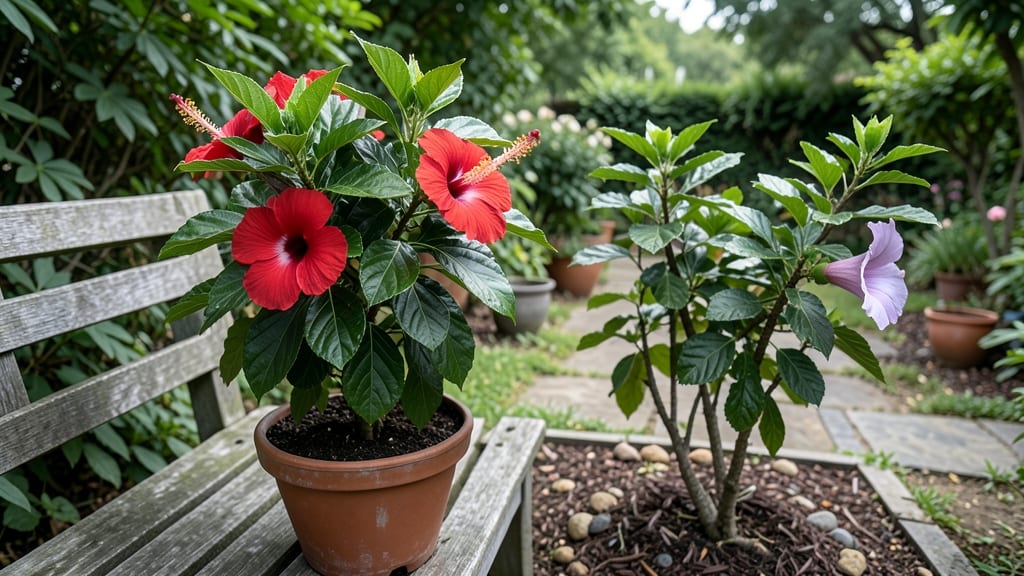
Hibiscus flowers aren't true perennials in cold climates, though they regrow each year from their roots after winter dieback—acting like hardy shrubs in temperate zones or tropical plants in warmer areas.
This winter dormancy is actually a survival strategy. 🌱 When temperatures drop below 25°F, most hibiscus varieties lose their leaves and stems, but their roots stay alive underground, ready to sprout fresh growth once warm weather returns.
The key difference between true perennials and hibiscus lies in their cold tolerance—while plants like hostas survive 0°F winters intact, hibiscus roots need protection from prolonged freezing.
In milder climates (USDA zones 8-11), they'll bloom year after year with minimal care, but in colder regions, they often need winter mulching or container protection to survive.
What's fascinating is how hibiscus adapt: tropical varieties like Hibiscus rosa-sinensis can't handle freezing at all, while hardier species such as Hibiscus moscheutos (swamp hibiscus) thrive in zone 5 with proper winter prep.
The regrowth process typically begins in spring when soil temperatures reach 60°F, and with the right care, you can extend their blooming season by up to 6 months compared to annual varieties.
💡 In This Article
- Hibiscus Lifespan: Why They Die Back in Winter
- Extending Hibiscus Growth: Cold-Hardy Varieties & Winter Care
Hibiscus lifespan: why they die back in winter
The winter dieback in hibiscus isn't a sign of death—it's an evolutionary adaptation. When temperatures drop below 25°F, these plants trigger a survival mechanism called dormancy, where they shed leaves and stems to conserve energy.
Unlike true perennials (like peonies), hibiscus don't store energy in their stems or leaves, but instead rely on their thick, fibrous root systems that can survive freezing ground temperatures down to 15°F for short periods.
This root system acts like a biological battery, storing starches and nutrients to fuel spring regrowth. 🌱
Botanically, hibiscus behave like deciduous shrubs—similar to how roses or lilacs lose foliage in winter but regrow from their base.
The key difference lies in their cold tolerance thresholds: while Hibiscus moscheutos (hardy hibiscus) can endure -10°F with proper protection, tropical varieties like Hibiscus rosa-sinensis will die back completely if exposed to 32°F for more than a few hours.
This explains why hibiscus are classified as semi-perennials in colder climates—they're not true perennials because they can't survive prolonged freezing without human intervention.
The USDA hardiness zones play a crucial role in determining hibiscus behavior. In zones 8-11, hibiscus grow as true perennials, blooming reliably each year with minimal winter care.
However, in zones 6 and colder, they require winter protection to survive, effectively making them act like annuals unless properly overwintered. This zone classification explains why gardeners in Boston (zone 6) might treat hibiscus as summer annuals while those in Atlanta (zone 8) enjoy perennial growth.
The root system's depth—typically 12-18 inches—helps insulate against temperature fluctuations near the soil surface.
What most gardeners don't realize is that hibiscus use a two-phase regrowth system. First, the roots begin metabolizing stored nutrients as early as 40°F soil temperatures, then shoot growth emerges when daytime air temperatures reach 55°F consistently.
This delayed emergence explains why hibiscus often appear "dead" for weeks after other perennials sprout. The new growth emerges from crown buds located just above the root crown, which is why proper winter mulching (at least 4-6 inches) is critical to prevent these buds from freezing.
The science behind this dormancy involves abscisic acid, a plant hormone that triggers leaf drop and stem dieback when cold stress is detected. This hormone helps redirect the plant's energy toward root preservation.
Meanwhile, the roots continue producing antifreeze proteins that lower their cellular freezing point by up to 10°F, similar to how some fish survive Arctic winters. This biochemical process explains why hibiscus can survive brief cold snaps that would kill more tender plants. 💫
Consider this comparison: A true perennial like hosta can survive -20°F winters because its energy storage is distributed throughout its rhizomes and leaves, while hibiscus concentrate all their survival energy in their roots.
This specialized strategy makes hibiscus uniquely adapted to their native tropical and subtropical environments, where sudden cold snaps are rare but can be deadly without proper preparation.
Understanding this mechanism helps explain why hibiscus thrive in containers—they can be moved to protected locations during winter, giving gardeners in cold climates full control over their survival.