
Plants
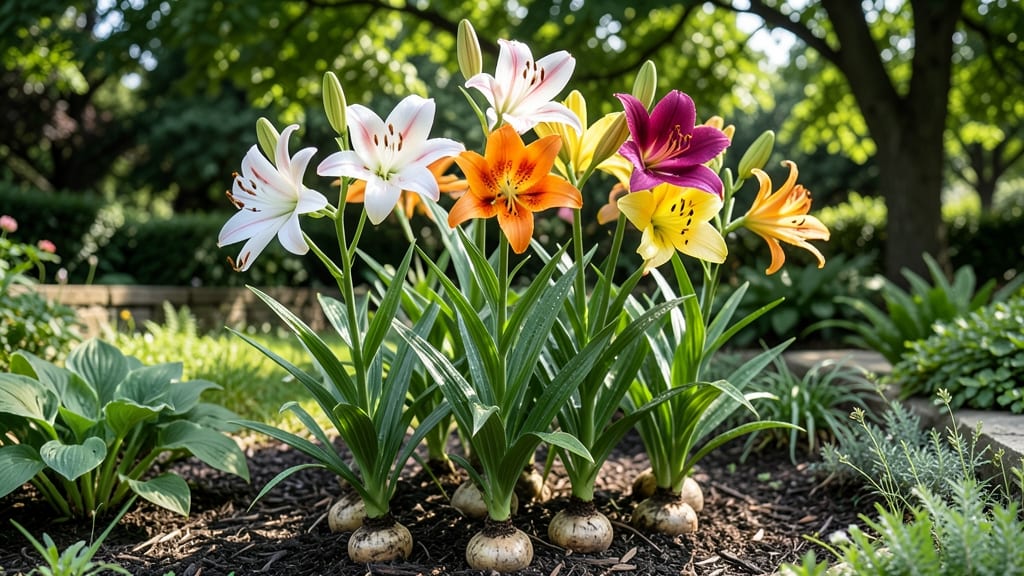
Lilies are perennials that regrow each year from underground bulbs, thriving in USDA zones 3-9 with proper care, though some tropical varieties may need winter protection or indoor overwintering. Their lifespan depends on species, soil, and sunlight conditions.
Lilies earn their perennial status thanks to their bulbs, which store energy underground during dormancy—typically in winter for temperate varieties. 🌱 Unlike annuals that complete their life cycle in one season, lilies send up fresh shoots each spring from the same root system, provided they receive adequate sunlight and well-draining soil.
The hardiness zones (3-9) reflect how well different species tolerate cold snaps, with Asiatic lilies handling frost better than their tropical cousins, which often require winter relocation to survive.
What truly extends a lily's lifespan is consistent care—think of it like giving your plant a cozy blanket for winter. Mulching with organic matter protects bulbs from freezing temperatures, while dividing overcrowded clumps every 3-4 years prevents competition for nutrients.
I've found that regular fertilization in early spring and proper watering (never soggy soil) makes a world of difference in keeping these beauties thriving for decades.
💡 In This Article
- Lily Lifespan Factors: Bulb Hardiness and Growth Zones
- Extending Lily Perennial Lifespan: Planting and Care Tips
Lily lifespan factors: bulb hardiness and growth zones
Lilies qualify as perennials because their underground bulbs act like nature's hard drive, storing nutrients and energy between growing seasons. These bulbs contain specialized cells that enter dormancy when conditions turn harsh—typically in late fall for temperate varieties.
During dormancy, the bulb's protective layers (tunics) prevent moisture loss while maintaining just enough metabolic activity to survive. 🌱 This biological trick allows lilies to "reset" each winter and emerge stronger in spring, unlike annuals that complete their entire lifecycle in one season.
The key to understanding lily hardiness lies in their growth zones. Most true lilies thrive in USDA zones 3-9, but their cold tolerance varies dramatically by species. Asiatic lilies, for example, handle 20°F (-7°C) winters with ease, making them ideal for northern gardens.
Oriental lilies, while stunning, prefer milder winters (zones 4-9) and may suffer damage below 15°F (-9°C). Tropical lilies, like the vibrant Stargazer, need winter protection—their bulbs can't survive below 30°F (-1°C), which is why gardeners in colder climates often dig them up and store them indoors.
What makes this even more fascinating is how bulb structure plays into survival. Each lily bulb contains multiple layers: the outer tunic (protective skin), fleshy scales (nutrient storage), and the basal plate (root growth zone).
The fleshy scales store starches and sugars that fuel regrowth in spring, while the basal plate remains dormant until temperatures rise.
This layered system ensures that even if part of the bulb is damaged, the remaining layers can often regenerate—though severe frost can still kill the entire bulb if protection is lacking.
Sunlight exposure also impacts dormancy cycles. Lilies planted in full sun (6+ hours daily) develop stronger bulbs because photosynthesis in the leaves produces more stored energy. In contrast, shade-loving varieties like the Martagon lily (Turk's cap) may enter dormancy earlier since they receive less energy from sunlight.
This is why gardeners in cooler climates often plant lilies in south-facing beds to maximize winter survival through better bulb development. 🌞
One common misconception is that all lilies are equally hardy. Take the Martagon lily, for instance—it thrives in zones 3-8 and can even naturalize in wooded areas, unlike its more delicate cousins.
The difference comes down to evolutionary adaptations: Martagon lilies developed in cooler climates, while tropical lilies evolved in frost-free regions. This is why your choice of species should match your local climate to ensure perennial success.
For gardeners in marginal zones (like zone 4), the solution often involves strategic planting. Burying bulbs 6-8 inches deep adds an extra layer of insulation, while mulching with 4-6 inches of straw or leaves can raise soil temperatures by 5-10°F during cold snaps.
This simple technique can mean the difference between a lily that survives winter and one that doesn't. The science here is all about creating a microclimate that mimics the lily's natural growing conditions.