
Plants
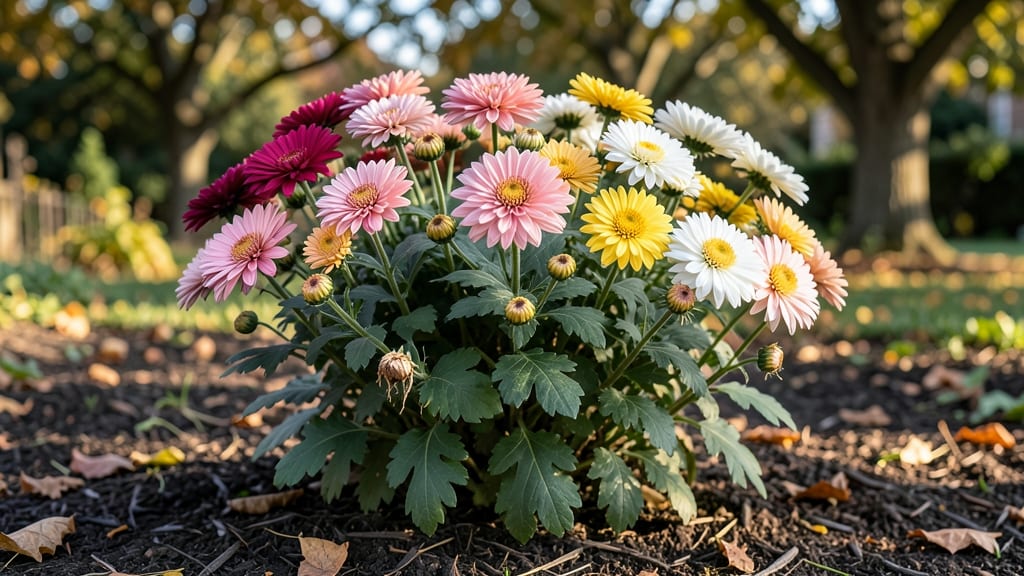
Mums are perennials in USDA Zones 5-9, meaning they regrow each spring from their roots—but gardeners in colder regions often treat them as annuals because frost kills the foliage. Hardy varieties like 'Autumn Joy' and 'Snowball' survive winter with proper care.
Here's the surprising twist: while mums technically qualify as perennials in warmer climates, their lifespan hinges on winter survival. 🌱 The key difference lies in their dormancy cycle—chrysanthemums enter a natural resting phase when temperatures drop, but only their roots remain alive beneath the soil.
In colder zones (like 3-4), even the hardiest varieties may not bounce back without protection. That's why many gardeners opt to replant new mums each year, not realizing they could be nurturing the same plants for years with the right winter prep.
What's fascinating is how mulching and late-season pruning can transform these plants from seasonal showstoppers into long-term garden investments. I've seen 'Autumn Joy' mums return year after year in Zone 6 gardens where they're cut back to 2-3 inches above ground and covered with 4-6 inches of straw mulch.
The secret? Timing—wait until after the first hard frost to prune, and avoid disturbing the roots during winter.
💡 In This Article
- Why Mums Die Back in Cold Climates
- How to Overwinter Mums for Next Year’s Blooms
Why mums die back in cold climates
Chrysanthemums—commonly called mums—enter a biological dormancy cycle when temperatures drop below 40°F. This survival mechanism triggers the plant to redirect energy from foliage to its root system, which can withstand frost down to -10°F to -15°F for hardy varieties like 'Autumn Joy'.
The above-ground stems and leaves die back because they lack the protective insulation of soil, but the roots remain alive beneath the surface, storing carbohydrates that fuel next year's growth. 🌿
The critical threshold for perennial survival lies between 20°F and 25°F—below this range, even hardy mums may suffer root damage. In USDA Zones 5-9, where winter temperatures rarely drop below 0°F for extended periods, the roots can safely overwinter.
However, in colder climates (Zones 3-4), prolonged exposure to -20°F or lower can kill the root crown, making the plant unable to regenerate. This is why gardeners in these regions often replace mums annually rather than attempting overwintering.
Mulching plays a crucial role in extending the lifespan of mums by acting as an insulating blanket. A 4-6 inch layer of straw or shredded leaves placed over the root zone can raise soil temperatures by 5-10°F, protecting roots from extreme cold.
Organic mulches also break down slowly, releasing nutrients that strengthen the plant's resilience. Without this protection, the roots are exposed to freeze-thaw cycles, which can cause physical damage and reduce the plant's ability to regrow in spring.
Another key factor is the plant's natural photoperiod sensitivity. Chrysanthemums are short-day plants, meaning they flower in response to decreasing daylight hours. As winter approaches, the reduced light triggers dormancy, but the roots remain metabolically active until temperatures drop too low.
This dual response—both to light and temperature—explains why mums often appear dead in winter but can bounce back with the right conditions. The root system's ability to store starches is what makes them perennials in suitable climates.
Consider the example of 'Snowball' mums, which are slightly more cold-hardy than other varieties. In Zone 5, these plants can survive winters with minimal protection, while in Zone 6, they thrive with just a light mulch.
The difference comes down to how long temperatures stay below freezing: a few days of 20°F may be survivable, but weeks at 0°F or lower will typically kill the roots.
This is why gardeners in marginal zones often take extra precautions, like using burlap wraps or even moving container-grown mums to sheltered locations.
What most people don't realize is that the timing of dormancy matters just as much as the temperature. Chrysanthemums begin their dormancy cycle in late fall, often before the first frost.
This means that if you prune them too early (before the foliage has fully died back), you risk removing the plant's natural insulation and energy reserves.
The ideal approach is to wait until the stems have browned completely before cutting them back to 2-3 inches above ground, allowing the roots to fully prepare for winter.