
Plants
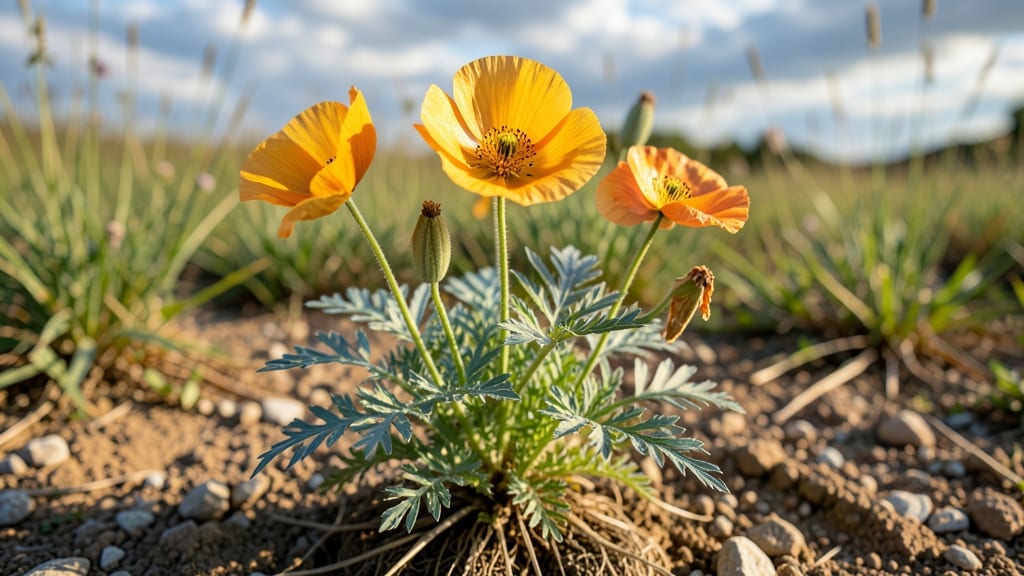
Poppies are not true perennials—they typically die back after flowering but may self-seed prolifically, returning annually in many climates. Some varieties, like Iceland poppies, behave as short-lived perennials or biennials, while others reseed aggressively for seasonal regrowth.
Most poppies you see in gardens behave like annuals—they bloom spectacularly, then their foliage withers away completely after flowering. 🌸 The key difference lies in their roots: while true perennials store energy underground year-round, poppies often rely on self-seeding to return.
This means if you let the seed pods mature, you'll get a fresh crop of volunteers next season without replanting. Iceland poppies are the exception—they develop deeper roots and may persist for 2-3 years before fading, making them act more like perennials in cooler climates.
What this means for gardeners is that poppies thrive on natural cycles rather than requiring winter hardiness. In warmer regions, they'll often reseed continuously, while in colder areas, varieties like Oriental poppies may need protection to survive the first winter.
The secret to keeping them around? Let some seed pods stay on the plant after blooms fade—just don't let them dry out completely before scattering.
💡 In This Article
- Poppy Life Cycle: Annual vs Perennial Behavior
- How to Encourage Year-Round Poppy Growth
Poppy life cycle: annual vs perennial behavior
The biological distinction between annual and perennial poppies comes down to their root systems and energy storage mechanisms. Annual poppies like the California poppy (Eschscholzia californica) develop shallow, fibrous roots that store minimal energy for overwintering.
These plants focus all their resources on a single 6-8 week flowering cycle, producing thousands of seeds before dying back completely. The trade-off? Their rapid growth and prolific reseeding make them perfect for sunny, low-maintenance gardens where they'll naturally return year after year without intervention.
Perennial-like poppies such as Iceland poppies (Papaver nudicaule) take a different approach. They develop a more robust taproot system that can store carbohydrates and moisture, allowing them to persist for 2-3 years in cooler climates.
The key difference is their dormancy strategy: while annuals die completely, these varieties enter a state of reduced metabolic activity during winter, then regrow from their roots in spring.
This explains why Iceland poppies often return reliably in zones 3-7, whereas their annual cousins may disappear entirely after their first flowering season.
What's fascinating about poppies is how their life cycles adapt to environmental cues. Annual poppies use photoperiodism—they detect day length changes to trigger flowering, ensuring seeds mature before hot dry periods.
Perennial varieties, meanwhile, have evolved deeper root systems to access groundwater, which gives them a survival advantage in drought-prone regions. 🌱 The California poppy's ability to reseed aggressively (up to 10,000 seeds per plant) means it can dominate landscapes through sheer volume, while Iceland poppies prioritize longevity through their root structure.
Temperature plays a crucial role in these behaviors. Annual poppies often germinate in fall, grow through winter, then bloom in spring—a strategy called winter annual behavior. Perennial varieties, however, may require vernalization (a period of cold exposure) to break dormancy and flower.
This is why Iceland poppies thrive in northern climates where winters are cold but not extreme, while tropical poppies like the Mexican poppy (Argemone mexicana) behave purely as annuals, completing their entire life cycle within 90-120 days.
The seed production mechanism is equally interesting. Poppy seed pods contain 200-300 seeds that can remain viable in soil for 3-5 years, waiting for ideal conditions to germinate. This built-in survival strategy explains why poppies often appear spontaneously in gardens—even if you didn't plant them intentionally.
The trade-off is that this reseeding can become invasive if not managed, as the plants will colonize new areas without human intervention.
For gardeners, understanding these differences means you can choose poppies based on your climate and maintenance preferences. Annual varieties offer immediate, dramatic color with minimal care, while perennial types provide longer-term presence but may require more attention to their specific growing conditions.
The secret to successful poppy gardening lies in matching the plant's natural behaviors with your garden's microclimate.