
Plants
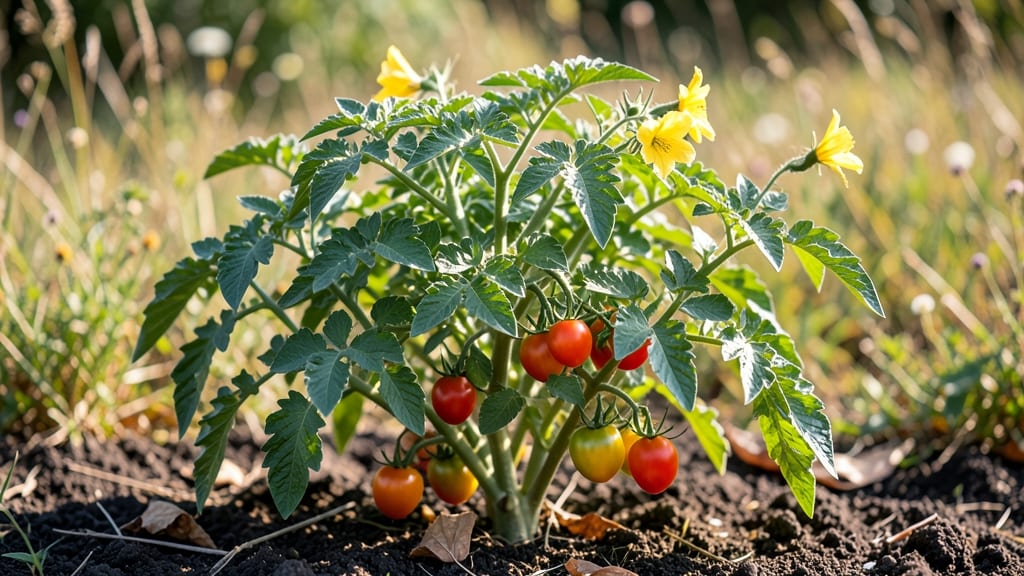
Tomato plants are not perennial—they die back after producing fruit in one growing season, but their roots may survive in frost-free climates. With proper care, you can regrow them from the base or overwinter cuttings indoors for multiple harvests.
Tomatoes are annuals in most gardens because they prioritize fruit production over survival. 🌱 Once they set fruit, their energy shifts entirely to ripening tomatoes, leaving little strength to endure cold temperatures or harsh winters.
That said, in warmer climates where frost never arrives, tomato plants can sometimes persist year-round, though they rarely thrive as perennials like asparagus or rhubarb. The key difference lies in their growth cycle—tomatoes focus on rapid, high-yield harvests rather than long-term root development.
What’s fascinating is how gardeners in colder regions still get multiple harvests from the same plant. By pruning back stems and overwintering cuttings indoors under grow lights, you essentially "reset" the plant’s life cycle.
This technique mimics nature’s way of conserving energy during dormancy, but with human intervention to extend the plant’s lifespan. It’s a great way to save money on seeds and ensure your favorite varieties return year after year!
💡 In This Article
- Why Tomato Plants Die Annually in Most Climates
- How to Overwinter Tomato Plants for Next Year’s Harvest
Why tomato plants die annually in most climates
Tomato plants behave like annuals because their biological focus shifts entirely to fruit production after flowering. Once they begin setting tomatoes, their energy is diverted from root and stem maintenance to ripening fruit—a process that depletes their reserves.
Unlike true perennials like asparagus or rhubarb, which invest in robust underground storage systems (rhizomes or crowns) to survive winter, tomatoes prioritize rapid growth and high yield over long-term survival. This energy trade-off explains why most tomato varieties collapse after their first harvest in colder climates.
The real kicker is temperature sensitivity. Tomatoes are tropical plants that thrive in 70-85°F conditions but struggle when temperatures dip below 50°F. Frost or even light freezes (28°F) trigger rapid cell death in their leaves and stems, halting photosynthesis.
In contrast, perennials like strawberries have hardier foliage and can regenerate from their crowns after winter damage. The difference lies in their evolutionary adaptations—tomatoes evolved for short, intense growing seasons in their native South American highlands, not prolonged cold exposure.
What’s interesting is how tomato roots respond to cold. While the above-ground parts die, the root system may linger in frost-free zones, waiting for warmer conditions.
This is why you sometimes see new shoots emerging from the base in spring—it’s not true perennial behavior, but rather the roots attempting to restart growth. In climates with mild winters (like Zone 9-11), these roots can persist for years, though the plant’s vigor declines without proper overwintering care.
This survival mechanism is more about persistence than true perennialism.
Consider the growth cycle comparison: Asparagus plants take 2-3 years to establish their crowns and can produce spears for decades, while tomatoes reach peak production in just 60-90 days before their energy is exhausted.
This biological difference explains why gardeners in colder regions must treat tomatoes as annuals—unless they intervene with overwintering techniques. The trade-off between rapid fruit production and long-term survival is hardwired into tomato genetics, making them fundamentally different from true perennials.
Here’s what happens at the cellular level: When tomatoes sense shortening daylight (a cue for winter), they stop producing chlorophyll and redirect nutrients to the roots. However, this process isn’t as efficient as in perennials, which store energy in specialized underground structures.
Without intervention, the roots eventually weaken from lack of photosynthesis, leading to complete die-off. This is why even "perennial" tomato varieties (like some cherry tomatoes) still require care to extend their life beyond one season.
For gardeners in colder regions, this biological reality means accepting tomatoes as annuals—but with a clever workaround. By pruning back stems and saving cuttings, you’re essentially "resetting" the plant’s life cycle, giving it a second chance at growth.
This technique mimics how wild tomatoes might survive in their native tropical environments, where seasonal variations are less extreme than in temperate climates. The key is understanding that tomatoes aren’t built for winter survival; they’re built for speed and yield.