
Plants
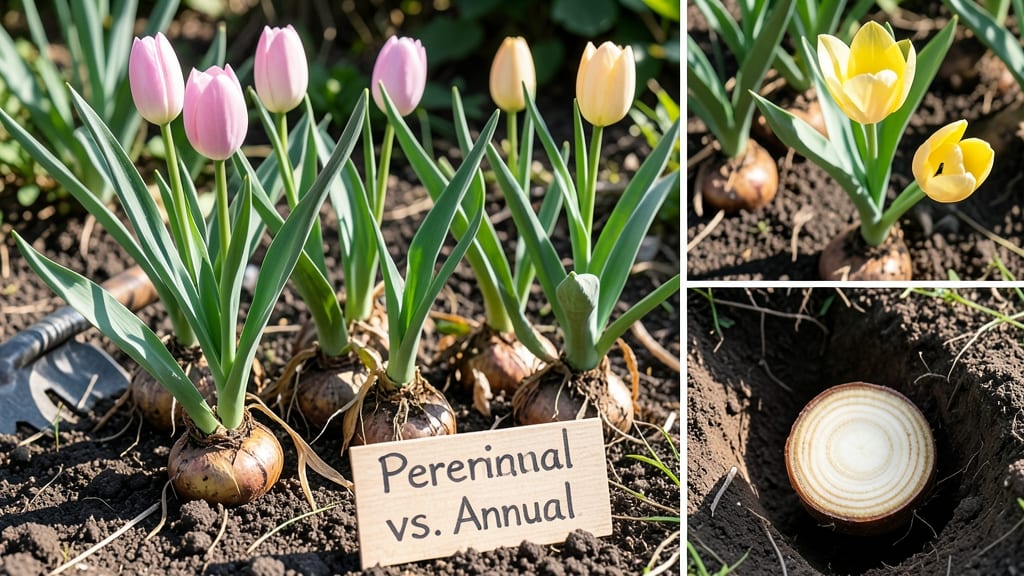
Tulips are perennials because they regrow from the same underground bulb each season, but their lifespan depends heavily on climate and care. In colder regions, bulbs often weaken after one year, forcing gardeners to replant for vibrant blooms.
Tulips earn their perennial label because they store energy underground in bulbs that can theoretically survive for years. 🌱 However, their performance drops sharply after the first bloom cycle, especially in harsh winters or poor soil conditions.
The key to extending their life lies in mimicking their natural Mediterranean habitat—well-draining soil, winter mulch, and protection from extreme cold. Many gardeners discover that even "annual" tulips can return if given these conditions, though replanting every 2-3 years often yields stronger stems and larger flowers.
What's fascinating is how tulip varieties respond differently to these conditions.
For example, Darwin Hybrid tulips tend to be more reliable perennials than species tulips, which often decline faster. 🌷 The secret weapon for serious gardeners is a technique called "bulb boosting"—adding fertilizer in early fall to replenish nutrients lost during flowering.
This simple step can transform a one-year wonder into a reliable spring performer.
💡 In This Article
- Why Tulip Bulbs Die After First Year
- How to Make Tulips Reappear Year After Year
Why tulip bulbs die after first year
The primary reason tulip bulbs decline after their first bloom is nutrient depletion. Each spring, a tulip bulb devotes nearly all its stored energy to producing a stunning flower stem and blooms, leaving little reserve for rebuilding.
A single bloom can consume 60-70% of the bulb's energy reserves, similar to how a marathon runner exhausts glycogen stores. Without replenishment, the bulb shrivels—sometimes losing 30% of its weight in a single season.
Fungal diseases like botrytis tulipae (gray mold) and tulip fire (a bacterial infection) further weaken bulbs by attacking their protective layers. These pathogens thrive in damp, poorly drained soil—conditions that also prevent bulbs from developing proper dormancy.
In colder climates (zones 3-5), the problem compounds: bulbs struggle to recover from winter stress without adequate insulation. 🌱 The result? Many gardeners find their tulips fading to weak stems or no blooms at all by year three.
Improper planting depth plays a critical role too. Tulips need 6-8 inches of soil coverage to protect them from temperature fluctuations and pests. Planting too shallow (4 inches) exposes bulbs to freezing and thawing cycles, which damages root development.
Conversely, burying too deep (10+ inches) suffocates the bulb, preventing it from accessing sunlight for photosynthesis in early spring.
Climate stress is the final nail in the coffin. Tulips originate from Mediterranean regions where they experience hot, dry summers and cool, wet winters. In humid North American climates, the lack of summer dormancy causes bulbs to stay active too long, depleting reserves faster.
Even in ideal zones 5-8, bulbs may only last 3-5 years without intervention—hence why many gardeners opt for annual replanting.
What most people overlook is the bulb's natural lifecycle. In the wild, tulips produce offsets (small bulbs) that gradually replace the parent bulb. However, gardeners often remove old foliage too soon, cutting off this natural renewal process.
Leaving stems until they yellow (6-8 weeks post-bloom) ensures photosynthesis continues, replenishing the bulb's energy stores for next year.
Consider this: a healthy tulip bulb should feel firm and plump when dug up, with papery skins intact. If it's shriveled or spongy, it's already past its prime.
This is why professional bulb growers rotate varieties—some, like Fosteriana tulips, are hardier perennials, while others, like Parrot tulips, decline faster due to their hybrid vigor demands.