
Watering
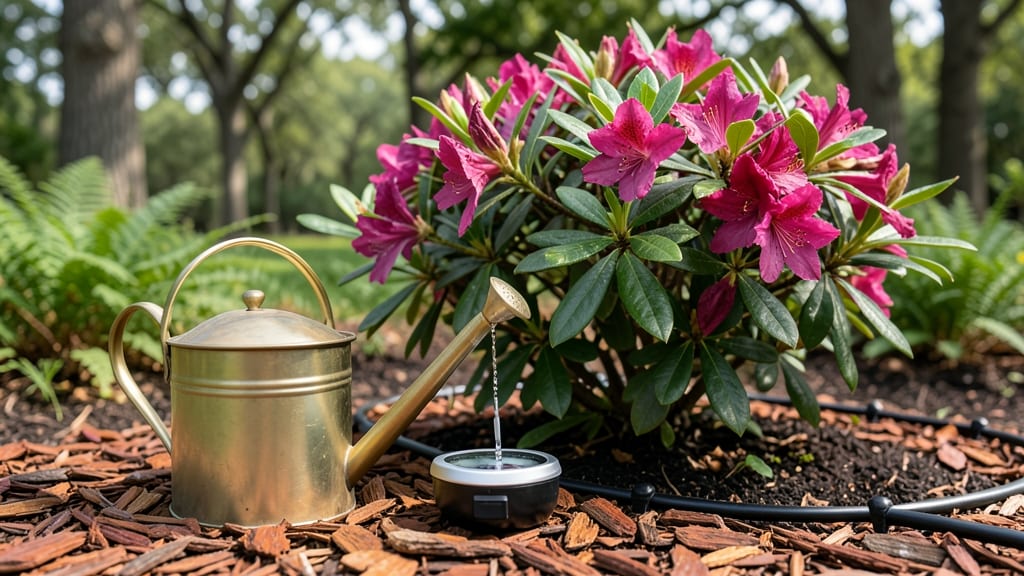
To keep your azalea blooming vibrantly, you need to nail its water requirements — too much or too little throws off the balance between lush foliage and root rot.
Picture this: your 🌸 azalea thrives in USDA Zone 6a, but one summer, you either drowned it or let it wilt under the afternoon sun. That’s the tightrope walk of azalea care, where consistent moisture meets drainage discipline.
The key? Understanding when to soak the roots and when to let the soil breathe.
In this guide, I’ll break down how often to water based on your soil type (sandy? clay-heavy?), seasonal shifts, and whether your azalea lives in a pot or garden bed.
You’ll also spot the early warning signs of over- or under-watering before they turn your shrub into a sad, droopy mess.
By the end, you’ll water like a pro — no more guesswork, just healthy blooms and roots that stay happy year-round.
How often to water azaleas based on soil and climate conditions
Azaleas thrive when their watering routine matches their soil type and local climate. Unlike drought-tolerant succulents, these acid-loving shrubs demand consistent moisture but despise soggy roots. The key?
Understanding how your soil composition and regional humidity affect their needs. For example, a sandy soil in Arizona will dry out faster than clay soil in the Pacific Northwest.
Your azalea’s watering schedule isn’t one-size-fits-all. Clay soils hold moisture longer, while sandy soils drain quickly—meaning you’ll water clay-based azaleas every 10-14 days but sandy azaleas every 5-7 days in summer.
Even the same plant needs adjustments between humid coastal climates (like Seattle) and arid desert regions (like Phoenix). Let’s break it down so you can tailor your watering like a pro.
Visual moisture check: Stick your finger 2 inches deep into the soil. If it feels dry, it’s time to water. For containers, lift the pot—if it’s light, water immediately. Mulch (2-3 inches of pine bark or wood chips) helps retain moisture and mimics their natural forest floor habitat.
| Soil Type | Climate Zone | Watering Frequency | Deep Watering Amount | Moisture Check Method |
|---|---|---|---|---|
| Sandy Soil | Arid (e.g., Phoenix) | Every 3-5 days (summer) | 1-1.5 gallons | Finger test at 1 inch |
| Loamy Soil | Temperate (e.g., Atlanta) | Weekly (spring/fall) | 1.5-2 gallons | Finger test at 2 inches |
| Clay Soil | Humid (e.g., Seattle) | Every 10-14 days | 2-3 gallons | Check surface dryness |
| Container | Any (pots dry faster) | Every 3-5 days | 1 gallon (until runoff) | Lift pot (light = dry) |
Seasonal shifts demand flexible watering. In summer’s peak heat, even well-established azaleas may need daily watering in containers or every 3-4 days in ground beds. My Georgia azaleas wilt by noon in July if I don’t water them before 6 AM—so I set a reminder.
Conversely, winter watering drops to monthly in most zones, except frost-free areas like Zone 8+ where you might water lightly every 2-3 weeks.
Humidity plays a sneaky role. In coastal climates (like San Francisco), azaleas may only need watering when the top inch of soil feels dry. But in dry climates (like Denver), you’ll need to water deeply 2-3 times per week in summer.
Pro tip: Group azaleas together to create a microclimate that retains moisture longer.
Newly planted azaleas are the most water-sensitive. For the first year after planting, water 2-3 times per week (deep soaks) to encourage root establishment. After that, mature azaleas in optimal conditions (partial shade, acidic soil) can handle bi-weekly watering in cooler months.
Always water at the base of the plant—avoid wetting leaves to prevent fungal diseases like powdery mildew.
If you’re unsure whether your azalea is thirsty, look for visual cues: Drooping leaves or crispy leaf edges signal underwatering, while yellowing leaves or mushy stems mean overwatering. In containers, check the weight—if it feels lighter than expected, water immediately.
For in-ground plants, press your finger into the soil; if it springs back when you remove it, it’s too dry.
Mulching is your secret weapon for consistent moisture. A 3-inch layer of mulch (like pine straw or bark chips) reduces evaporation by up to 50% and keeps roots cool. Just avoid piling mulch against the stem—leave a 2-inch gap to prevent rot. My Pacific Northwest azaleas
Signs of overwatering vs. underwatering in azaleas (and how to fix it)
Azaleas thrive on consistent moisture but are surprisingly delicate when it comes to water balance. Overwatering and underwatering both trigger distinct symptoms, often leading to irreversible damage if ignored. The key is learning to read your azalea's signals—yellowing leaves might mean too much water, while crispy edges suggest drought stress.
Start by checking the soil moisture 1-2 inches below the surface. Stick your finger in—if it feels soggy, you're overwatering. If it's bone-dry, your azalea is thirsty. Root rot from excess water is the #1 killer of azaleas, while underwatering causes wilting and stunted growth.
Both conditions require immediate action to save your plant.
⚠️ Azalea Water Requirements - The Danger Zone
Azaleas need: 1-2 gallons of water weekly (more in summer), but well-draining soil is critical. Soggy soil = root rot; crusty soil = drought stress. Test soil moisture before watering—never let azaleas sit in standing water.
Yellow leaves with soft, mushy stems are classic overwatering signs. If you notice white mold at the soil line or a foul smell, your azalea is drowning. Prune affected branches immediately and reduce watering to every 10-14 days.
For severe cases, repot into fresh, acidic, well-draining soil to revive roots.
On the flip side, underwatered azaleas show crispy leaf edges and drooping foliage that doesn't bounce back after watering. The leaves may also curl inward or develop brown patches.
If you see these signs, water deeply until it runs out the drainage holes, then mulch heavily to retain moisture for 2-3 days.
For container-grown azaleas, check soil moisture daily in summer—small pots dry out faster. Move containers to shadier spots to slow evaporation. Never let azaleas wilt for more than 24 hours; they recover poorly from severe drought stress.
Adjust your watering schedule based on weather and pot size—larger containers need less frequent watering.
Pro tip: Morning watering is best—it gives leaves time to dry before evening, reducing fungal risks. If your azalea's leaves turn purple or red, it's often a nutrient deficiency caused by poor water absorption from overwatering. Flush the soil with water to cleanse roots, then adjust your routine.