
Watering
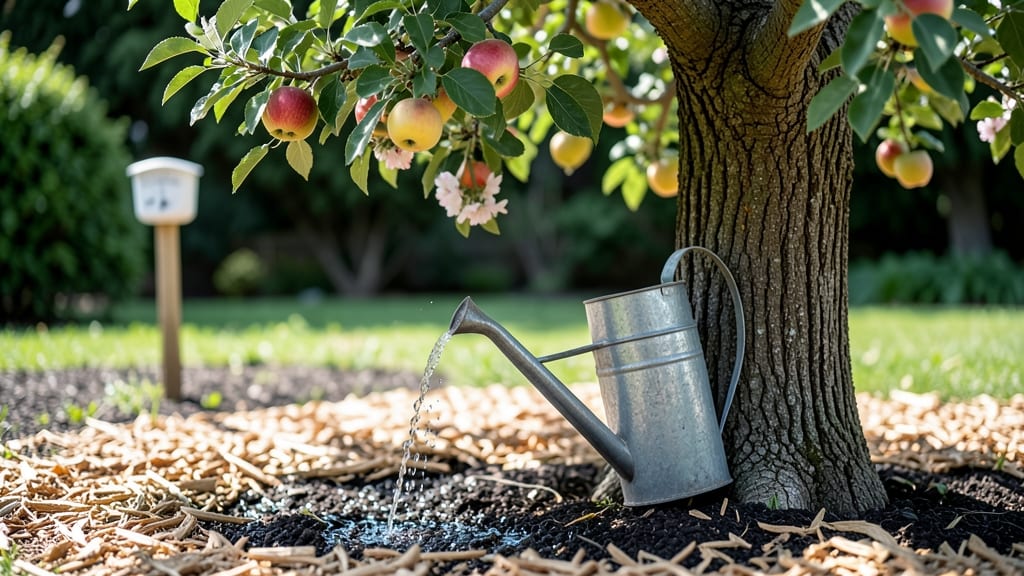
Watering an apple tree 🍎 the right way means deep soaks every 7 to 10 days in spring and fall, but that schedule shifts dramatically in summer heat and winter dormancy.
Struggling to keep your apple tree healthy? Overwatering or underwatering can stifle growth, reduce fruit yield, and even kill your tree—yet most gardeners get the watering schedule wrong. The key is matching your watering to the tree’s age, soil type, and seasonal needs, not just following a one-size-fits-all rule.
Young trees need more frequent, shallow checks to establish roots, while mature trees thrive with deep, infrequent watering that encourages strong root systems. A 15-gallon soak once a week in summer can mean the difference between a bountiful harvest and a struggling sapling.
Below, I’ll break down the exact schedule by season, how to tell if you’re over- or under-watering, and the simple tricks—like mulching and drip irrigation—that save time and keep your tree thriving year-round.
Apple tree watering schedule by season: when and how much to deep soak
Getting your apple tree's watering schedule right is the difference between a thriving orchard and a struggling sapling. Young trees need consistent moisture to establish deep roots, while mature trees still require strategic watering to produce juicy fruit.
The key? Deep soaking at the right intervals—never shallow, frequent watering that encourages weak roots.
Apple trees are surprisingly drought-tolerant once established, but their first 2-3 years are critical. During this time, their roots struggle to reach deep water sources. Even mature trees benefit from seasonal adjustments—more in summer, less in winter.
Let's break down exactly how often to water your apple tree by season, plus the deep-soak technique that builds strong roots.
Spring is all about root establishment. Water your apple tree weekly with 15-20 gallons of water per deep soak. Focus on the root zone—the area under the tree's canopy. Use a garden trowel to check soil moisture: if the top 2-3 inches feel dry, it's time to water.
This season is perfect for training your tree to develop deep roots that can access water later in life.
Summer demands the most attention. With high evaporation rates and potential drought, increase your watering to every 5-7 days. Mature trees may need 20-30 gallons per session, while young trees still thrive on 15-20 gallons.
Always water in the early morning to prevent fungal diseases like apple scab. A simple trick? Use a soaker hose placed at the tree's drip line to deliver water slowly and evenly.
Fall is a transitional period. Reduce watering to bi-weekly deep soaks of 10-15 gallons. The goal is to prepare the tree for dormancy without encouraging late-season growth that could be damaged by frost.
Check soil moisture at 4-6 inches deep—this deeper check ensures you're not overwatering as the tree slows its growth.
Winter watering is minimal but crucial. Most apple trees enter dormancy, but established trees still need monthly light watering (5-10 gallons) during thawing periods. Avoid watering frozen soil, as it can damage roots.
Instead, water just enough to keep the top 2 inches of soil from drying out completely. This prevents winter desiccation, where trees lose moisture through dry air.
For young apple trees (under 3 years old), always water more frequently than mature trees. Their root systems are shallow and can't reach deep moisture. In contrast, mature trees (5+ years) can handle slightly longer intervals between watering, especially if they've established deep roots.
Always adjust based on your local climate—trees in sandy soil dry out faster than those in clay.
Pro tip: Use a moisture meter for accuracy. Stick it 4-6 inches deep in the soil. Readings below 40% indicate it's time to water. This tool eliminates guesswork and helps you avoid both overwatering and underwatering.
Pair it with a rain gauge to track natural precipitation and adjust your schedule accordingly.
Never water your apple tree at night. Wet foliage overnight creates the perfect conditions for fungal diseases like powdery mildew. Morning watering also gives the tree time to dry out during the day, reducing disease risk.
If you're using a sprinkler, switch to a drip irrigation system or soaker hose for targeted watering that keeps leaves dry.
Watch for signs of stress. Wilting leaves or yellowing foliage often signal underwatering, while mushy bark or root rot
Signs your apple tree is overwatered or underwatered (and how to fix it)
Your apple tree 🍎 is a long-term investment, and getting the watering balance right is key to its health. Too much or too little water can cause stress, leading to poor fruit production or even tree death.
I’ve seen many gardeners struggle with yellowing leaves, mushy bark, or wilting branches—all signs of watering gone wrong.
First, let’s tackle the most common mistakes. Overwatering often happens when well-meaning gardeners assume more water equals better growth. Meanwhile, underwatering can sneak up during hot summers or droughts, leaving your tree thirsty. Both extremes send the same distress signals, but the fixes are totally different.
⚠️ callout warning
Young trees (1-3 years old) need deep watering every 5-7 days during summer. Mature trees (4+ years) thrive with 15-20 gallons every 10-14 days, but adjust for soil type and rainfall. Always water at the base, not the leaves, to prevent fungal diseases.
Pro Tip: Stick your finger 2-3 inches into the soil. If it’s dry, water deeply. If soggy, wait a few more days.
One of the first signs of overwatered apple trees is yellowing leaves that stay soft and spongy to the touch. Check the soil—if it smells like wet socks or feels squishy, you’re overdoing it. Root rot is a silent killer, and once it sets in, your tree may never recover.
Look for mushy bark at the base or fungal growth like mold.
To fix overwatering, reduce frequency and let the top 2-3 inches of soil dry between waterings. Improve drainage by adding compost or coarse sand to heavy clay soil.
If root rot is suspected, prune affected roots and apply fungicide to prevent spread. Mulch around the base (but not touching the trunk) to regulate moisture.
On the flip side, underwatered apple trees show crispy brown edges on leaves and wilting branches that don’t bounce back when watered. The soil will pull away from the pot (if potted) or feel bone-dry 2 inches deep.
In extreme cases, you might see premature leaf drop or small, bitter fruit.
Revive an underwatered tree by giving it a deep soak—aim for 15-20 gallons spread over the root zone. Water in the early morning to reduce evaporation. For young trees, create a watering basin by mounding soil around the base to direct water where it’s needed most.
During droughts, consider drip irrigation or mulching with straw to retain moisture.
Remember, consistency is key. Apple trees hate moisture fluctuations, so stick to a schedule and adjust based on seasonal needs. If your tree’s leaves are yellowing, check the soil first—then decide whether to water more or pull back.
With the right balance, your apple tree will reward you with lush growth and sweet fruit for years to come. 🌱