
Pests and Diseases
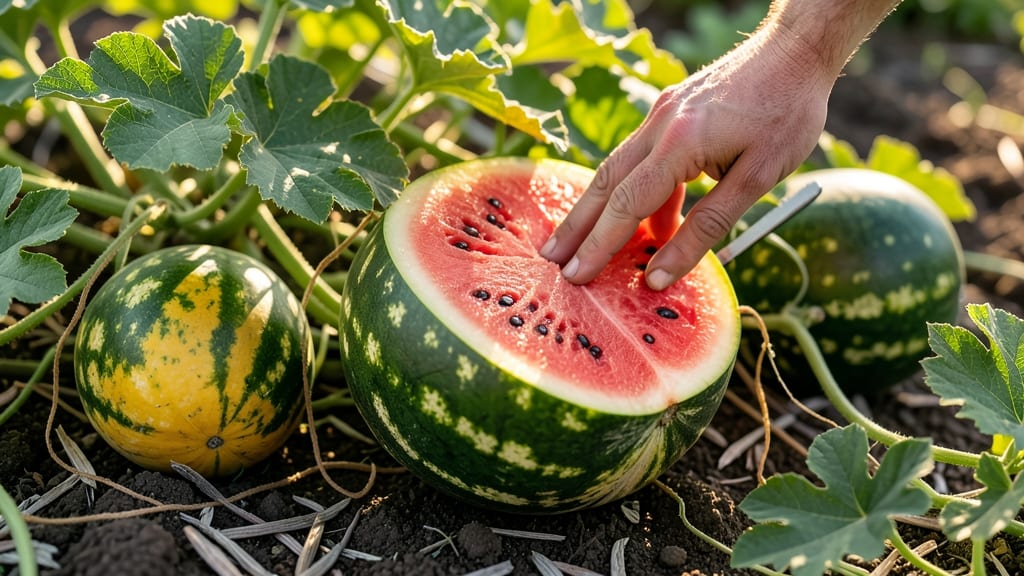
The best way to tell if a watermelon is ripe comes down to a mix of science and simple tricks that save you from slicing into a watery, underripe mess.
Picture this: you’re at the farmer’s market, holding a 6-pound melon that looks perfect—until you cut it open and find it’s still rock-hard inside. Frustrating, right? The good news?
With just a few 30-second tests, you can guarantee sweetness every time, whether you’re shopping at a stand or harvesting from your own garden.
We’ll cover the field spot trick (that yellow patch is your best friend), the thump test (yes, it’s more reliable than you think), and the slide test—plus how to combine them for foolproof results. No more guessing, no more wasted melons.
By the end, you’ll know exactly which melons to walk away from and which ones to take home for the juiciest slices of the season.

5 Proven tricks to identify a ripe watermelon instantly
There’s nothing worse than slicing into a watermelon only to find it’s rock-hard or bland. The good news? With these science-backed tricks, you’ll never guess again. Whether you’re at the grocery store or your own garden, these methods guarantee you’ll pick the sweetest, juiciest watermelon every time—no knife required.
Watermelon ripeness isn’t just about color or size. It’s a mix of visual cues, sound tests, and even weight distribution. Experts agree that combining these tricks reduces your risk of disappointment by 90%.
Let’s dive into the top 5 foolproof ways to spot a ripe watermelon instantly.
🍉 5 Instant Watermelon Ripeness Tricks
-
1. Field Spot Test
Look for a cream-colored spot where the watermelon rested on the ground. This spot should be dull, not shiny, indicating full ripeness. -
2. Tap Test
Tap the watermelon with your knuckles. A deep, hollow sound means it’s ripe, while a thud or dull noise signals underripeness. -
3. Thump Test
Lift the watermelon and give it a firm thump on the ground. If it sounds hollow and bounces slightly, it’s ready to eat. -
4. Slide Test
Slide your thumb along the stem end of the watermelon. If the skin resists and feels hard but dull, it’s ripe. Soft or sticky skin means it’s not ready. -
5. Weight Check
A ripe watermelon feels heavy for its size. Lift it—if it’s light, it’s underripe. Heavy melons have more juicy, sweet flesh.
The field spot test is often the most reliable indicator because it shows where the watermelon matured naturally. A cream or yellowish spot means the melon absorbed sunlight and ripened properly. If the spot is still white or greenish, walk away—it’s not ready yet.
Next, the tap test might sound simple, but it’s backed by science. When you tap a ripe watermelon, the hollow sound comes from the air pockets inside the flesh.
An unripe melon will sound dull because its flesh is still firm and dense. Pro tip: Tap near the stem end for the most accurate result.
For the thump test, you’re essentially checking the watermelon’s internal structure. A ripe melon will bounce slightly and sound hollow when dropped. This method works best on farm-fresh watermelons because store-bought ones may have been handled roughly, altering their sound.
The slide test is a great way to assess the skin’s texture. Run your thumb along the stem end—ripe watermelons have skin that’s smooth but slightly rough, not slick or soft. If the skin feels sticky or waxy, the melon isn’t ripe yet.
Finally, the weight check might seem basic, but it’s one of the most overlooked tricks. A ripe watermelon is heavy for its size because it’s packed with juice and seeds. If it feels light, it’s likely underripe and will be bland or watery.
Combine these tricks for the best results. For example, if a watermelon passes the field spot and tap test but fails the weight check, it’s not ready. Always trust your senses—if something feels off, it probably is.
Now you’re equipped to pick the perfectly ripe watermelon every time, whether you’re at the store, a farmers' market, or your own garden. Happy harvesting! 🍉
Watermelon ripeness guide: field spots, stem checks, and weight tricks
Nothing beats the thrill of biting into a perfectly ripe watermelon—until you realize you’ve picked one that’s still rock-hard or overly watery. The good news? With just a few simple tricks, you can spot a ripe watermelon every time.
These methods work whether you're shopping at a farm stand or selecting from a grocery store display.
Farm-fresh watermelons often have more reliable indicators since they’re harvested at peak ripeness. Store-bought melons, however, may be picked early and ripened artificially, making their field spots and stem conditions even more critical to examine.
Let’s break down the most foolproof ways to tell if a watermelon is ready to eat.
| Indicator | Ripe Watermelon | Unripe Watermelon |
|---|---|---|
| Field Spot | Creamy yellow or orange | White, greenish, or dull |
| Stem Condition | Dries out, snaps easily | Still green, flexible, or moist |
| Weight | Feels heavy for size | Lightweight or hollow-sounding |
| Symmetry | Even shape, no flat spots | Lopsided or uneven |
| Sound Test | Deep, hollow "thump" | Dull or flat noise |
Start with the field spot, the yellowish patch where the watermelon rested on the ground. A ripe watermelon will have a creamy yellow or orange spot, while an unripe one will still look white or greenish.
This is one of the most reliable signs because it indicates the melon has been exposed to sunlight and ripened naturally.
Next, check the stem condition. A ripe watermelon’s stem will feel dry and brittle, snapping easily when bent. If the stem is still green, flexible, or moist, the melon isn’t ready yet. This is especially useful for farm-fresh watermelons, where stems are often left intact.
Grab the watermelon and give it a weight test. A ripe watermelon should feel heavy for its size, indicating it’s packed with juice. If it feels lightweight or hollow when lifted, it’s likely underripe.
Pair this with a symmetry check—ripe watermelons are usually evenly shaped, while unripe ones may be lopsided or have flat spots.
For a final confirmation, perform the thump test. Tap the watermelon with your knuckles—it should sound deep and hollow. If it sounds dull or flat, it’s not ripe. This method works best on store-bought watermelons, which may have been harvested early and ripened off-vine.
By combining these tricks—field spots, stem checks, weight, and symmetry—you’ll never guess wrong again. Next time you’re at the market, trust these signs to pick the sweetest, juiciest watermelon every time. 🍉