
Light Requirements
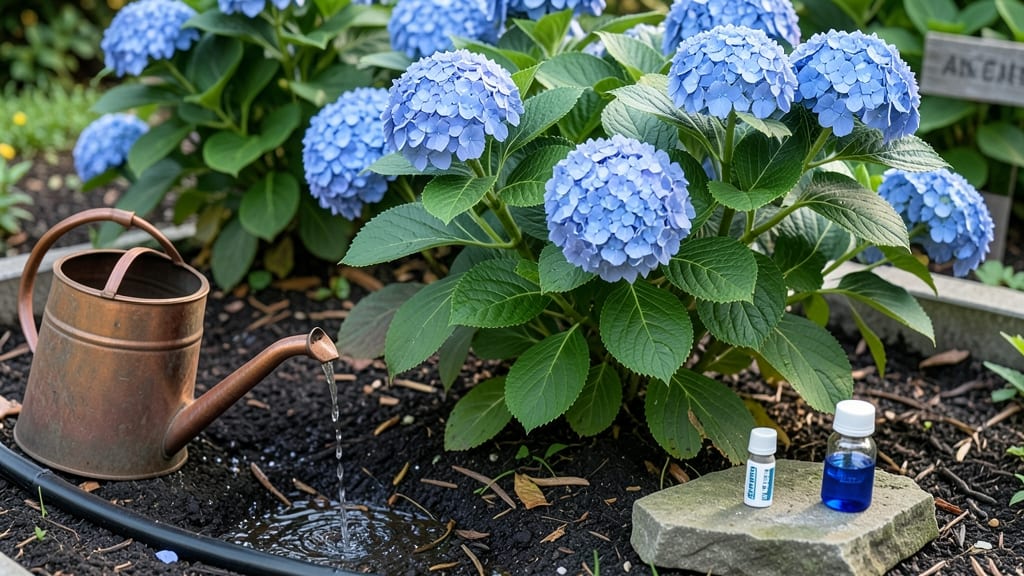
The blue hydrangea water requirements are the secret to those jaw-dropping 💙 blooms—get it wrong, and you’ll end up with pale pink or soggy roots instead.
Want vibrant blue hydrangeas year after year? Watering isn’t just about frequency—it’s about understanding your climate zone, soil type, and seasonal needs to unlock that stunning blue hue.
In Zone 6a, where many gardeners grow these showstoppers, spring and summer demand deep weekly watering to keep soil evenly moist, while fall and winter shift to lighter, less frequent soaks.
Below, I’ll break down the exact schedule by season, how to tell if you’re over- or under-watering, and the one trick that keeps those blooms deep blue all season.
Blue hydrangea water requirements by USDA hardiness Zones
Blue hydrangeas (Hydrangea macrophylla) thrive when their water needs match your climate zone. In colder Zones 3-5, they need consistent moisture to establish roots, while Zones 7-9 demand drought-tolerant adjustments. The key? Deep watering—never shallow soaks—that keeps soil evenly moist without waterlogging.
I’ve grown these beauties in Zone 6a for years, and the difference between vibrant blue and faded blooms often comes down to seasonal watering schedules.
Your USDA zone dictates how often you water. For example, Zone 3 plants need weekly watering in summer, while Zone 9 hydrangeas can stretch watering to bi-weekly once established. Mulch is your best friend—it retains moisture and regulates soil temperature.
I always use 3-4 inches of organic mulch (like shredded bark) around the base, keeping it 2-3 inches away from the stem to prevent rot.
Here’s the zone-specific breakdown you need to keep your hydrangeas thriving:
In Zones 3-5, young hydrangeas (first 2 years) need more frequent watering—think 2-3 times per week in summer—until their roots establish. Mature plants in these zones handle bi-weekly watering once established, but drought stress can turn blooms pink.
I’ve seen this firsthand: a Zone 4 hydrangea I neglected in a heatwave bloomed pale pink instead of blue!
For Zones 6-9, the goal shifts to drought tolerance. In Zone 7, I’ve successfully grown hydrangeas with only 2 deep waterings per month during summer, thanks to 3 inches of mulch and well-draining soil.
The trick? Water slowly and deeply—aim for 1-2 inches of soil moisture at all times. Use your finger to check: if the top 2 inches feel dry, it’s time to water.
One critical mistake I’ve seen (and made!) is watering at night. This encourages fungal diseases like powdery mildew, which can defoliate your hydrangea. Always water in the early morning (before 10 AM) so foliage dries quickly.
If you’re using a sprinkler system, avoid wetting the leaves—opt for drip irrigation or a soaker hose placed at the base.
Container-grown blue hydrangeas need even more attention—they dry out 3x faster than in-ground plants. In Zones 3-6, I water potted hydrangeas daily in summer, using 1-2 gallons per watering
How to adjust watering for blue hydrangea color maintenance
Your blue hydrangeas won’t stay vibrant without the right watering science. The secret lies in maintaining a soil pH of 4.5-5.5, which unlocks aluminum availability—the key to those stunning blue blooms.
Too much water dilutes this balance, while too little stresses the plant. Let’s dive into the watering techniques that keep your hydrangeas deep blue all season long.
First, understand that consistent moisture is critical, but overwatering is the #1 enemy of blue blooms. When roots sit in soggy soil, they can’t absorb the aluminum ions needed for blue pigmentation. Instead, aim for deep, infrequent watering—think 1-2 inches per week—delivered directly to the root zone.
This encourages strong root growth while preventing waterlogged conditions that turn blooms pink or purple.
| Factor | Blue Hydrangea Requirement | Action Steps |
|---|---|---|
| Soil pH | 4.5-5.5 | Test with pH strips; amend with sulfur or peat moss if needed. |
| Watering Depth | 12-18 inches | Use a trowel to check moisture; water until soil 6 inches down is damp. |
| Frequency | 2-3x per week (spring-fall) | Reduce to weekly in winter; adjust for rain (1 inch = skip watering). |
| Best Time | Morning (6-9 AM) | Avoid evening watering to prevent fungal diseases like powdery mildew. |
| Mulch Layer | 2-3 inches | Use pine bark or cedar chips to retain moisture and acidify soil. |
To maintain that blue hue, I recommend mulching annually with pine bark or cedar chips. These organic materials slowly acidify the soil while locking in moisture. Apply a 2-3 inch layer around the base (but keep it 2 inches away from the trunk to prevent rot).
For extra insurance, add hydrangea-specific fertilizer in early spring—look for one with high sulfur content to boost that acidic environment.
Watch for color changes as your first clue. If blooms start shifting to pink or purple, it’s often a sign of overwatering or high pH. Adjust by letting the top 2 inches of soil dry out between waterings and retest your soil pH.
A simple $5 pH test kit from your local garden center works wonders. Pro tip: Rainwater is ideal—it’s naturally acidic and free of chlorine that can alter soil chemistry.
Don’t forget seasonal adjustments! In summer heat, your hydrangeas may need daily deep watering if temperatures exceed 90°F. Monitor the soil by sticking your finger 3 inches down—if it’s dry, water thoroughly.
Conversely, in fall and winter, reduce watering to every 2-3 weeks unless your region experiences freeze-thaw cycles, which can stress roots. A well-draining soil is your best friend here.
For container-grown blue hydrangeas, the rules change slightly. Pots dry out 3x faster than garden beds, so check moisture daily in summer and water whenever the top 1 inch feels dry.
Use a self-watering pot or terracotta container (which wicks moisture) to maintain consistency. And remember: blue hydrangeas in pots need more frequent pH testing since potting mixes often start neutral.