
Light Requirements
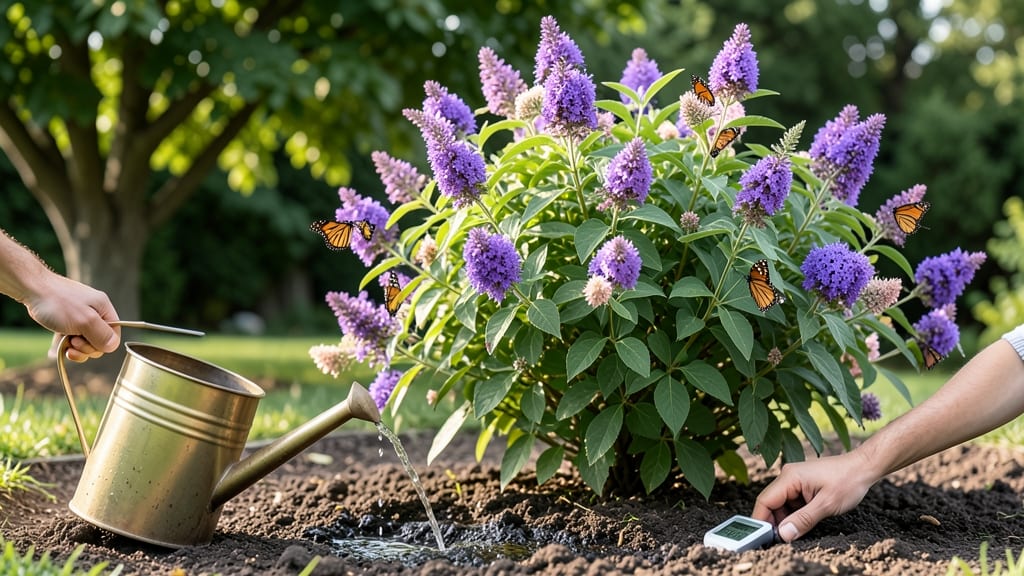
Your butterfly bush water requirements are simpler than you think — deep, infrequent soakings beat shallow daily sprinkles every time, and getting it right means fewer wilting leaves and more of those 🦋 blooms you planted for.
Picture this: You check your butterfly bush after a week of 90°F heat, and the soil is bone-dry two inches down. That’s not a thirsty plant — it’s a stressed one.
Overwatering in summer is just as deadly as letting it dry out completely, and most gardeners swing between both extremes without realizing it.
Here’s the game-changer: a zone-specific watering schedule that adjusts for your climate, soil type, and whether your butterfly bush is a young sapling or a mature shrub.
We’ll break down how often to water in USDA Zone 6a (and beyond), when to cut back in winter, and the one mulching trick that saves 30% more moisture in summer.
By the end, you’ll know exactly when to reach for the hose — and when to leave the plant alone. No more guesswork, no more dead branches, just a butterfly bush that thrives year after year with minimal effort.
Butterfly bush water requirements by USDA hardiness Zone
Your butterfly bush (Buddleia spp.) thrives in USDA Zones 5-9, but its water needs vary dramatically depending on where you live. In arid climates like Zone 7b, you’ll water less often than in humid Zone 9—where evaporation is slower but fungal risks rise.
Understanding these zone-specific differences ensures your plant stays lush without wasting water or drowning roots.
Butterfly bushes are drought-tolerant once established, but young plants and those in containers need consistent moisture. The key is deep, infrequent watering that encourages strong root growth.
In Zone 5’s cooler summers, you’ll water more frequently than in Zone 9’s heat, where the plant’s natural resilience kicks in. Let’s break down exactly how to tailor your routine.
In Zones 5-6, your butterfly bush’s roots stay cooler, so they dry out slower than in Zones 7-9.
That’s why you’ll see shorter watering intervals in spring and fall—your plant needs steady moisture to push new growth before summer heat arrives. Mulch with 2-3 inches of organic matter (like shredded bark) to lock in moisture and regulate soil temperature.
For Zone 7-8 gardeners, the real challenge is preventing water stress during heatwaves. Here, butterfly bushes can handle longer dry spells once mature, but young plants need weekly checks.
Stick your finger 2 inches into the soil—if it’s dry, water deeply. Avoid overhead sprinklers, which can scorch leaves or invite fungal diseases like powdery mildew.
Zone 9 presents unique challenges: high humidity means fungal diseases lurk, while consistent warmth lets roots dry out faster than you’d expect.
The solution? Water deeply but infrequently, always in the early morning so foliage dries by afternoon. Raise the bush slightly with a mound of soil to improve drainage if your yard gets soggy after rains.
One critical mistake I see in all zones is ignoring soil type. Butterfly bushes hate soggy roots, so amend heavy clay with compost or perlite to improve drainage. In sandy soils (common in Zone 7-8), water more frequently but shallower—sand drains too quickly for deep soaks to work.
Pro tip: Group your butterfly bushes with other drought-tolerant plants like lavender or Russian sage to create a microclimate that retains moisture.
This works especially well in Zone 7-9 gardens where water conservation is key. Drip irrigation on a timer is another game-changer—set it for 30 minutes every 5-7 days in summer and reduce to bi-weekly in winter.
Remember, overwatering is just as deadly as underwatering. Yellowing leaves? That’s often a sign of root rot from too much moisture. Wilted foliage that doesn’t perk up after watering?
Usually means the roots are struggling from drought. Adjust your schedule seasonally: in spring, water every 3-4 days; in summer, every 5-7 days; and in fall/winter, reduce to monthly.
Your butterfly bush’s water needs change as it matures. A 1-year-old plant needs weekly watering in summer, while a 5-year-old shrub might only need watering every 2-3 weeks. Prune back dead wood in late winter to encourage new growth, which will have higher water demands.
With these zone-specific guidelines, your butterfly bush will reward you with vibrant blooms and strong growth all season long. 🦋💧
Seasonal watering schedule: how to adjust for spring, summer, fall, and winter
Your butterfly bush thrives on seasonal watering adjustments—what works in summer heat can drown roots in winter dormancy. The key is matching moisture levels to your plant’s growth stage and climate.
For example, young bushes need frequent deep watering to establish roots, while mature plants can handle drought-like conditions once established. Let’s break down the perfect schedule for each season, so you never guess again.
Start by checking your soil moisture before watering—stick your finger 2-3 inches deep. If it’s dry, it’s time to water. In containers, soil dries out faster, so you’ll need to water 2-3 times per week in summer, while in-ground plants may only need water every 5-7 days.
Always water at the base of the plant, not overhead, to prevent fungal diseases like powdery mildew.
- 🌸 Spring (March-May): Water every 3-4 days—deep soak until water drains 6 inches down. Mulch with 2-3 inches of organic matter to retain moisture.
- ☀️ Summer (June-August): Increase to every 2-3 days during heatwaves. Watch for wilting leaves or yellowing—signs of drought stress. Water early morning to reduce evaporation.
- 🍂 Fall (September-November): Reduce to every 5-7 days as growth slows. Let soil dry slightly between waterings to prepare for dormancy.
- ❄️ Winter (December-February): Water bi-weekly only if soil is bone-dry. Avoid wet soil to prevent root rot in freezing temps.
In spring, focus on root establishment. After planting, water daily for the first week, then taper to every 3-4 days as new growth appears. Apply a 2-inch layer of mulch around the base (but not touching the stem) to lock in moisture and suppress weeds.
This is also the perfect time to fertilize lightly—a balanced 10-10-10 formula encourages lush foliage and blooms.
Summer is when your butterfly bush drinks the most, especially in USDA Zones 8-9. If temperatures exceed 90°F, increase watering to every 2 days and monitor for drooping branches or crispy leaf edges, which signal thirst.
Group plants together to create a microclimate that retains humidity, or use drip irrigation for consistent moisture without wetting leaves.
As fall arrives, your bush’s water needs drop dramatically. By September, reduce watering to once a week and stop fertilizing entirely. This helps the plant harden off before winter.
Remove any dead or diseased branches to improve airflow and reduce winter moisture retention. In Zone 5 or colder, wrap young bushes with burlap for extra protection from freezing winds.
Winter care is often overlooked, but overwatering is the #1 killer of butterfly bushes in dormancy. Only water if the ground is completely frozen or if you’re in a mild-winter zone (Zone 7+).
A 3-inch layer of mulch acts as insulation, protecting roots from temperature swings. Prune back 1/3 of the plant in late winter (just before new growth) to encourage vigorous spring blooms.
Remember, rainfall isn’t free water—always check soil moisture after storms. A 1-inch rain may satisfy your bush for 3-5 days, but clay soil holds moisture longer than sandy soil. Adjust your schedule based on your local climate and soil type, not just the calendar.
With this seasonal rhythm, your butterfly bush will reward you with vibrant blooms and butterfly magnet status all year!