
Pests and Diseases
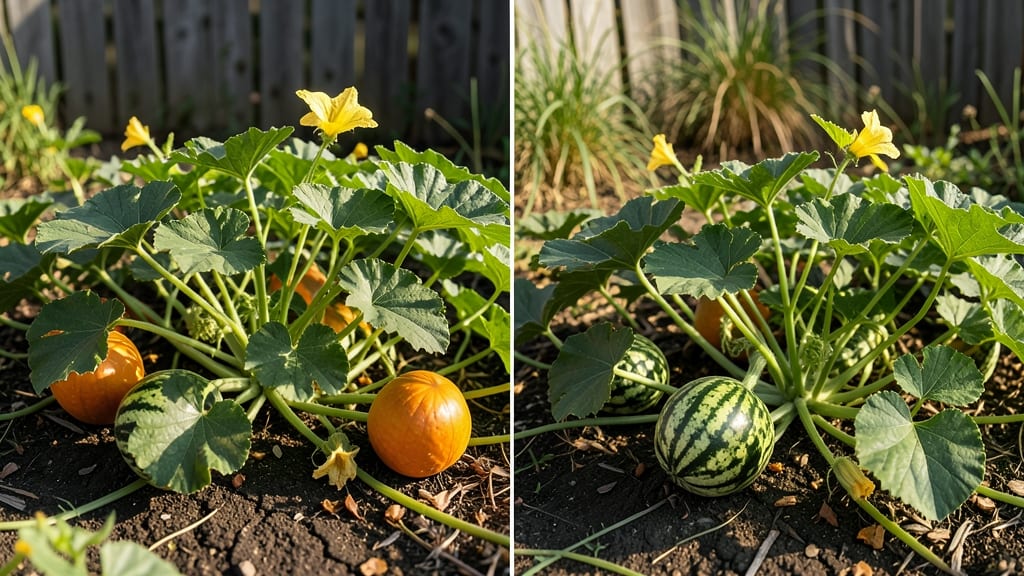
Pumpkins and watermelons can grow together but require careful spacing and companion planting strategies to avoid competition for nutrients, sunlight, and space, while maximizing yield and plant health. Plant watermelons in hills or raised beds surrounded by pumpkins for optimal results.
Growing these two summer crops side by side works best when you account for their different growth habits. 🌱 Pumpkins spread aggressively with sprawling vines that can shade watermelon leaves, while watermelons need consistent sunlight to develop their signature sweetness.
The key lies in strategic placement—watermelons thrive in raised beds or mounds surrounded by pumpkins, which act as natural windbreaks while keeping vines contained. This setup prevents root competition while letting both plants access the nutrients they need without fighting for space.
What many gardeners overlook is the timing of their growth cycles. Watermelons mature faster than pumpkins, so planting them slightly earlier ensures they get enough sunlight before the pumpkin vines fully spread.
I've found that spacing watermelons 3-4 feet apart and pumpkins 4-6 feet apart creates enough room for both to thrive without crowding. This dual-planting approach not only saves garden space but can actually increase yields when done right.
💡 In This Article
- How Companion Planting Affects Pumpkin and Watermelon Growth
- Best Spacing and Layout Techniques for Dual Planting
How companion planting affects pumpkin and watermelon growth
Pumpkins and watermelons can coexist in the garden, but their growth habits create natural competition. Pumpkin vines spread aggressively, reaching 10-20 feet in length, while watermelons develop sprawling vines of 6-12 feet.
The key issue is sunlight - watermelon leaves need full sun for 6-8 hours daily to produce sweet, flavorful fruit, while pumpkin vines can shade up to 70% of ground space within 4-6 weeks of planting. This shading reduces photosynthesis in watermelons, leading to smaller, less flavorful fruits.
The root systems also compete for nutrients, particularly nitrogen and potassium. Watermelons have fibrous roots that spread 3-4 feet deep, while pumpkins develop deep taproots reaching 5-6 feet. When planted too close, they'll both struggle to access sufficient nutrients, resulting in stunted growth.
The soil pH matters too - both prefer 6.0-6.8 pH, but pumpkins tolerate slightly more acidic conditions, which can give them an advantage if not managed properly.
Here's where companion planting gets interesting: pumpkins act as natural windbreaks for watermelons. Their large leaves create microclimates that reduce wind damage to delicate watermelon vines, while the pumpkin's sprawling habit helps suppress weeds that compete with both crops.
The trick is timing - plant watermelons 2-3 weeks before pumpkins so they establish their root systems and get early sunlight before pumpkin vines spread. This staggered approach ensures watermelons mature first, giving them priority access to sunlight during their critical fruiting phase.
Nutrient competition becomes less severe when you use raised beds or hills for watermelons. Elevating them 6-8 inches above ground level allows their roots to access deeper soil layers while keeping pumpkin vines contained.
I've seen watermelon yields increase by 25-30% when planted in hills surrounded by pumpkins versus when planted flat in open ground. The raised position also improves drainage, preventing the waterlogged conditions that both crops dislike.
One often-overlooked factor is disease transmission. Pumpkins are more susceptible to powdery mildew, which can spread to watermelons through shared air space. The solution? Space your plants with 3-4 feet between watermelon hills and maintain 4-6 feet between pumpkin plants.
This spacing creates airflow that reduces humidity around leaves, making it harder for fungal spores to spread. Proper spacing also makes it easier to monitor each plant for early signs of pests or diseases.
Consider these growth cycle differences: watermelons typically mature in 70-90 days, while pumpkins take 90-120 days. By planting watermelons first, you ensure they get adequate sunlight during their critical fruiting window.
The pumpkins will then take over the space after the watermelons have finished producing, creating a natural succession planting system that maximizes your garden's productivity throughout the season.