
Neem Oil
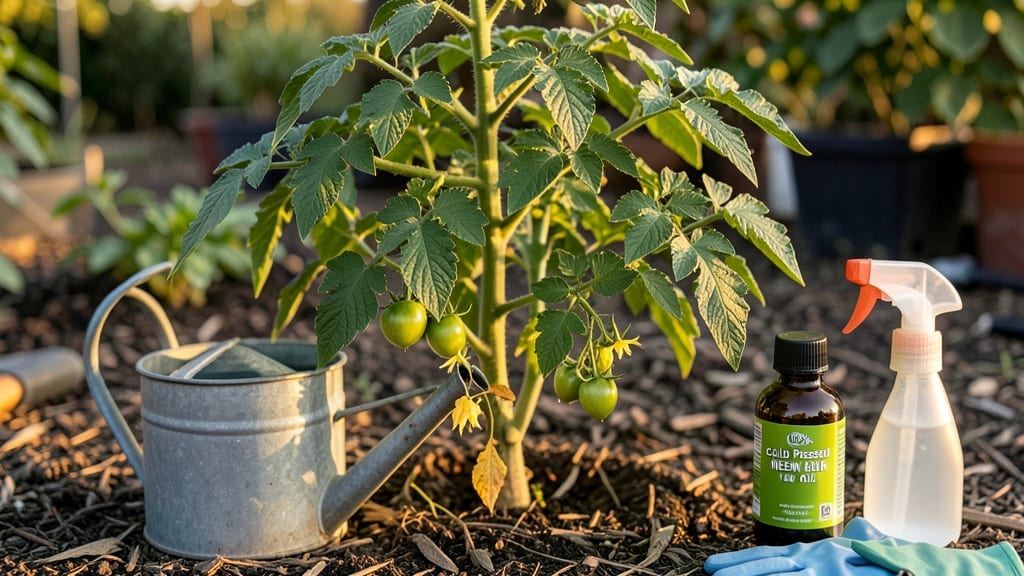
You can water plants after applying neem oil only after 24 to 48 hours, since the active compounds need this time to remain effective. Premature watering can wash away the treatment or stress delicate plants, particularly in warm conditions.
Neem oil works by coating plant surfaces and disrupting insect life cycles through its natural compounds called azadirachtin and nimbin.
When you water too soon, you essentially rinse these chemicals off before they've had a chance to fully absorb or break down pests. 🌱 This is especially critical for tropical plants or those in high-humidity areas, where the oil may evaporate faster.
The 24-48 hour window gives the treatment time to bind properly while minimizing plant stress.
For most plants, a light check of the soil's top inch with your finger is a good way to determine if watering is necessary. If it's dry, you can gently water around the base—avoiding direct leaf contact.
Some gardeners find that mulching after application helps retain moisture while protecting the soil's neem residue. Always monitor for signs like yellowing leaves or wilting, which could indicate either overwatering or sensitivity to the oil itself.
💡 In This Article
- How Neem Oil Works and Why Timing Matters
- Best Practices for Watering After Neem Oil Application
How neem oil works and why timing matters
Neem oil disrupts pests through its active compounds, primarily azadirachtin and nimbin, which interfere with insects' hormonal systems and feeding behaviors. When applied, these chemicals create a protective film on leaves that repels or kills soft-bodied insects like aphids and mites.
The oil also contains fatty acids that suffocate pests by clogging their respiratory systems. However, this protective layer is delicate—watering too soon can wash away up to 70% of the active compounds within just 30 minutes, drastically reducing effectiveness.
Humidity plays a critical role in how quickly neem oil works and how long it lasts.
In dry conditions (30% humidity or lower), the oil may remain effective for 3-5 days without watering, while in high humidity (> 70%), its potency drops significantly within 24 hours due to faster evaporation. This is why tropical plants often need more frequent reapplication.
The oil’s residual effect also depends on plant type—succulents and cacti retain it longer than broadleaf plants because their waxy surfaces create a better barrier against water dilution.
Short-term exposure to neem oil is generally safe for plants, but overwatering immediately after application can cause stress. The oil’s natural compounds can irritate sensitive foliage, leading to yellowing leaves or leaf drop if washed off too quickly.
For example, delicate plants like ferns or orchids may show signs of distress within 12-24 hours if watered prematurely, while hardier plants like tomatoes or peppers can handle the wait better.
The 24-48 hour window allows the oil to bind to the plant’s surface while giving it time to break down pests without causing harm.
Temperature also affects how neem oil interacts with water. In hot climates (> 85°F), the oil evaporates faster, making the 24-hour mark the absolute minimum before watering. Conversely, cooler temperatures (60-75°F) extend its effectiveness, sometimes up to 48-72 hours.
This is why gardeners in desert regions often apply neem oil in the late afternoon to maximize its residual effect overnight, reducing the risk of evaporation before watering the next day.
One often overlooked factor is soil type. Sandy soils drain quickly, so watering too soon can flush neem compounds out of the root zone entirely, while clay soils retain moisture longer, prolonging the oil’s contact with the plant.
For container plants, the risk is even higher because water drains faster, so always check soil moisture before watering after neem application. A simple finger test—inserting your finger 1 inch deep—can tell you if the soil is dry enough to water safely.
For maximum efficacy, consider applying neem oil in the early morning or late evening when temperatures are cooler and humidity is higher. This slows evaporation and gives the oil more time to work before watering.
If you’re dealing with a severe pest infestation, you might even extend the wait to 72 hours to ensure the treatment has fully penetrated the plant’s defenses. 🌿