
Advice
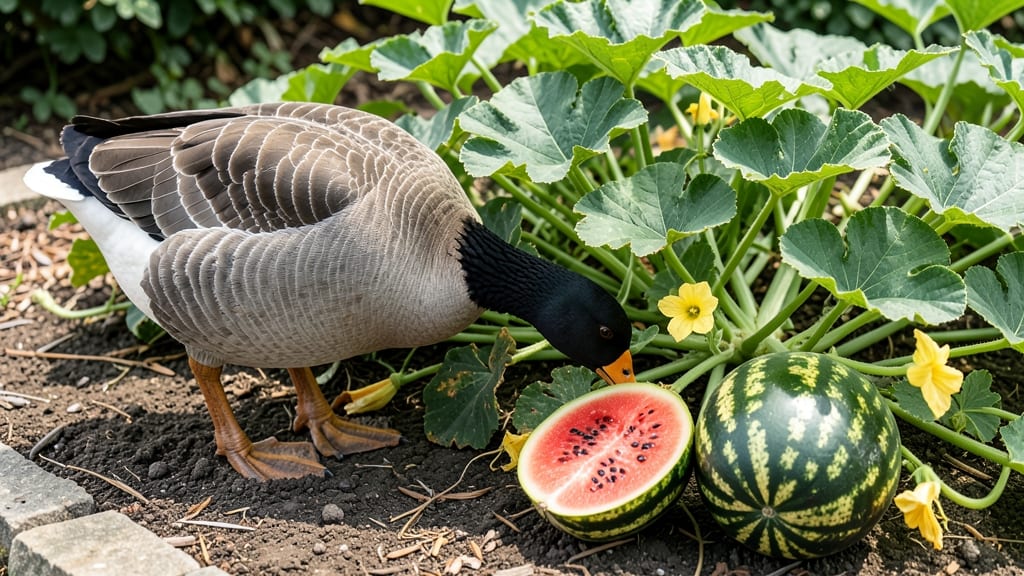
Geese do eat watermelon safely in moderation, as the fruit provides hydration and vitamins, but you should never feed them the rind or seeds, which can cause digestive blockages or discomfort. Offer only fresh, seedless flesh as an occasional treat.
Watermelon is a hydrating and nutrient-rich option for geese, packed with vitamins A and C that support their immune systems. 💧 However, the real risks lie in the rind and seeds—hard seeds can cause intestinal blockages, while fibrous rinds may lead to digestive upset.
Vets recommend cutting watermelon into bite-sized pieces and removing all seeds before offering it, ensuring it's only about 10-15% of their daily diet to avoid sugar overload. For extra safety, opt for organic watermelon to minimize pesticide exposure.
When feeding watermelon to geese, always supervise their first few bites to monitor for any adverse reactions. 🌞 Uneaten portions should be refrigerated within two hours to prevent bacterial growth, and any uneaten watermelon should be discarded after 24 hours.
This approach keeps your geese healthy while turning a common summer fruit into a safe, refreshing snack.
💡 In This Article
- Nutritional Safety of Watermelon for Geese
- How to Feed Watermelon to Geese Without Risks
Nutritional safety of watermelon for geese
Watermelon is a hydrating powerhouse for geese, containing about 92% water by weight—ideal for keeping these birds cool in summer.
The fruit also provides essential vitamins like A (849 IU per cup) and C (12.2 mg per cup), which support their immune systems and feather health. 💧 The natural sugars in watermelon (about 6-8 grams per 100 grams) offer quick energy, but this is where moderation becomes critical—geese metabolize sugars differently than humans, and excess can lead to weight gain or digestive upset.
The real risks lie in the rind and seeds. Watermelon rinds contain high fiber and cellulose that geese can't properly digest, potentially causing obstructions or impactions in their gizzards.
Meanwhile, the hard black seeds pose a greater threat—they can lodge in the digestive tract, creating blockages that may require veterinary intervention. 🚨 Even a single seed swallowed whole has been known to cause serious complications in waterfowl, so complete removal is non-negotiable.
Vets emphasize that watermelon should make up no more than 10-15% of a goose's daily diet due to its sugar content. Wild geese primarily consume grains, insects, and aquatic plants, so their digestive systems aren't adapted to high-sugar fruits.
A single 1-inch cube of seedless watermelon (about 20 grams) is a safe serving size for an adult goose, while goslings should receive even smaller portions (5 grams) to avoid overwhelming their tiny systems.
Another consideration is the fruit's natural pesticides. Conventionally grown watermelons may contain residues that could harm geese, so opting for organic varieties reduces this risk.
The bright red flesh is safe, but any green or white portions should be discarded—they contain higher concentrations of cucurbitacins, compounds that can cause mild stomach irritation in birds. 🌱 Always wash the fruit thoroughly before serving, even organic watermelons, to remove any surface contaminants.
Geese also benefit from watermelon's electrolyte content, particularly potassium (170 mg per cup) and magnesium (15 mg per cup), which help maintain proper muscle function and nerve signaling. These minerals are especially valuable during molting season when geese require extra nutrients to support feather regrowth.
However, the fruit's acidity (pH ~5.2) means it shouldn't replace their staple diet of grains and proteins—think of it as a refreshing supplement rather than a dietary cornerstone.