
Pests
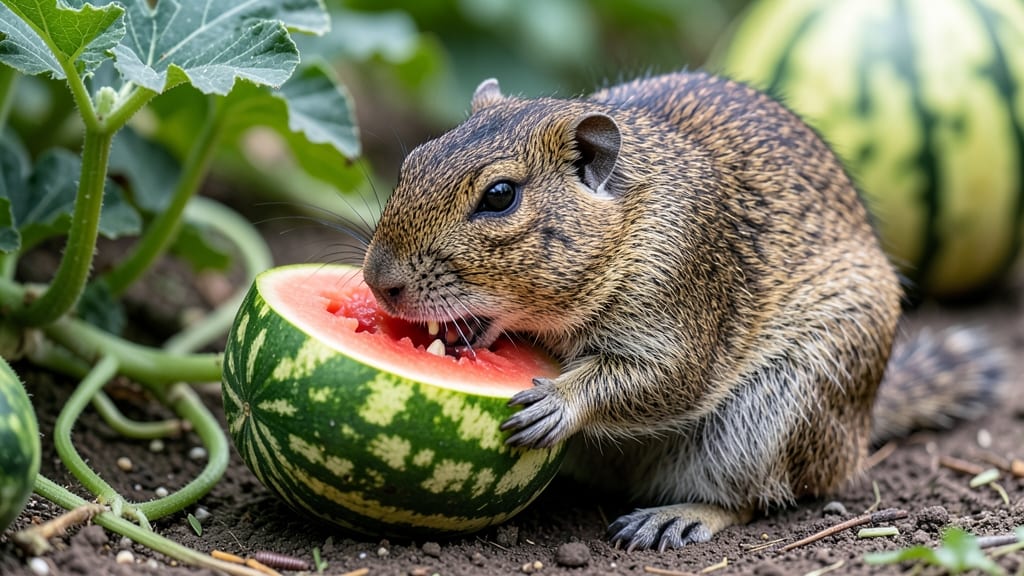
Groundhogs do eat watermelon, but they favor the tough rind and seeds over the watery pulp, which doesn't provide enough nutritional value for their diet. Their digging habits can also destroy watermelon plants entirely.
Groundhogs are primarily plant-based foragers, and while they won't turn down watermelon, they're more interested in the fibrous parts. 🌱 Their natural diet consists of grasses, clover, and leafy greens, so watermelon's high water content makes it a secondary choice.
What they really target are the seeds and rind—both packed with protein and fiber, which aligns perfectly with their dietary needs. This explains why you might find half-eaten watermelons in your garden, even if the rest looks untouched.
What makes this especially frustrating is their digging behavior. Groundhogs don't just nibble—they'll completely uproot plants to access the roots and stems, leaving your entire watermelon patch vulnerable. 🚜 This is why gardeners often report losing entire crops overnight, even when the fruit itself appears untouched.
The key is understanding their foraging patterns to implement effective protection strategies.
💡 In This Article
- Groundhog Diet: What They Naturally Consume in the Wild
- Protecting Watermelons from Groundhog Damage
Groundhog diet: what they naturally consume in the wild
Groundhogs—also known as woodchucks—are primarily herbivorous, with a diet that thrives on fibrous, nutrient-dense plant materials. In the wild, they consume grasses (30-40% of their diet), clover, leafy vegetables, and even bark or twigs when other food is scarce.
Their digestive system is adapted to break down cellulose-rich plants, which explains why they gravitate toward watermelon rinds and seeds—these parts contain high fiber and protein, mirroring the nutritional profile of their natural diet.
The juicy watermelon flesh, however, poses a problem: its 92% water content offers little nutritional value for groundhogs, whose bodies require more substantial calories. 🌱 Instead, they target the seeds (10-15% protein) and the tough outer rind, which provides the fiber and carbohydrates they need.
This selective feeding behavior is why you might find a watermelon with half its rind chewed away but the rest of the fruit still intact—groundhogs aren’t wasteful, but they’re also not interested in low-nutrient snacks.
Their foraging habits are equally telling. Groundhogs dig extensive burrow systems, often 3-6 feet deep, and will uproot entire plants to access roots or stems. Watermelon vines, with their sprawling growth and shallow roots, are particularly vulnerable.
A single groundhog can destroy up to 50 pounds of vegetation per week, making watermelon patches a prime target—not just for the fruit, but for the entire plant structure. This explains why gardeners often find devastated patches where watermelons once thrived, even if the fruit itself appears untouched.
What’s fascinating is how their diet shifts with seasons.
In spring and summer, when watermelons are ripe, groundhogs will actively seek them out, but in fall and winter, they rely more on stored roots or dormant plants. 🌿 This seasonal variation means watermelon damage is most common during peak growing months, when the melons are tender and the groundhogs are most active.
Understanding this pattern is key to protecting your garden at the right times.
Groundhogs also have a unique digestive adaptation: their cecum, a specialized pouch in their digestive tract, ferments fibrous plant material, allowing them to extract maximum nutrients from tough vegetation.
This adaptation makes them less likely to consume water-rich foods like watermelon pulp, as it doesn’t align with their evolutionary dietary needs. The rind and seeds, however, are a perfect fit—both are dense in nutrients and require the same chewing and digestion process as their wild staples.
If you’ve ever wondered why groundhogs seem to ignore the juicy parts of watermelons, it’s because their bodies are wired for efficiency.
Every bite must provide meaningful nutrition, and watermelon flesh simply doesn’t meet that threshold. 🔥 The rind and seeds, on the other hand, are like a fast-food meal for a groundhog—quick, filling, and packed with the energy they need to survive.