
Plants
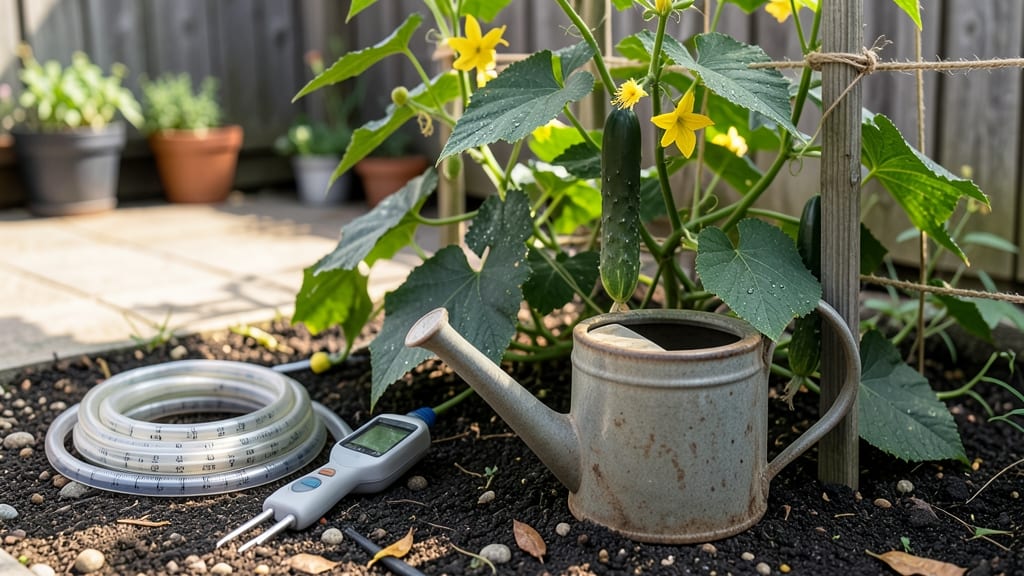
Watering cucumber plants every day isn’t always the right move—it depends on soil, weather, and how mature your 🥒 vines are.
Overwatering or underwatering cucumber plants can turn your thriving vines into a sad, wilted mess—so how often should you water them? The answer isn’t as simple as ‘yes’ or ‘no’—it’s about science, soil, and season.
Young cucumbers need daily moisture to establish roots, but mature plants thrive on deep, infrequent watering—think every 3-5 days once they’re established. Too much water stresses them, while too little leads to bitter fruit or wilting leaves.
Below, I’ll break down the science-backed schedule for your cucumbers, plus how to spot over- or underwatering before it’s too late. No guesswork—just healthy, productive vines.
The science behind cucumber watering: how often to water for optimal growth
Cucumber plants thrive on consistent moisture, but their water needs change dramatically from seedlings to fruiting. Unlike drought-tolerant plants, cucumbers have deep taproots that seek moisture, while their sprawling vines lose water quickly through transpiration.
Understanding these physiological quirks is key to avoiding blossom-end rot or stunted growth.
The ideal soil moisture for cucumbers is like a well-wrung sponge—evenly damp but not soggy. Their roots need oxygen, so waterlogged soil suffocates them.
Meanwhile, dry soil triggers stress hormones that reduce fruit set. The solution? A balanced approach that adapts to your climate, soil type, and plant maturity.
Your local climate plays a huge role in watering frequency. In hot, dry regions like Arizona or California, cucumbers may need daily watering to prevent wilting, while in humid coastal areas like Oregon, you might only water every 5-7 days.
Pay attention to weather forecasts: after a heavy rain, skip watering entirely to avoid root suffocation.
Soil type affects how often you water too. Sandy soil drains quickly, requiring frequent, shallow watering, while clay soil holds moisture longer, allowing less frequent, deeper watering. To test your soil’s moisture retention, dig down 3 inches after watering—if it’s dry, it’s time to water again. Organic matter like compost improves retention, so amend heavy clay with perlite or sandy soil with peat moss.
Young cucumber plants (0-4 weeks) need daily watering because their roots are shallow and transpiration rates are high. Once they’ve developed a strong root system (around 6 weeks), you can stretch watering to every 3-5 days.
During fruit development, maintain consistent moisture—fluctuations cause blossom-end rot, a common cucumber disease.
Morning watering is non-negotiable for cucumbers. Watering in the early morning (before 10 AM) reduces evaporation and gives foliage time to dry, preventing fungal diseases like powdery mildew.
Avoid evening watering, as wet leaves overnight create the perfect environment for pathogens. If you must water in the evening, use a soaker hose to keep leaves dry.
Mulching is your secret weapon for efficient cucumber watering. A 3-inch layer of straw or wood chips locks in moisture, reduces soil temperature swings, and suppresses weeds. Organic mulches like grass clippings also add nutrients as they decompose.
For container-grown cucumbers, use self-watering pots or place a moisture meter in the soil to track moisture levels accurately.
Watch for visual cues that your watering routine needs adjustment. Wilting leaves in the afternoon indicate underwatering, while yellowing lower leaves often signal overwatering. For bush varieties, water at the base to avoid leaf diseases, and for vining
Signs your cucumber plants are overwatered or underwatered (and how to fix it)
Cucumber plants 🥒 are finicky about water—too little and they wilt, too much and they drown. The key is finding that sweet spot where the soil stays moist but not soggy.
I’ve seen healthy vines turn yellow overnight from overwatering, or crispy leaves from drought stress. Both extremes rob you of those sweet, crisp cucumbers you’re dreaming of.
Let’s start with the most obvious signs. Yellowing leaves are your first clue—whether from overwatering (when they’re mushy) or underwatering (when they’re dry and crispy). Check the soil moisture by sticking your finger 1-2 inches deep.
If it’s damp, you’re likely overdoing it. If it’s bone dry, your plants are thirsty.
🚨 callout-warning 🚨
DO: Water deeply 1-2 times daily for young plants, every 3-5 days for mature vines (check soil first!).
DON’T: Water at night—soggy leaves = fungal risks. Morning watering is best!
Fix Overwatering: Stop watering, let soil dry slightly, and improve drainage with perlite or compost.
Fix Underwatering: Water slowly at the base until moisture reaches 6 inches deep. Mulch to retain moisture!
Pro Tip: Blossom-end rot (black spots on cucumbers) often signals inconsistent watering—keep soil evenly moist!
Wilting leaves are another red flag, but here’s the twist: wilting can happen from both overwatering and underwatering. The difference? Overwatered plants feel soft and mushy when you squeeze the stem, while underwatered ones are dry and brittle. If your cucumbers are wilting but the soil is wet, root rot might be setting in—time to act fast.
For overwatered plants, the first step is to stop watering immediately. Let the top 2-3 inches of soil dry out before watering again. If the roots look black or smell foul, you’re dealing with root rot.
In severe cases, you may need to replace the plant and amend the soil with sand or coconut coir to improve drainage. A 50/50 mix of potting soil and perlite can save future plants!
If your cucumbers are underwatered, the fix is simpler: deep watering. Use a soaker hose or drip irrigation to deliver water slowly at the base of the plant.
Aim for 1-2 inches of water per week, adjusting for heat or wind. Mulching with straw or shredded leaves helps lock in moisture and keeps roots cool. Pro tip: Water in the morning to give foliage time to dry before evening humidity sets in.
Don’t ignore blossom-end rot—those black, sunken spots on the blossom end of cucumbers scream watering inconsistency. To prevent it, water consistently and consider adding calcium-rich compost or crushed eggshells to the soil.
Even moisture = happy cucumbers! With these fixes, your vines will bounce back in no time—and you’ll be harvesting crisp, sweet cucumbers in weeks. 🌱