
Watering
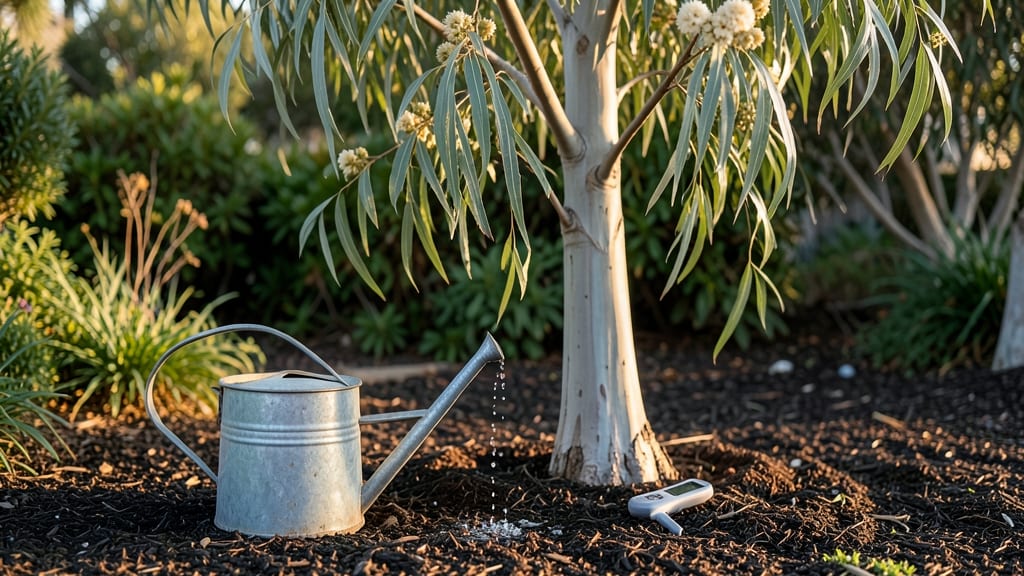
Eucalyptus trees need water—but not nearly as much as you might think, especially once they’re established 🌳.
Picture this: a towering eucalyptus standing through droughts with barely a wilt. That’s their superpower—but even drought-tolerant species need water to thrive, not just survive. The key? Understanding when to water deeply and when to let the soil dry out completely.
Young eucalyptus trees need regular moisture to build strong roots, but mature trees can go weeks without water—if planted in the right soil.
We’ll break down the seasonal shifts in watering needs, how to spot overwatering (yes, it’s a real risk), and why mulching can cut your water use by half.
By the end, you’ll know exactly how much water eucalyptus needs—without wasting a drop. Let’s dive into the zero-waste watering strategy that keeps your tree happy and your hose off.
How much water Does eucalyptus need during active growth?
Eucalyptus trees are often called drought-tolerant, but their active growth phase—typically spring through summer—demands careful watering to establish strong roots and vibrant foliage. Young eucalyptus trees, in particular, need consistent moisture to thrive, while mature trees develop deep root systems that access water independently.
The key is understanding deep watering techniques and adjusting for your local soil type and climate.
When your eucalyptus is actively growing, it’s not about frequent shallow watering but rather infrequent deep soaks. This encourages roots to grow downward, making the tree more resilient once established.
For example, in my USDA Zone 8 garden, I’ve found that young trees need watering every 5-7 days during peak summer months, while mature trees can stretch that to every 10-14 days. The goal? Mimic natural rainfall patterns without creating waterlogged soil.
Soil type plays a huge role in how often you water. Sandy soil drains quickly, so you’ll need to water more frequently—sometimes even daily for young trees—whereas clay soil holds moisture longer, reducing the need for watering. If you’re unsure about your soil, do a simple test: Grab a handful and squeeze. If it crumbles easily, it’s dry; if it stays compact, it’s holding moisture well.
Here’s a quick breakdown of what to expect based on your eucalyptus tree’s age and soil conditions:
One of the biggest mistakes I see gardeners make is overwatering young eucalyptus trees. While they do need consistent moisture, soggy soil can lead to root rot, which is fatal for these trees. To avoid this, always water in the early morning so excess moisture evaporates during the day.
I also recommend using a soaker hose or drip irrigation system to deliver water directly to the root zone without wetting the leaves or bark.
If you’re planting eucalyptus in containers, remember that potted trees dry out much faster than in-ground ones. I’ve had to adjust my watering schedule from weekly to every 3-4 days in summer heat.
A pro tip: Use a moisture meter to check soil conditions before watering. Stick it 2-3 inches deep—if it reads dry, it’s time to water.
Seasonal adjustments are critical. During spring and early summer, when growth is most active, eucalyptus trees need the most water. But as temperatures rise and the tree enters a semi-dormant state in late summer, you can reduce watering by 30-50%.
This mimics their natural habitat, where eucalyptus trees in Australia experience dry seasons. Overwatering during these periods can stress the tree and attract pests like psyllids or aphids.
For deep watering techniques, focus on saturating the soil to a depth of 12-18 inches. Use your finger to check: If the soil feels dry at that depth, water again.
I like to use a garden fork to loosen compacted soil around the base of the tree before watering. This helps water penetrate deeper and encourages root growth downward, where it’s most beneficial for the tree’s long-term health.
Lastly, consider mulching around the base of your eucalyptus tree. A 2-3 inch layer of organic mulch, like wood chips or straw, helps retain moisture in the soil and regulates temperature.
Just keep the mulch 6 inches away from the trunk to prevent rot. In my experience, mulched trees require 20% less water than unmulched ones during the hottest months.
By tailoring your watering routine to your eucalyptus tree’s age, soil type, and seasonal needs, you’ll set it up for lifelong resilience. Remember, eucalyptus trees are survivors—they just need a little guidance to thrive in your garden. 🌳💧
Eucalyptus water needs in dormancy: the zero-waste strategy
When eucalyptus trees enter dormancy, their water needs drop dramatically—but that doesn’t mean you should neglect them entirely. Dormancy typically occurs in winter months (USDA Zone 6a and below), when growth slows and moisture requirements shift.
The key is balancing hydration without waste, especially in drought-prone climates where overwatering is just as harmful as underwatering.
Many gardeners make the mistake of completely stopping water during dormancy, thinking these trees can survive on rainfall alone. However, young eucalyptus trees (under 3 years old) still need monthly deep watering to prevent root desiccation.
Mature trees, on the other hand, can often survive on natural precipitation—but only if your region receives consistent winter rain.
⚠️ WARNING: Overwatering in Dormancy ⚠️
To reduce water waste, focus on mulching techniques that retain moisture while protecting roots. Apply a 3-inch layer of organic mulch (like wood chips or straw) around the base of your tree, but keep it 6 inches away from the trunk to prevent rot. This layer acts as a moisture barrier, slowing evaporation and reducing the need for supplemental watering.
Climate plays a critical role in dormancy watering. In arid regions (like Southern California or Arizona), even mature eucalyptus may need bi-weekly light watering during dry winters.
Conversely, in humid climates (such as Pacific Northwest), natural rainfall often suffices. Always adjust your watering schedule based on local weather patterns and soil drainage.
Watch for early signs of stress like yellowing leaves or brittle branches, which can indicate either underwatering or overwatering. In dormancy, leaf drop is normal, but excessive shedding paired with mushy bark signals overwatering.
For underwatering, crispy leaf edges or slow growth in spring are red flags. Address these issues promptly by adjusting your watering frequency or improving drainage.
By following these zero-waste strategies, you’ll ensure your eucalyptus thrives through dormancy without wasting a drop. The goal isn’t to eliminate water entirely but to optimize hydration for the tree’s natural cycle—saving water, time, and resources in the process. 🌳