
Flowers
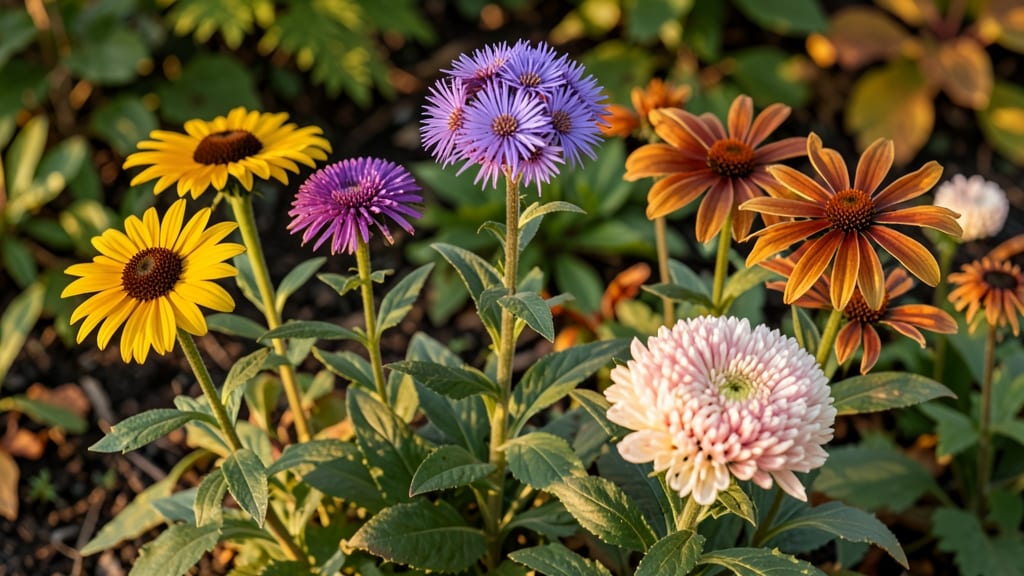
Fall flowering perennials turn your garden into a cozy, colorful sanctuary when most plants call it quits. 🌿 I’ve seen gardens transform from summer’s fading blooms to autumn’s vibrant display—all with plants that practically care for themselves once established.
The secret lies in choosing the right varieties and giving them a little seasonal TLC.
Start with hardy favorites like mums, asters, and sedum, which thrive in cooler weather and need minimal fuss. Plant them in late summer to early fall so roots establish before winter, and they’ll reward you with blooms from September through frost.
Even my black thumb can’t kill these—just give them decent soil and sunlight, and they’ll do the rest.
You’ll end up with a garden that stays lively when others are bare, plus the added bonus of attracting pollinators and hummingbirds during their last feeding frenzy of the year.
The fragrance of Russian sage or the deep purple of New England asters makes autumn feel like a celebration, not an ending.
Works for any yard—city balconies, rural borders, or even containers on a patio. Here’s how to pick, plant, and keep them blooming year after year without the drama.
📚 In This Guide
- What you need
- Instructions
- Tips and common mistakes
- Wrapping up and next steps
What you need
- ● Fall-blooming perennials: Choose from options like asters, black-eyed Susans, sedum, chrysanthemums, or Russian sage. Aim for 3–5 plants per square foot for a lush look.
- ● Well-draining potting mix: 50 lbs (for in-ground planting) or 1–2 gallons per container (for pots). Opt for a blend with compost (20–30%) for nutrients.
- ● Organic fertilizer: 10–10–10 or 5–10–10 NPK ratio, 1 lb per 100 sq ft. Look for slow-release formulas to avoid overfeeding.
- ● Mulch: 2–3 inches of shredded bark, straw, or pine needles to retain moisture and regulate soil temp.
- ● Garden trowel or hand shovel (for transplanting small plants).
- ● Garden gloves (heavy-duty for thorny plants like roses or hydrangeas).
- ● Pruners (bypass pruners for clean cuts; sterilize with rubbing alcohol between plants).
- ● Watering can or hose with adjustable nozzle (gentle spray setting for seedlings).
- ● Measuring tape or ruler (to space plants 12–24 inches apart, depending on variety).
- ● Sunlight assessment: Most fall perennials thrive in full sun (6+ hours/day), but some (like heuchera) tolerate partial shade (3–6 hours).
- ○ Soil test kit (optional but helpful). Aim for pH 6.0–7.0; amend with lime (to raise pH) or sulfur (to lower pH) if needed.
- ○ Drip irrigation or soaker hose (optional for drought-prone areas; water 1–2 inches per week in fall).
How to select and plant fall flowering perennials for season-long color
These hardy plants thrive with minimal care—here’s how to choose and establish them for vibrant autumn displays.
🌱 Step 1: Choose the Right Species for Your Climate
Fall-blooming perennials like sedum, asters, and chrysanthemums thrive in different zones. Check your USDA hardiness zone to select varieties that naturally extend their bloom into autumn. For example, New England asters (Zones 4-8) and goldenrod (Zones 3-9) handle cooler temperatures better than tropical mums, which prefer Zones 7-11.
Look for plants labeled as "late-season bloomers" or "autumnal" at nurseries. I always verify bloom time on the tag—some perennials like Russian sage bloom from summer into fall, while others like black-eyed Susan peak in late summer but linger into autumn. Grouping plants with staggered bloom times ensures continuous color.
🪴 Step 2: Prepare the Planting Site for Optimal Growth
Most fall-blooming perennials prefer full sun (6+ hours daily), but a few like heuchera tolerate partial shade. Test your site’s sunlight by observing it for a week—morning sun is gentler than harsh afternoon rays. Amend heavy clay soil with 2-3 inches of compost to improve drainage, as waterlogged roots stunt autumn blooms.
Spread a 2-inch layer of mulch (like shredded bark) after planting to retain moisture and suppress weeds. I avoid organic mulches like straw near the base of plants, as they can smother stems. Instead, create a 2-inch mulch donut around the plant, leaving the center clear to prevent rot.
☀️ Step 3: Plant at the Right Time for Strong Roots
Plant perennials in early spring or early fall—never in summer heat. For autumn blooms, focus on early fall planting (4-6 weeks before your first frost) to give roots time to establish before winter. Dig holes twice as wide as the root ball but only as deep—planting too deep suffocates stems and delays flowering.
Water deeply after planting to settle soil around roots, then maintain 1 inch of water weekly (more in extreme heat). You’ll see new growth in 3-4 weeks—this signals successful rooting. Avoid fertilizing in late summer, as new growth won’t harden off before frost. Instead, add a slow-release fertilizer in spring to fuel autumn blooms.
✂️ Step 4: Deadhead and Maintain for Extended Blooms
Remove spent blooms regularly to redirect energy into new flowers. For asters and sedum, pinch back faded stems by ⅓ their length to encourage bushier growth. I use clean pruners and make cuts at a 45-degree angle just above a leaf node—this prevents water from pooling and causing rot.
Leave seed heads on winter-blooming varieties like coneflowers for winter interest, but remove them from plants like mums to prevent self-seeding. In late fall, cut back woody stems (like Russian sage) to 6 inches tall to protect tender growth from harsh winds and encourage fresh spring shoots.
💧 Step 5: Winterize for Next Year’s Blooms
Apply a 3-inch layer of mulch in late fall to insulate roots from freezing temperatures. For tender perennials like chrysanthemums in Zone 6 or colder, mound soil around the base up to the plant’s first leaves to create a protective barrier. Water deeply before the first hard frost to ensure roots stay hydrated through winter.
Prune back dead or damaged foliage in early spring before new growth emerges. This prevents disease and lets you assess the plant’s health. I always mark my garden map with notes on which perennials performed best—this helps me replicate successful pairings in future seasons.
Tips & tricks for perfect fall flowering perennials
These hardy plants reward patience—here's how to maximize their autumn beauty with minimal effort.
Climate Matching: When selecting perennials, verify their hardiness zones against your local climate. For example, New England asters thrive in Zones 4-8, while goldenrod handles Zones 3-9. I always cross-reference nursery tags with my USDA zone map to avoid disappointment. This simple check prevents investing in plants that'll struggle with your winter temperatures.
Sunlight Strategy: Most fall bloomers need full sun, but morning light is gentler than afternoon heat. If your garden has limited sun, prioritize asters or heuchera which tolerate partial shade. I test my garden's sunlight for a week before planting—this helps me place heat-sensitive varieties like sedum in cooler morning spots.
Soil Prep Secret: The 2-3 inches of compost mentioned in Step 2 works wonders for heavy clay soils. For sandy soils, mix in 1 part peat moss to improve moisture retention. I always test my soil's drainage by digging a hole and filling it with water—if it drains within 30 minutes, your soil's ready for planting. This prevents waterlogged roots that stunt autumn blooms.
Frost Timing: Planting 4-6 weeks before your first frost gives roots time to establish. I check my local frost date calendar and count backward—this ensures robust root systems before winter. For tender varieties like chrysanthemums, I add a protective layer of mulch 2 weeks before the first frost to extend their season.
Pro Tips for Fall Flowering Perennials
- These hardy plants reward patience—here's how to maximize their autumn beauty with minimal effort.
- Climate Matching: When selecting perennials, verify their hardiness zones against your local climate.
- Sunlight Strategy: Most fall bloomers need full sun, but morning light is gentler than afternoon heat.
Frequently asked questions
What are the easiest fall perennials for beginners?
Start with sedum (like ‘Autumn Joy’), mums (chrysanthemums), or Russian sage. These thrive in average soil, need little water, and handle cooler temps like pros. Pro tip: Deadhead spent blooms to encourage more flowers!
When is the best time to plant fall perennials?
Plant 6–8 weeks before your first frost (late summer to early fall). This gives roots time to establish before winter. Check your USDA zone—cooler regions (like Zone 5) may need earlier planting (August), while warmer zones (Zone 8+) can wait until September.
How do I keep fall perennials blooming longer?
Water deeply but less frequently as temps drop—aim for 1 inch per week. Mulch with 2–3 inches of shredded leaves or bark to protect roots. Bonus: Fertilize lightly with a slow-release bloom booster in early fall for extra color!
Are fall perennials deer- or pest-resistant?
Not all! Lantana and salvia often deter deer, while mums and black-eyed Susans may get nibbled. For pest control, opt for Russian sage (resistant to most bugs) or use neem oil on affected plants. Watch for: aphids on new growth—hose them off gently!
Can I cut back fall perennials now, or should I wait?
Wait until spring for most perennials (like coneflowers or sedum). Cutting back too early removes winter protection. Exceptions: Deadhead spent blooms (like mums) to tidy up, but leave foliage until late winter—it shields roots from freeze-thaw cycles!
What’s a great alternative if my soil is too clay-heavy?
Try coreopsis, bee balm, or blanket flower (Gaillardia). These tolerate clay soil and still pack a punch with fall color. For extra help, amend with compost or plant in raised beds. Pro move: Group perennials with similar needs for easier care!
Wrapping up and next steps
Fall flowering perennials are the secret weapon for extending your garden’s vibrancy without the fuss! 🌿 From hardy asters to fragrant sedums, these plants thrive with minimal care while delivering stunning blooms—proving that beauty and ease go hand in hand.
Whether you’re a seasoned gardener or just starting, adding these resilient stars to your landscape ensures year-round color with zero stress.
Ready to transform your space? Start small: Pick one or two perennials from this list, plant them in well-draining soil, and let nature do the rest. Before you know it, your garden will be a fall masterpiece—all while you sip coffee and enjoy the view! 🌸