
Watering
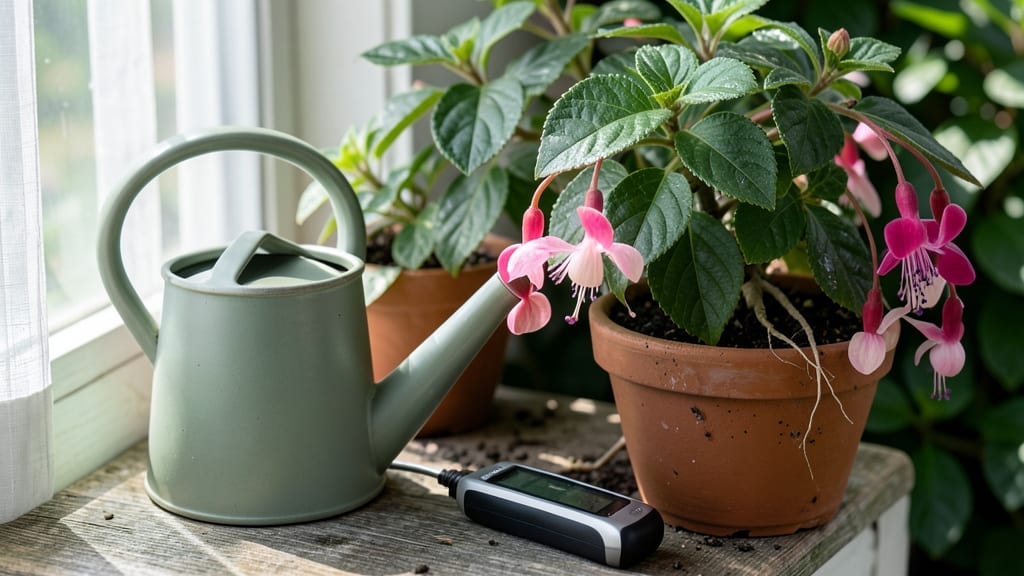
Mastering the fuchsia water requirements keeps their blooms vibrant and roots healthy—without the guesswork of over- or under-watering.
Struggling to keep your fuchsias thriving? The secret lies in a simple soil dryness test: stick your finger an inch deep, and if it feels dry, it’s time to water. Too much moisture leads to root rot, while too little causes droopy leaves—both kill blooms.
Seasonal shifts matter too. In summer, fuchsias need frequent watering, while winter slows their thirst. Container plants dry out faster than in-ground ones, so adjust your schedule accordingly.
Below, I’ll break down the exact watering routine, how to spot trouble early, and the best methods for keeping your fuchsias happy year-round.
How often to water fuchsias based on soil dryness (the 1-Inch test)
Fuchsias thrive when their soil moisture stays consistent—neither soggy nor bone-dry. The 1-inch soil dryness test is my foolproof method to avoid root rot or wilting. Stick a finger 1 inch deep into the soil; if it feels dry, it’s time to water.
This simple trick saves fuchsias from the two biggest watering pitfalls: overwatering and underwatering.
I’ve learned the hard way that fuchsias in containers dry out faster than those in garden beds. Their delicate roots need consistent moisture, but they’ll protest with drooping leaves or yellowing foliage if neglected.
The key? Watering when the top inch of soil feels dry to the touch—like a damp sponge, not a muddy brick.
| Condition | Soil Feel | Watering Action | Frequency |
|---|---|---|---|
| Top 1 inch dry | Like a damp sponge | Water thoroughly | Every 2-3 days (summer) |
| Top 1 inch slightly moist | Cool, not soggy | Light watering | Every 3-4 days (spring/fall) |
| Top 1 inch soggy | Muddy, cold | Hold off; improve drainage | Wait 5-7 days |
| Top 1 inch bone-dry | Powdery, cracked | Deep soak + mulch | Immediately; monitor closely |
Seasonal shifts change everything. In summer’s heat, fuchsias in hanging baskets may need daily watering—especially if they’re in full sun. I test the soil early morning to avoid evening watering, which can trigger fungal diseases.
In winter, reduce watering to bi-weekly as growth slows, but never let the soil dry out completely.
Containers are trickier because they evaporate moisture faster. I’ve found that terracotta pots dry out quicker than plastic containers, so I water mine every 1-2 days in summer.
For in-ground fuchsias, the soil retains moisture longer, so every 3-5 days works—always checking that 1-inch rule. Mulching helps retain moisture and keeps roots cool.
Overwatering is just as deadly as underwatering. Yellow leaves and mushy stems scream “root rot!” If you see these signs, stop watering and let the soil dry slightly.
For underwatering, crispy leaf edges and drooping blooms mean it’s time to deep-water and add organic mulch to lock in moisture. I’ve revived many a fuchsia with this two-step fix.
Morning watering is non-negotiable. Watering in the early hours lets foliage dry before nightfall, reducing pests like aphids and fungal spores. Avoid evening watering—it’s a fast track to leaf spot diseases.
If you must water later in the day, aim for the soil base, not the leaves, to minimize splash-back.
Fuchsias in hanging baskets or window boxes need extra attention. Their roots are exposed to air currents and heat, so I water them twice daily in peak summer. A self-watering planter can be a game-changer here—it keeps moisture levels steady without the guesswork.
For outdoor garden beds, a 5-gallon bucket of water every few days works wonders.
Adjust your watering based on your local climate. In humid regions, fuchsias may need less frequent watering because the air retains moisture. In arid zones, even in-ground plants might need daily checks.
I keep a soil moisture meter handy—it’s a small investment that saves hours of trial and error. For most gardeners, though, the finger test is all you need.
Remember: consistency is key. Fuchsias hate moisture swings, so stick to your watering schedule once you’ve found the right rhythm. With the 1-inch test and seasonal tweaks, your fuchsias will reward you with vibrant blooms all season long. Happy watering—your fuchsias will thank you! 🌸
Fuchsia watering mistakes that kill blooms (and how to fix them)
Fuchsias are stunning plants with cascading blooms, but they’re finicky about watering. Overwatering causes root rot, while underwatering leads to droopy leaves and lost flowers. I’ve seen both mistakes destroy fuchsias in my own garden—here’s how to avoid them.
The biggest culprit? Inconsistent watering schedules. Skipping days or drowning them during summer heat stresses fuchsias. Even well-draining pots can fail if water pools at the bottom. Let’s fix these common errors before your blooms fade.
⚠️ Critical Fuchsia Water Requirements
- Soil moisture: Keep top 1 inch dry between waterings
- Avoid: Soggy soil or letting roots dry completely
- Best time: Water in morning (never at night)
- Drainage: Pots must have drainage holes
Fuchsias hate wet feet—yellow leaves or black stems mean you’re overwatering.
First, check your watering frequency. Most gardeners water too often, especially in summer. Fuchsias need consistently moist (not soggy) soil. Stick your finger 1 inch deep—if it’s dry, water; if damp, wait.
Next, watch for poor drainage. Without holes in pots, water sits at the bottom, suffocating roots. I repotted my fuchsias into terracotta pots with gravel at the base, and blooms doubled within weeks. If your plant feels heavy, it’s likely waterlogged.
Yellowing leaves? That’s a red flag. Overwatering causes leaves to turn yellow and drop, while brown edges mean underwatering. Trim affected leaves and adjust your schedule. For wilting, soak the pot in water for 10 minutes—this revives thirsty plants fast.
Seasonal shifts matter too. In summer, water daily if temperatures hit 85°F+, but reduce to every 3 days in fall. Mulch helps retain moisture—spread 2 inches of mulch around the base to keep roots cool and hydrated.
For container fuchsias, use self-watering pots if you travel often. These keep soil evenly moist without drowning roots. And always water at the base, not the leaves—wet foliage invites fungal diseases like powdery mildew. 🌸