
Lawn
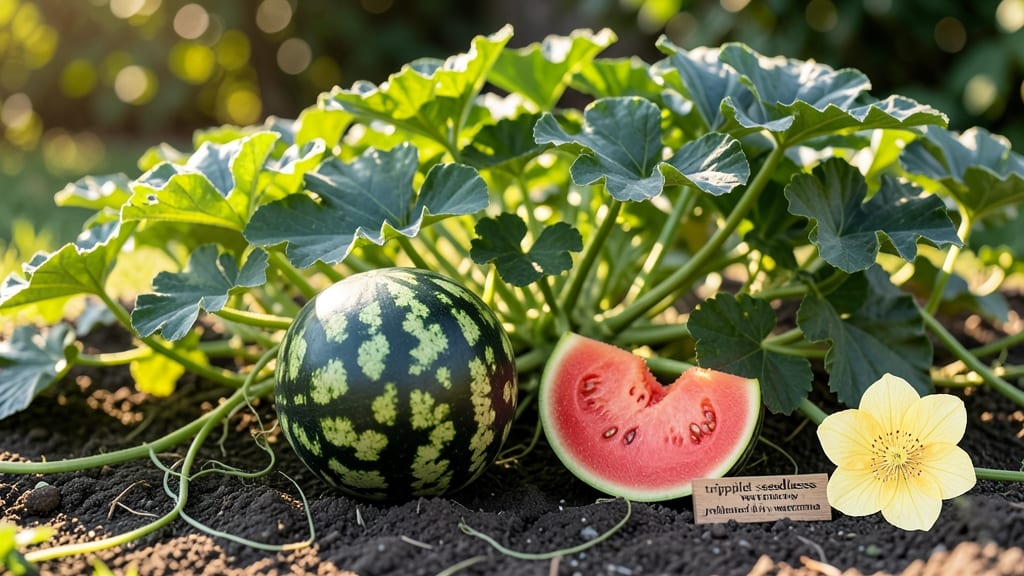
Seedless watermelons are created through a specialized breeding process called triploid hybridization, where seedless plants with three sets of chromosomes are cross-pollinated with pollen from regular two-chromosome plants. This genetic trick prevents seed development while maintaining the fruit's sweetness and structure.
This clever genetic approach works because the triploid plants can't produce viable seeds on their own—they need pollen from diploid plants to trigger fruit growth. 🌱 The result is a watermelon with all the juicy goodness but none of the hassle of removing seeds.
While this process is common in commercial farming, home gardeners face challenges like lower yields and the need for careful pollination management, which often requires hand-pollination techniques.
What makes this process fascinating is how plant hormones play a role. When the triploid plant receives diploid pollen, it stimulates fruit development without seed formation. This method has been refined over decades, making seedless watermelons a staple in grocery stores worldwide.
The trade-off? These watermelons often require more care during cultivation to compensate for their genetic sterility.
💡 In This Article
- The Science Behind Triploid Seedless Watermelon Genetics
- Growing Seedless Watermelons: Commercial vs Home Gardening
The science behind triploid seedless watermelon genetics
At the heart of seedless watermelons lies a fascinating chromosomal dance. Most plants, including regular watermelons, are diploid, meaning their cells contain two sets of chromosomes (one from each parent). But seedless watermelons start as triploid plants, with three sets of chromosomes (3n).
This extra set comes from crossing a tetraploid (4n) watermelon with a regular diploid (2n) one—creating seeds that, when planted, grow into triploid plants that can't produce viable seeds on their own.
The magic happens when these triploid plants receive pollen from a diploid watermelon. The diploid pollen (2n) fertilizes the triploid ovule (3n), but the resulting embryo has an uneven 5n chromosome count, which is non-viable. Instead of developing seeds, the plant focuses its energy on growing sweet, seedless fruit.
This process relies on precise genetic ratios: about 90% of commercial seedless watermelons are produced this way, with varieties like 'Sugar Baby' and 'Crimson Sweet' being popular choices.
Plant hormones play a crucial role in this fruit development. When diploid pollen triggers the triploid plant's reproductive cycle, it stimulates the production of auxin and gibberellins—hormones that promote fruit growth. These hormones signal the plant to develop the fruit's structure while suppressing seed formation.
The result is a watermelon with all the juicy, sweet characteristics but none of the fibrous seeds, making it a favorite for snacking and salads.
Here's what most people don't realize: the triploid plants themselves are sterile and can't reproduce without external pollen. This means commercial growers must carefully manage pollination, often using hand-pollination techniques or planting nearby diploid "pollinator" rows.
Without this intervention, the triploid plants would produce no fruit at all—a striking example of how genetics can manipulate nature for our culinary convenience.
The trade-off? These seedless varieties often have slightly lower yields (about 10-15% less than seeded varieties) and can be more susceptible to certain diseases due to their genetic complexity.
But the payoff—a watermelon you can eat from rind to rind without seed-spitting—makes it worth the effort for both farmers and home gardeners willing to put in the extra care.
Consider this: the first seedless watermelons were developed in the 1930s through traditional breeding, but modern techniques now use precise chromosomal manipulation. Today, you'll find seedless varieties in nearly every grocery store, proving how far we've come in harnessing plant genetics for better food experiences. 🌱