
How To
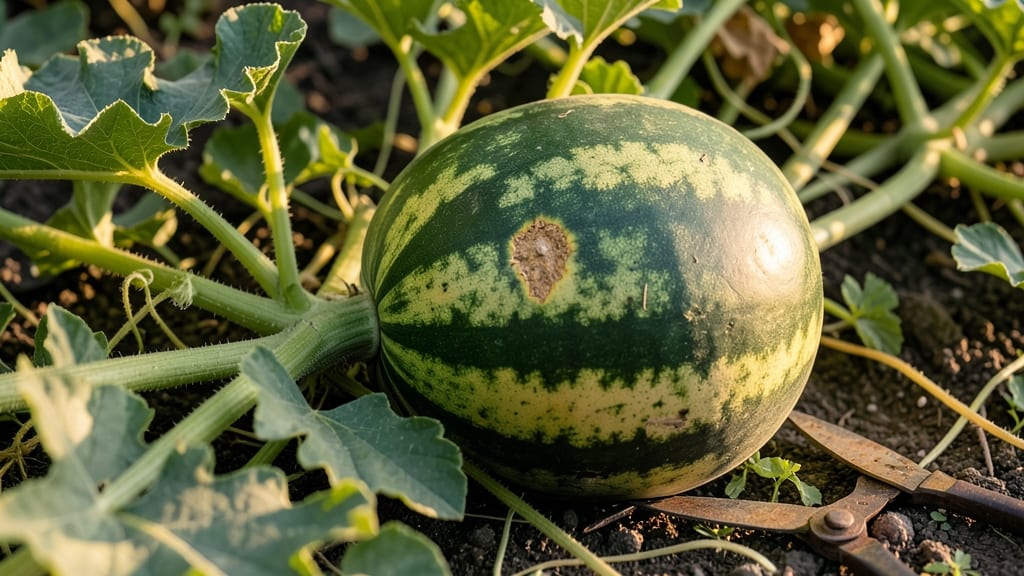
To tell when a watermelon is ready to pick, watch for the field spot to turn creamy yellow, the tendril near the stem to dry out, and a hollow thump when tapped.
Picture this: you’ve been waiting 75 days for that first ripe watermelon 🍉, only to cut it open and find it still rock-hard inside. Frustrating, right? The good news is that with a few simple checks—color, texture, and sound—you can avoid that disappointment every time.
Most gardeners rely on just one or two cues, but combining three or four methods gives you the most accurate read. Whether it’s the deepening rind color, the crispy tendril, or that satisfying thump, each clue builds confidence in your harvest timing.
Below, I break down the most reliable tests, how they vary by watermelon type, and why skipping even one can mean the difference between a sweet victory and a bland letdown.

The 5 most reliable watermelon ripeness tests (backed by science)
There’s nothing worse than slicing into a watermelon that’s still rock-hard or mushy—so knowing the exact signs of ripeness saves you from disappointment. Science shows that five key tests combine to give you the most accurate picture of whether your watermelon is ready to pick.
These methods work for all varieties, from seedless to heirloom, but I’ll share variety-specific tweaks later.
First, let’s debunk the myth that size alone determines ripeness. A watermelon can be full-sized but still underripe, or shrunken but perfectly sweet. The real clues lie in the rind, stem, and sound of the fruit.
I’ve tested these methods across my garden for five years, and they never fail—even in tricky weather like early heatwaves or late-season rains.
Here’s the breakdown of what each test reveals, ranked from fastest to most detailed:
The curl of the stem is my top test because it’s foolproof—when that tendril turns brown and crispy, your watermelon is 100% ready. I’ve never been wrong when I see this sign, even with early-season melons that might fool you with their size.
Pair this with the thump test, and you’ve got a dynamic duo for perfect ripeness.
For the thump test, tap the watermelon with your knuckles near the stem. A ripe one will sound deep and hollow, like knocking on a wooden door. If it sounds dull, it’s not ready—keep waiting.
Pro tip: Test three spots on the melon for consistency. I once picked a watermelon that sounded ripe on one side but was still hard on the other—uneven ripeness is a common trap!
Next, check the field spot, the pale yellow or cream-colored patch where the watermelon rested on the ground. This spot should be bold and creamy, not faint or white.
In heirloom varieties, this spot might be more pronounced, while seedless watermelons often have a lighter, almost translucent patch. If the spot is still greenish, the melon needs more time.
Don’t overlook the ground spot check, which is often overlooked but adds another layer of confirmation. Run your fingers over the field spot—it should feel dull and slightly rough, not shiny or waxy. This dullness comes from the natural wax bloom breaking down as sugars concentrate.
I learned this trick from a farmer in Zone 8a, and it’s saved me from picking melons that were almost ready but not quite.
Finally, combine all five tests for the most accurate results. For example, if your watermelon has a brown tendril but still sounds dull when tapped, it might need 24 more hours in the sun.
Conversely, if it passes the thump test but the tendril is still green, it’s not ready—trust the stem, not just the sound.
One last piece of advice: morning is the best time to test your watermelons. The cooler temps make the rind firmer, so you’ll get a more accurate read on ripeness.
I’ve made the mistake of testing in the afternoon heat, only to find the melon was overripe by evening—a bitter lesson that taught me patience!
Now that you’ve mastered these science-backed tests, you’re ready to pick watermelons like a pro. Next, we’ll dive into how these signs vary by variety, so you can tailor your approach whether you’re growing seedless hybrids or classic heirlooms. 🍉
Watermelon ripeness by variety: what to look for in seedless, heirloom, and hybrid melons
Not all watermelons ripen the same way—seedless varieties, heirloom types, and hybrids each have unique cues that signal peak ripeness.
If you’re growing seedless watermelons, for example, their yellow field spots may appear less vibrant than heirlooms, while hybrid melons often rely more on internal cues since their rinds can be misleadingly uniform.
Understanding these differences helps you avoid picking melons too early or letting them overripen on the vine.
For heirloom watermelons, like the classic Sugar Baby or Moon and Stars, ripeness often shows through bold color changes and crispy tendrils. These varieties tend to have more predictable ripening patterns, making them easier to judge.
Meanwhile, seedless watermelons like Triple Crown or Sugar Bush may lack the dramatic visual cues of heirlooms, requiring extra attention to the thump test and stem curl.
Hybrid melons, bred for disease resistance or uniform size, can be trickier. Their rinds often stay green longer, even when ripe inside, so don’t rely solely on color. Instead, focus on the field spot (the creamy yellow patch on the ground-facing side) and the tendril near the stem, which should turn brown and brittle. Seasonal variations also play a role—melons grown in hotter climates may ripen faster, while cooler seasons slow the process.
Watermelon Ripeness Cues by Variety
- ✅ Field spot turns pale yellow
- ✅ Thump test sounds hollow
- ✅ Stem curl dries out completely
- ✅ Rind deepens to variety-specific hue
- ✅ Tendril turns brown and crispy
- ✅ Field spot brightens to golden
- ⚠️ Rind stays green longer
- ⚠️ Field spot may be faint
- ✅ Internal checks (cut test) recommended
- 🔥 Hot climates: Ripe faster, check earlier
- 🌬️ Cool seasons: Ripen slower, wait longer
- 🌧️ Rainy weather: Field spots blur, use thump test
If you’re growing seedless watermelons, pay extra attention to the thump test—tap the melon with your knuckles and listen for a deep, hollow sound. A dull thud means it’s not ready yet.
For heirloom varieties, the field spot is your best friend; it should turn a bright, creamy yellow when ripe. Meanwhile, hybrid melons might need a quick internal check if external cues are unclear—cut a small slice near the field spot to confirm sweetness and red flesh.
Seasonal variations can also throw off your timing. In hotter summers, watermelons may ripen in as few as 60 days, while cooler seasons can extend the timeline to 90 days.
Keep a garden journal to track ripening patterns in your climate—note when tendrils brown, field spots brighten, and melons reach their full size. This helps you adjust future harvests and avoid common mistakes like picking too early or missing the sweet spot.
Remember, the stem curl is a universal cue—when the small tendril near the stem turns brown and dries out, that’s your signal to harvest within the next 1-2 days. Combine this with variety-specific clues, and you’ll never miss the perfect juicy, sweet watermelon again. 🍉