
Orchid Care
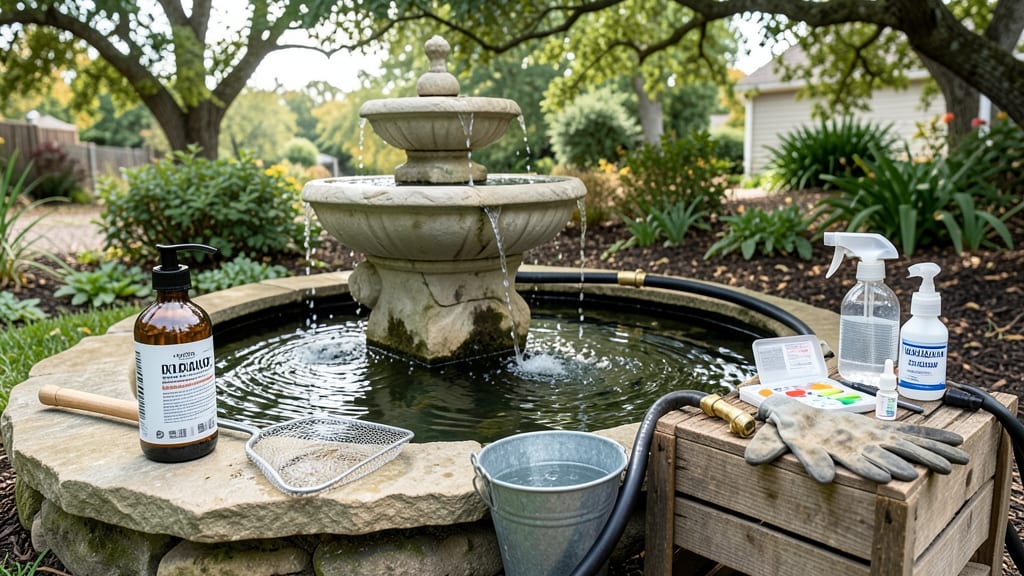
To keep fountain water clean, maintain a routine of daily debris removal, perform partial water changes (20-30%) weekly, and add fountain treatments like hydrogen peroxide or specialized tablets to prevent algae and bacteria. A quality pump filter and consistent circulation will keep your water crystal clear.
Clean water in your fountain isn't just about looks—it's about creating a healthy environment for your plants and preventing unsightly buildup. 🌿 The key is consistency: removing leaves and debris daily stops organic matter from decaying in the water, while weekly changes refresh the water chemistry.
I've found that adding a few drops of hydrogen peroxide (3%) not only kills algae but also breaks down organic contaminants without harming plants. For larger fountains, commercial fountain tablets designed for water features work wonders—they dissolve slowly and release treatments over time.
What many people overlook is the importance of circulation. A properly sized pump creates movement that prevents stagnation, where algae and bacteria thrive. 💫 If your water starts looking cloudy or green, it's often a sign that your system needs adjustment—whether it's increasing circulation or adding a stronger treatment.
I always recommend testing your water's pH occasionally, as extreme levels can make treatments less effective.
💡 In This Article
- Why Fountain Water Turns Cloudy or Green
- Best Natural and Chemical Fountain Water Treatments
Why fountain water turns cloudy or green
Fountain water turns cloudy or green primarily due to microscopic algae blooms and bacterial growth. These organisms thrive when sunlight hits stagnant water, providing the energy they need to multiply rapidly.
Even a small amount of organic debris—like fallen leaves or bird droppings—can feed these microbes, accelerating contamination. 🌿 The cloudiness you see is often a mix of algae cells, bacteria, and suspended organic particles that scatter light instead of letting it pass through cleanly.
Sunlight exposure is the biggest culprit, as it fuels photosynthesis in algae. A fountain placed in direct sunlight without shade can see algae growth in as little as 3-5 days, while shaded fountains may take 2-3 weeks to show similar issues.
Mineral buildup from hard water (high calcium/magnesium) also contributes to cloudiness, creating a white, milky appearance that clogs filters and reduces water flow over time.
The pH balance matters too—most fountain treatments work best in a neutral range (6.5-8.5), while extreme acidity or alkalinity can make water more hospitable to harmful microbes.
Stagnant water creates the perfect breeding ground because it lacks circulation to disperse contaminants. Without movement, organic matter sinks and decomposes, releasing nutrients that algae and bacteria consume. This is why fountains with weak or clogged pumps often develop problems faster. 💫 The good news?
Proper circulation—achieved through a well-sized pump—disrupts this cycle by keeping water moving and preventing debris from settling. Even a gentle flow can reduce algae growth by up to 70% compared to stagnant water.
Another hidden factor is the introduction of new water sources. Tap water often contains chlorine or chloramine, which can kill beneficial microbes but also leave behind residues that feed algae when they break down. Rainwater, while chlorine-free, may introduce organic pollutants from the air.
That’s why using filtered or dechlorinated water for top-offs helps maintain clarity longer. If your fountain water smells musty or has a slimy film, it’s a sign of advanced bacterial growth—usually from organic buildup that’s been ignored for too long.
pH imbalance plays a sneaky role too. Water that’s too acidic (pH < 6.0) can corrode fountain materials and weaken treatment effectiveness, while alkaline water (pH > 8.5) promotes mineral scaling. Testing strips (costing just a few dollars) can reveal these issues before they become visible.
For example, a pH of 7.5 might make your hydrogen peroxide treatment less effective, requiring a stronger dose or a different approach.
What most people don’t realize is how quickly these problems compound. A single missed debris cleanup can lead to a chain reaction: decaying matter → nutrient release → algae/bacterial boom → cloudy water. Breaking this cycle early—with daily skimming and weekly treatments—saves time and effort in the long run.
Think of it like brushing your teeth: skipping a day doesn’t seem like much, but it sets up bigger problems later. 💡