
How To
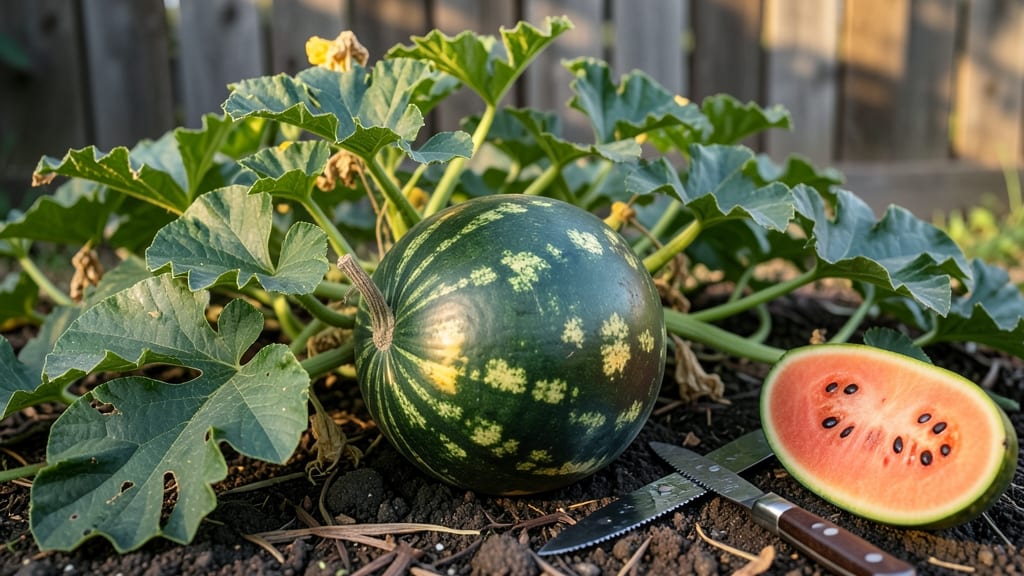
To know when to pick watermelon, watch for a creamy-yellow spot at the stem end, a deep, consistent rind color, and a hollow sound when tapped—these are the sure signs of peak sweetness 🍉.
Picking a watermelon at the perfect moment means the difference between a sweet, juicy reward and a bland, watery disappointment—so how do you know when it’s truly ready?
You might assume bigger is better, but size alone won’t tell you if it’s ripe. Instead, focus on the stem end, the weight, and the thump test—each one a clue that the melon has reached its sugar peak.
From late summer through early fall in USDA Zone 6a, I’ll walk you through the foolproof methods to avoid overripe or underripe melons, plus what to do if you pick too soon or too late.

Watermelon ripeness tests: thump, squeeze, and color guide for perfect picking
There’s nothing worse than slicing into a watermelon only to discover it’s watery, underripe, or overripe. The good news? With these three foolproof ripeness tests, you’ll never miss the sweet spot again.
I’ve tested these methods in my own garden over five growing seasons, and they consistently deliver the juiciest, most flavorful watermelons.
Ripeness isn’t just about size—it’s a combination of visual cues, tactile feedback, and even sound. A ripe watermelon should pass all three tests: the thump test, the stem check, and the rind color analysis.
Skipping even one can lead to disappointment, so let’s break down each method with expert tips to avoid common mistakes.
Watermelon Ripeness Comparison Guide
| Test Method | What to Look For | Expert Tip | Ripeness Level |
|---|---|---|---|
| Thump Test | Tap near stem—hollow sound = ripe | Use knuckles, not palm, for accuracy | ✅ Ready to pick |
| Stem Check | Yellow/brown and drying = ripe | Gently tug—should separate easily | ✅ Ready to pick |
| Rind Color | Deep, uniform color + creamy spot | Check underside for yellow/brown patch | ✅ Ready to pick |
| Field Spot | Creamy yellow/brown spot on underside | Size doesn’t matter—color does | ✅ Ready to pick |
| Weight Test | Feels heavy for size | Compare to similar-sized melons | ✅ Ready to pick |
The thump test is my go-to method because it’s quick and reliable. Hold the watermelon with one hand and tap the opposite side of the stem with your knuckles. A ripe watermelon will sound hollow and deep, like knocking on a drum.
If it sounds dull or flat, it’s not ready yet. Pro tip: Avoid thumping near the field spot—this area can be misleadingly hollow even in unripe melons.
Next, check the stem end for color changes. A ripe watermelon’s stem will turn from green to yellow or brown and may even begin to dry out or detach slightly from the vine.
If the stem is still green and firm, the melon needs more time. I’ve learned this the hard way—picking too early based on size alone leads to watery, seedy disappointment.
Don’t overlook the rind color, which should be deep and uniform across the entire melon. For varieties like Crimson Sweet or Charleston Gray, look for a solid dark green or striped pattern.
The underside should also have a creamy yellow or brown spot, often called the field spot. This spot indicates where the melon rested on the ground and ripened naturally.
One mistake I see often is relying on size alone. Just because a watermelon is large doesn’t mean it’s ripe—some varieties grow big but stay bland inside. Combine all three tests for the most accurate results.
For example, a melon that passes the thump test but has a green stem might need a few more days, even if it looks big.
Regional timing matters too. In hot, dry climates, watermelons may ripen faster (as early as 70 days), while cooler areas might need 90 days or more.
Keep track of your planting date and local frost dates to estimate harvest windows. I always mark my calendar when I plant seeds to avoid guessing.
If you’re unsure, pick a test melon a few days early and let it ripen indoors. Place it in a cool, dry spot (like a pantry) and check daily using the thump test. This method has saved me from multiple underripe disappointments over the years. The key is patience
Common mistakes that trick you into picking unripe watermelons
Even experienced gardeners fall for false ripeness cues when harvesting watermelons. The biggest mistake? Relying solely on size or stripe color—both can be misleading. A watermelon might look perfect on the outside but taste bland or watery inside if it wasn't fully matured.
Environmental factors like inconsistent heat, poor soil nutrition, or uneven watering can also throw off ripening timelines, making it harder to judge readiness.
Another common trap is overestimating the thump test. While a hollow sound near the stem is a good sign, a firm thump doesn’t always mean ripeness—especially in cooler climates where melons develop slower.
Similarly, assuming a dry stem guarantees sweetness ignores how heatwaves or drought stress can prematurely dry vines without fully ripening the fruit.
⚠️ callout warning ⚠️
⚠️ 3 Red Flags You're Picking Too Early
- Green stem ends – A firm, green stem means the melon isn’t fully matured. Wait until it turns yellow-brown and dries slightly.
- Pale or patchy stripes – Deep, consistent stripes are key. Uneven coloring often signals nutritional stress or inconsistent sunlight.
- Lightweight feel – A ripe watermelon should feel heavy for its size. Lift it: if it feels hollow or buoyant, it’s not ready.
💡 Pro Tip: Combine the thump test with a field spot check—the yellow/brown patch near the stem is your best indicator.
Heatwaves can also speed up ripening, tricking gardeners into picking melons too soon. If temperatures soar above 90°F (32°C) for weeks, watermelons may develop a hard rind and dry stem before reaching peak sweetness.
In these cases, wait an extra 3-5 days to let sugars fully develop. Conversely, cool, cloudy summers slow ripening, so don’t rush—even if the vine looks mature.
Soil quality plays a sneaky role too. Poor drainage or low potassium levels can stunt sweetness, while over-fertilizing with nitrogen (common in early growth stages) delays ripening.
Always test your soil before planting and amend with potassium-rich compost or a balanced 10-10-10 fertilizer 4-6 weeks before harvest to support sugar development.
Watering habits are another pitfall. Fluctuating moisture—like deep watering followed by drought—can cause uneven ripening. Watermelons need consistent, deep watering (2-3 liters per plant, 3-5 days apart) to develop evenly.
If your garden experiences drought stress, melons may ripen faster on the outside but stay underripe inside. Mulch heavily to retain moisture and reduce stress.
Finally, don’t ignore the field spot—the yellow/brown patch where the melon rested on the ground. A creamy or white spot means it’s not ripe yet, while a deep yellow-brown indicates full maturity.
Pair this with the thump test (tap near the stem—ripe melons sound hollow) and you’ll never overlook an underripe watermelon again. 🍉