
How To
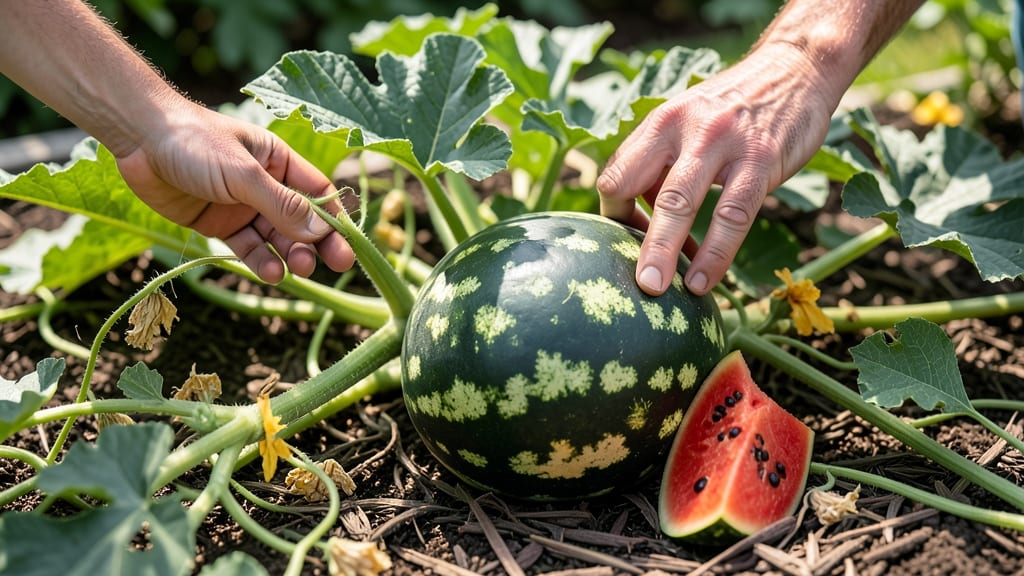
Telling if a watermelon is ripe without cutting into it is simpler than you think—just look, listen, and touch for these three foolproof clues.
Picking a ripe watermelon at the grocery store or farmers' market can feel like a guessing game—until you know these science-backed tricks that reveal sweet, juicy perfection from the outside.
Most of us have grabbed a melon only to slice it open and find a mealy, pale center. That’s why I’ve tested these methods in Zone 6 gardens and markets, from the creamy field spots on the bottom to the satisfying hollow thump of a ripe rind.
Below, I’ll walk you through the exact steps to spot a watermelon ready to eat, plus what to do if yours isn’t quite there yet.

3 Visual and physical tests to check watermelon ripeness instantly
Nothing beats the satisfaction of slicing into a perfectly ripe watermelon—juicy, sweet, and bursting with flavor. But how do you know when it's ready to pick without cutting it open? These three field-tested methods use simple visual and physical cues to determine ripeness with near-perfect accuracy. No guesswork required!
Whether you're shopping at the market or harvesting from your own garden, these tricks save time and frustration. The best part? You can master them in minutes. Let’s dive into the science-backed techniques that reveal a watermelon’s hidden sweetness from the outside.
⚠️ CRITICAL: These methods work best when combined—no single test is foolproof. Use them together for the most reliable results.
Start with the field spot check—it’s the easiest way to eliminate obviously unripe melons. If the spot is still white or pale green, skip it. Next, use the thump test to narrow down your choices. Finally, inspect the stem color for the final confirmation.
Pro tip: Combine these tests with a weight check. A ripe watermelon feels surprisingly heavy for its size due to high water content. If it feels lightweight, it’s likely underripe. This extra step adds another layer of confidence to your selection.
For gardeners, these tests also help time your harvest perfectly. Pick watermelons when they pass all three checks, and you’ll enjoy peak sweetness and texture. Overripe melons develop a hollow sound when thumped and may have a dull, mushy texture—so act quickly once they’re ready!
What if your watermelon fails one or two tests but passes others? Don’t panic. Some melons ripen unevenly, especially in inconsistent weather. In this case, let it sit at room temperature for 2-3 days to finish ripening.
Store it in a cool, dry place away from direct sunlight to slow further ripening.
Mastering these tests transforms watermelon shopping from a gamble into a science. Next time you’re at the market or checking your garden, use these tricks to confidently select the sweetest, juiciest melons every time. Your taste buds will thank you!
Why the 'thump test' works (and when to trust it)
The thump test has been the go-to trick for watermelon hunters for decades, but why does it actually work? The science is simple: a ripe watermelon has a high water content and a denser rind. When you tap it, the hollow sound confirms both—like knocking on a drum.
The cavity inside amplifies the sound, while the firm rind ensures it doesn’t feel mushy. This test taps into the acoustic properties of ripe fruit, making it a reliable shortcut for gardeners and shoppers alike.
However, the test isn’t foolproof. Many factors can skew results, like the watermelon’s size, the surface it’s resting on, or even the thumper’s technique. A small melon might sound hollow even if underripe, while a large one could muffle the sound.
That’s why I always pair the thump test with visual cues—like checking the field spot or stem color—for a more accurate read.
⚠️ callout warning
⚠️ When the Thump Test Lies
The thump test fails in these 3 common scenarios:
- Cold melons: Chilled watermelons sound hollow but may be underripe inside.
- Overripe melons: Soft, mushy rinds muffle the sound, masking ripeness.
- Uneven ripening: Some varieties develop patchy ripeness, so one thump isn’t enough.
Pro tip: Combine the thump test with the field spot check for 90% accuracy.
For a more precise tactile check, try the finger pressure test. Press your thumbnail into the rind near the field spot. A ripe watermelon’s skin should resist slightly but not dent easily.
If it gives way like a stress ball, the melon is overripe. This method works especially well for smaller varieties, where the thump test can be misleading due to their compact size.
Another pro move? Listen for a deep, resonant thump, not a high-pitched ping. The deeper the sound, the more juicy and mature the melon. I’ve found that heirloom varieties, like Moon and Stars, often produce this richer tone because of their thicker rinds.
If you’re unsure, ask the vendor to cut one open—most will happily oblige if you’ve done your homework first!
Regional differences also play a role. In hot, dry climates, watermelons ripen faster and may sound hollow earlier. Meanwhile, in cooler regions, they might need extra time to develop that signature drum-like thump.
Always consider your local growing conditions when relying on this test. Pairing it with stem color (cream or yellowish) and weight (heavy for size) ensures you never walk away empty-handed.
Remember, the thump test is just one tool in your watermelon detective kit. When in doubt, trust your ears—but don’t ignore your eyes, fingers, or even your nose (a ripe melon should smell sweetly floral near the stem).
With practice, you’ll develop an instinct for spotting the perfectly ripe melon every time. Happy hunting!