
Blooming
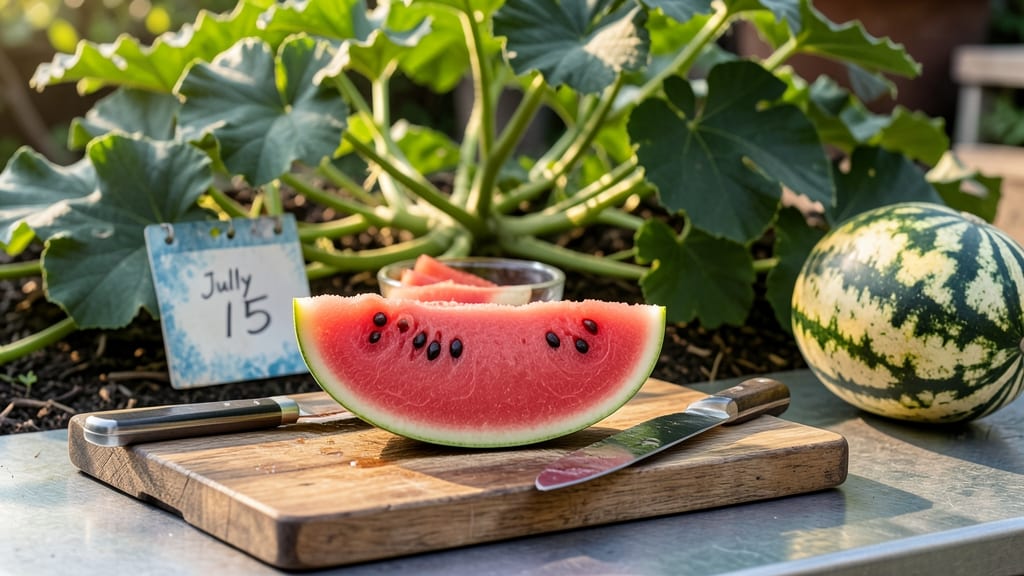
Watermelon lasts 3-5 days when cut and refrigerated, while whole melons stay fresh for 1-2 weeks at room temperature or 1-2 months in cool storage. Overripe watermelon develops soft spots, fermented odors, and mold—discard immediately if these appear.
Understanding how long watermelon stays fresh depends on whether you're dealing with whole fruit or cut pieces. 🔥 The rind acts as a natural barrier against moisture loss and microbial invasion, which is why whole melons last significantly longer than sliced ones.
Even with proper refrigeration, cut watermelon's high water content makes it more susceptible to bacterial growth and texture breakdown within just a few days.
For maximum shelf life, store whole melons in a cool, dry place away from direct sunlight, and only refrigerate cut pieces once they're ready to be eaten.
If you've ever wondered why some watermelons last longer than others, it often comes down to ripeness at purchase and storage conditions. A perfectly ripe watermelon with intact skin can maintain its quality for weeks, while an overripe one will spoil quickly regardless.
Always check for firmness, a creamy rind color, and a satisfying thud when tapped—these are your best indicators of freshness before storage even begins.
💡 In This Article
- Watermelon Shelf Life Science: Why Cut vs Whole Melons Spoil Differently
- Pro Tips to Extend Watermelon Freshness Beyond the Basics
Watermelon shelf life science: why cut vs whole melons spoil differently
The rind of a watermelon acts as a protective barrier against two key spoilage factors: moisture loss and microbial invasion. Whole melons maintain their structural integrity because the rind slows down water evaporation, which keeps the flesh firm and hydrated.
Inside, enzymes like polygalacturonase break down cell walls gradually, but the rind delays this process by limiting oxygen exposure. When you cut a watermelon, you expose 92% water content directly to air, accelerating both moisture loss and bacterial growth.
Refrigeration becomes critical for cut watermelon because cold temperatures (35-40°F) slow down enzyme activity by up to 70% and inhibit microbial growth. The ideal storage temperature for cut pieces is 37°F, where bacterial reproduction rates drop dramatically.
However, even refrigerated cut watermelon will develop oxidation (browning) within 24 hours—this is why lemon juice or plastic wrap creates a protective barrier against air exposure.
Whole melons don't need refrigeration because their rind creates a microclimate that maintains humidity. At room temperature (68-72°F), whole melons can last 1-2 weeks as the rind's waxy cuticle slows moisture loss to just 0.5% per day.
The key difference is surface area: a whole melon has minimal exposed flesh compared to a cut piece where every slice presents fresh surfaces for bacterial colonization. This is why cut watermelon spoils 5-7 times faster than whole melons.
Microbial growth is the silent killer of cut watermelon. Bacteria like Pseudomonas and Lactobacillus thrive in the high-moisture environment of watermelon flesh, especially when stored in high-humidity containers that trap condensation.
The fermentation process these bacteria trigger produces that familiar sour, alcoholic smell—a clear sign it's time to discard the fruit. Whole melons avoid this because their intact rind blocks bacterial entry points.
Texture changes provide early warning signs of spoilage. As watermelon ages, pectinases break down the fruit's structural polymers, turning firm flesh into a mushy consistency. This enzymatic activity accelerates when stored at above 50°F, which is why warm kitchen counters are watermelon's worst enemy.
The rind's thickness also matters: thicker rinds (like those on seedless varieties) provide better protection against spoilage than thin-skinned types.
Consider this comparison: a whole watermelon stored at 50°F with 60% humidity will maintain quality for 2 months, while the same melon cut and refrigerated at 37°F will last just 3-5 days. The difference comes down to surface area exposure and microbial access points.
For maximum freshness, always store whole melons in a cool, dark place and only cut what you plan to eat within 24 hours.