
Companion Plants
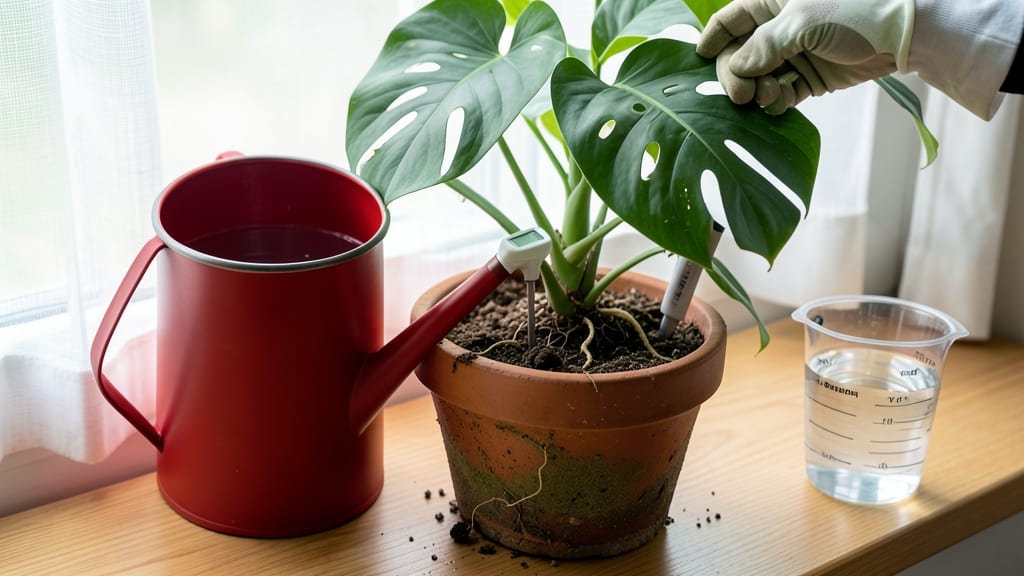
How much of a plant is water varies dramatically: young leaves and stems contain 80% to 95%, while mature trees drop to 50-70%. Succulents and dormant seeds store just 10-30%, and ripe fruits/vegetables peak at 85-95%.
This variation reflects each plant's life stage and ecological needs. 🌱 Young, fast-growing plants need maximum water to fuel rapid cell division, while woody perennials conserve moisture in their dense structures. Even within a single plant, leaves often hold more water than roots or bark.
For gardeners, understanding these percentages helps explain why wilting can happen quickly in high-water plants but slowly in drought-tolerant species.
What's fascinating is how water content shifts seasonally—dormant bulbs and seeds shrink to 10-30% to survive dry periods, while tropical plants maintain near-90% hydration year-round. This explains why some plants thrive in containers while others need deep soil moisture.
My team always checks moisture levels before watering, especially during heatwaves when evaporation rates spike.
💡 In This Article
- Water Content Variations Across Plant Types and Growth Stages
- How to Measure and Optimize Plant Water Content for Healthy Growth
Water content variations across plant types and growth stages
Water isn't just a passive ingredient in plants—it's the foundation of their structure and function. In fast-growing vegetables like cucumbers or lettuce, water makes up 90-95% of their weight during peak growth, giving them that crisp, juicy texture we crave.
This high hydration supports rapid photosynthesis and cell expansion, which is why these plants wilt dramatically when water-stressed. 💧 The science here is fascinating: water molecules create turgor pressure in plant cells, essentially inflating them like tiny balloons to maintain rigidity.
Contrast that with mature trees like oak or maple, where water content drops to 50-70%. Their thick bark and dense wood act like natural water storage systems, conserving moisture during dry spells.
What's surprising is how even within a single plant, water distribution varies wildly—leaves can hold 85-90% while roots might only contain 60-70%. This variation helps explain why some plants can survive droughts: their roots maintain essential hydration while leaves sacrifice water content to prevent wilting.
Seasonal changes create dramatic shifts too. Consider a tomato plant: its fruits swell to 94% water at peak ripeness, but the same plant's stems might only hold 75%. When winter arrives, deciduous trees like maples reduce their leaf water content to 60% or less as they prepare for dormancy.
Even cacti, which seem so dry, can store 80-90% water in their stems during wet seasons—proof that water efficiency is more about regulation than absolute content.
What most gardeners don't realize is how these percentages directly impact plant health. A 10% drop in water content can trigger wilting in high-water plants like basil, while the same drop in a succulent might go unnoticed.
This explains why container gardens need more frequent watering—potted plants lose moisture 3-5 times faster than in-ground plants due to exposed soil surfaces and limited root access to deeper water sources.
Here's where it gets technical: water content affects everything from nutrient transport to temperature regulation. Plants with 90+% water act like living radiators, cooling themselves through transpiration. When water drops below 70% in leaves, photosynthesis slows dramatically because the chloroplasts (where photosynthesis happens) need constant hydration to function efficiently.
This is why heatwaves cause so much plant stress—high temperatures increase evaporation rates, forcing plants to use precious water reserves just to stay cool.
Consider these key variations by plant category:
- Herbaceous plants: 85-95% water (e.g., lettuce, spinach, herbs) – wilt visibly when water drops below 80%
- Woody perennials: 50-70% water (e.g., roses, fruit trees) – can survive 30% drops without wilting
- Succulents/cacti: 10-30% water (e.g., aloe, jade) – store water in specialized cells to survive months without rain
- Fruits/vegetables: 85-95% water at peak ripeness (e.g., watermelon is 92% water)
The most dramatic shifts occur during dormancy. A dormant seed might contain just 10% water, while the same seed during germination can swell to 50% as it prepares for growth. This water absorption triggers enzymatic reactions that break down stored nutrients, essentially "turning on" the plant's metabolic processes. 🌱