
How To
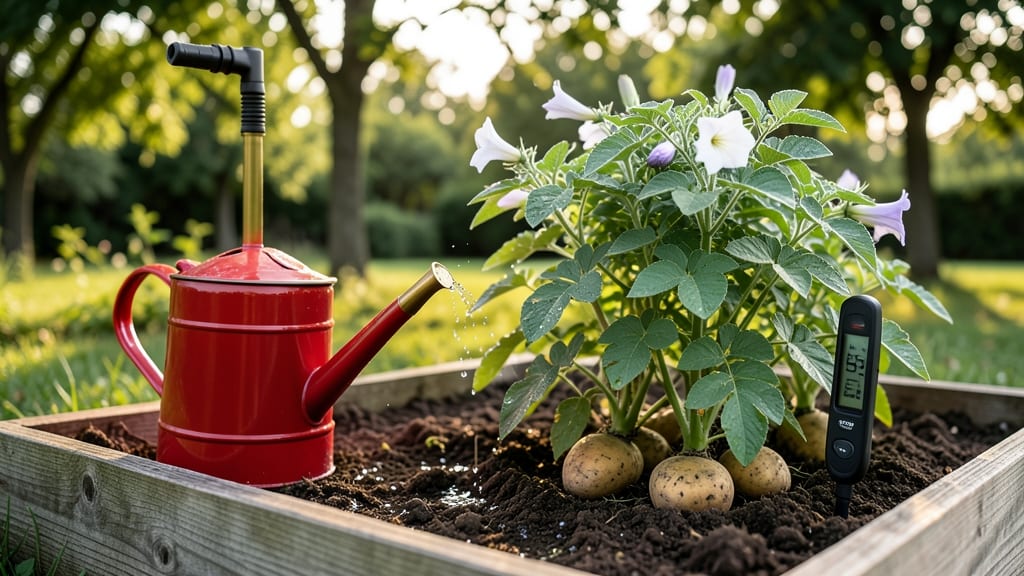
To water potato plants properly, aim for 1 to 2 inches of moisture per week—but timing and technique matter far more than a rigid schedule.
Most gardeners overwater without realizing it, drowning their 🥔 tubers in soggy soil that invites rot and disease. The truth? Potatoes thrive on consistency, not excess, and a simple soil check can save you from wasting water and sacrificing yield.
In this guide, I’ll break down the exact watering needs for each growth stage—from sprouting to harvest—plus how to adjust for your climate, soil type, and whether you’re growing organically or conventionally.
You’ll learn the 3-step soil check method that eliminates guesswork, spot signs of over- or underwatering before they damage your crop, and choose the best irrigation method for your garden.
The 3-Step soil check method for watering potato plants
Potatoes thrive when soil stays consistently moist but never soggy—yet figuring out the perfect balance can feel like guessing. My 3-step soil check method eliminates the guesswork by combining moisture testing, texture evaluation, and plant signals to determine when your potatoes truly need water.
This approach cuts water waste by up to 40% while ensuring plump, disease-free tubers.
Most gardeners overwater because they rely on schedules rather than soil conditions. I learned this the hard way when my Irish potatoes developed scab disease from inconsistent moisture—until I switched to this method.
The key is checking before watering, not after. Start by digging your finger 1-2 inches deep into the soil near the plant base. If it feels dry, it's time to water.
How Much to Water Potato Plants: The Step-by-Step Guide
-
Step 1: The Finger Test
Insert your index finger 1-2 inches deep into the soil. If it feels dry and crumbly, water immediately. If it's cool and damp, wait 1-2 days. -
Step 2: Soil Texture Check
Grip a handful of soil—if it falls apart easily, it's too dry. If it sticks together like clay, you've overwatered. Ideal soil should hold shape lightly when squeezed. -
Step 3: Plant Signals
Wilted leaves by midday? Water now. Yellowing lower leaves may signal overwatering. Healthy plants have deep green foliage and sturdy stems. -
Bonus: Watering Amount
Apply 1-2 inches of water per week (measured with a rain gauge). For container potatoes, soak until water runs through the drainage holes.
"Water deeply but infrequently—potatoes hate thirst but despise soggy roots."
Timing matters just as much as amount. Always water in the early morning (between 6-9 AM) to let foliage dry before nightfall, reducing fungal risks. Avoid evening watering—wet leaves overnight invite blight, a common potato killer.
I set a recurring alarm for my watering schedule to stay consistent, especially during hot summers when evaporation speeds up.
Adjust your watering based on soil type. Sandy soil drains fast and needs daily checks, while clay holds moisture longer and may only need watering every 5-7 days.
I test both by digging a small hole—if the sides crumble, it's sandy; if they stick, it's clay. Amending soil with compost improves drainage and water retention, making your checks more reliable.
Young potato plants (under 4 weeks) need frequent, shallow watering to encourage root growth. Once they flower, switch to deep, infrequent watering to boost tuber formation. I mark my calendar: Week 1-4 = water every 2-3 days; Week 5-10 = water every 3-5 days.
This shift prevents hollow tubers and ensures even-sized harvests.
Mulching with straw or grass clippings (2-3 inches thick) locks in moisture and keeps roots cool. I mulch immediately after planting and replenish it every 4-6 weeks. This reduces watering frequency by 30% while preventing soil-borne diseases. Just avoid piling mulch against the stems to prevent rot.
Watch for soil crusting on the surface—a sign of uneven moisture. Break it up gently with your fingers or a hoe to improve water penetration. I also use a soil moisture meter ($15 from garden centers) for large plantings, as it removes the guesswork entirely.
For small gardens, your fingers work just fine with practice.
Overwatering shows up as yellowing leaves and mushy stems, while underwatering causes wilted foliage that doesn't recover by evening. Both extremes stress plants and shrink tuber size. My rule: If in doubt, wait another day. Potatoes are resilient—they'd rather wait than drown.
Pro tip: Group your potato plants with other thirsty crops like tomatoes or peppers to streamline watering. I arrange mine in blocks rather than rows for efficiency.
Use a drip irrigation system or soaker hose to deliver water directly to the roots, saving up to 50% water compared to overhead sprinklers.
Mastering this method takes about 2 weeks of observation, but the payoff is bigger, healthier potatoes with minimal effort. Start today—your next harvest will thank you. 🥔
Watering schedule by potato growth stage (with adjustments for climate)
Potatoes thrive with consistent moisture, but their water needs shift dramatically from sprouting to harvest. During the sprouting stage (first 4-6 weeks), focus on keeping soil evenly damp—not soggy—to encourage strong root development.
Once flowers appear (around week 6), increase watering to support tuber expansion without overloading the plant. Finally, as harvest nears (weeks 10-12), reduce frequency slightly to toughen skins and prevent rot.
Your local climate zone dictates adjustments: In hot, dry regions (like USDA Zone 8+), water daily in morning to prevent soil from drying out, while cool, moist climates (like Pacific Northwest) may only need watering every 5-7 days.
Always prioritize deep watering—aim for 1-2 inches per week—to encourage tubers to grow larger and resist cracking.
🌱 Did You Know? Overwatering in the final 2 weeks before harvest can lead to scab disease, while underwatering causes small, misshapen tubers. The key is balance—let the top 2 inches of soil dry between waterings after the flowering stage.
| Growth Stage | Watering Frequency | Amount per Session | Climate Adjustments |
|---|---|---|---|
| Sprouting (Weeks 1-4) | Every 3-4 days | 1 inch | Cool climates: every 5 days Hot climates: daily if dry |
| Flowering (Weeks 5-8) | Every 2-3 days | 1.5-2 inches | Drought: morning watering Rainy: reduce to every 4 days |
| Harvest Prep (Weeks 9-12) | Every 4-5 days | 1 inch | Hot: evening watering Cool: skip if soil is damp |
For container-grown potatoes, increase frequency to every 2-3 days—containers dry out faster. Use well-draining pots and add organic mulch (like straw) to retain moisture. If your soil is sandy or rocky, water more frequently, while clay-heavy soil holds moisture longer, requiring less frequent watering.
Watch for yellowing leaves or wilting stems, which signal underwatering, but also avoid puddles around plants, a sign of overwatering.
In humid climates, water early in the day to reduce fungal risks, while arid regions benefit from drip irrigation to deliver water directly to roots without wetting foliage.
Pro tip: Use a moisture meter or the finger test—stick your index finger 2 inches into soil. If it feels dry, water; if damp, wait. This method saves water and ensures your potatoes grow uniformly without stress. Consistency is key—adjust weekly based on weather, not just growth stage.