
Watering
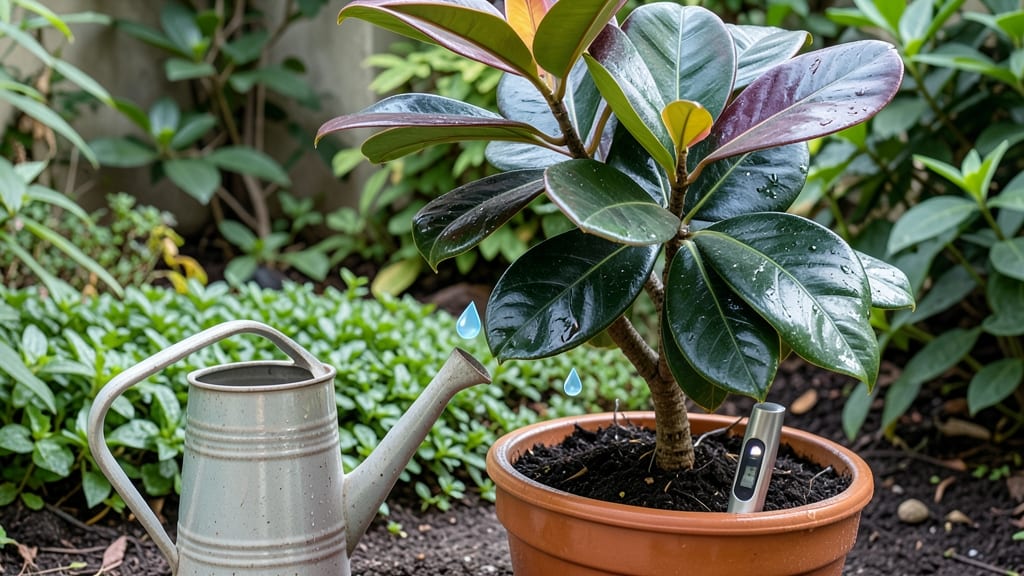
Watering a rubber plant 🌿 the right amount means giving it just enough moisture to thrive without drowning its roots—because too much or too little can both spell trouble.
Overwatering your rubber plant can kill it just as fast as underwatering—so how do you strike the perfect balance? The answer lies in a simple finger-dip test and understanding your plant’s unique needs.
Most rubber plants need water every 1–2 weeks, but that changes with the seasons. In spring and summer, they drink more, while winter slows their thirst to a trickle. The key is checking the soil first.
Below, I’ll show you the exact finger-dip method to test moisture, seasonal adjustments for healthy growth, and how to spot over- or underwatering before it’s too late.
The finger-dip test: how to check rubber plant soil moisture correctly
Overwatering your rubber plant (Ficus elastica) is one of the fastest ways to kill it, but underwatering can cause just as much damage. The key to keeping your plant thriving is learning how to read its soil moisture like a pro.
My go-to method? The simple, no-tools-required finger-dip test. This technique lets you check moisture levels accurately and avoid both root rot and dehydration.
Rubber plants are drought-tolerant once established, but they still need consistent moisture—just not soggy soil. The finger-dip test gives you a hands-on way to determine when your plant is truly thirsty.
Unlike relying on a watering schedule (which can fail in different climates), this method adapts to your plant’s current needs in real time. Plus, it’s a great way to build a deeper connection with your plant’s health.
Here’s how to do it right: The correct depth for testing is about 1-2 inches deep into the soil. This is where the root zone actively absorbs moisture.
Digging too shallow might give you a false sense of dryness, while going too deep could miss the critical moisture layer your rubber plant relies on. I’ve made this mistake myself—once I nearly drowned my plant because I thought the top layer was dry enough!
Timing matters too. Always check soil moisture before watering, not after. Wet soil from a recent watering can trick you into thinking your plant needs more water than it does. I recommend testing every 5-7 days during warm months and every 2-3 weeks in winter when growth slows.
Pro tip: Do this test in the morning when soil is naturally cooler and moisture levels are stable.
- 1. Wait until the top inch of soil feels dry to the touch—this is your cue to test deeper.
- 2. Insert your finger 1-2 inches deep into the soil, near the plant’s edge of the pot (not the center).
- 3. Feel for moisture: If the soil feels damp but not soggy, wait 1-2 more days before watering.
- 4. If it feels completely dry, it’s time to water. Give your rubber plant a deep soak until water runs out the drainage hole.
- 5. Empty the saucer 10-15 minutes later to prevent root suffocation from sitting water.
What you’re really feeling for is the texture and temperature of the soil. Healthy rubber plant soil should feel slightly moist but not cold or clumpy. If it sticks to your finger or feels icy, that’s a red flag for overwatering.
On the flip side, if it crumbles like dust, your plant is crying out for water. I’ve learned to trust my fingers more than any watering app—they’re always right about what my plants need!
One of the biggest mistakes I see (and I’ve done it too!) is checking moisture in the center of the pot. The edges dry out faster, so testing there gives a more accurate read of your plant’s true needs. Another error is watering on a schedule without checking.
Rubber plants in smaller pots dry out quicker than those in larger containers, and humidity levels change with seasons. Always adapt your watering to what your plant is telling you, not a rigid calendar.
If you’re new to the finger-dip test, start by watering deeply every time you test and dry soil. This helps establish a consistent moisture baseline for your rubber plant. Over time, you’ll develop a feel for the ideal texture.
I keep a small notebook by my plants to track when I water and how the soil feels—it’s become a fun little habit that keeps my rubber plants thriving. Remember, less frequent but deeper watering is always better than shallow, frequent sips.
Your rubber plant’s leaves will also give you clues. Yellowing leaves often signal overwatering, while crispy, brown edges mean it’s thirsty. But don’t rely solely on leaves—soil moisture is the most reliable indicator.
I’ve saved more than one rubber plant by catching these signs early and adjusting my watering habits. The finger-dip test isn’t just a method; it’s a relationship with your plant’s needs.
For container-grown rubber plants, pot size matters. A 6-inch pot may need watering every 5-7 days, while a 12-inch pot could go 2-3 weeks between waterings. Always check soil moisture first—never guess!
And if you’re growing your rubber plant in well-draining soil (which you should), you’ll find it’s far more forgiving when slightly dry than when soggy. Trust the test, and your plant will reward you with lush, vibrant growth.
Here’s my final tip: If you’re unsure whether to water, wait one more day. Rubber plants are resilient and can handle a little dryness better than they can handle too much water.
The finger-dip test gives you the confidence to water with intention, not anxiety. Soon, you’ll be able to check your plant’s moisture needs in seconds—no tools required!
Rubber plant watering schedule: seasonal adjustments for healthy growth
Your rubber plant's watering needs shift dramatically with the seasons, and getting this right is the key to keeping its glossy leaves vibrant year-round. In spring and summer, when growth is most active, your plant will drink up to twice as much water as it does in winter.
The trick is to match your watering rhythm to your plant's natural cycle—too much in winter can suffocate roots, while too little in summer stresses the foliage.
Humidity plays a surprising role too—if your home feels dry (common in winter with indoor heating), your rubber plant may need water 30% more frequently than in naturally humid summer months. That's why I always check two things before watering: the season and my home's current humidity level.
This simple adjustment has saved my rubber plants from both yellowing leaves and mushy stems over the years.
One of the biggest mistakes I see is treating rubber plants like succulents—they're not drought-tolerant like cacti! In summer heat, I water mine every 5-7 days and watch for drooping leaves as the first sign of thirst.
The key is to water deeply until you see water draining from the pot's holes, then let the top inch of soil dry out completely before watering again.
Winter is when rubber plants often suffer from overwatering because people don't adjust their routine. I've learned to wait until the soil is bone-dry to 3-4 inches down before watering in winter months.
This prevents the classic root rot that turns leaves yellow and mushy. If you're unsure, stick your finger in—if it feels damp past the first inch, wait one more week.
Watch for these red flags that reveal your watering is off: Yellow leaves with crispy edges mean you're overwatering, while brown leaf tips and wrinkled foliage signal underwatering. I've fixed both by adjusting my schedule and using a moisture meter—it's the easiest way to avoid guesswork.
For overwatered plants, I repot in fresh, dry soil and hold off on watering for a full week.
Remember that container size matters too—small pots dry out faster, while large containers hold moisture longer. If your rubber plant's leaves start curling or developing brown spots, check both your watering schedule and your pot size.
Sometimes a simple upgrade to a 12-inch pot with better drainage solves chronic watering issues. The right balance keeps your rubber plant thriving through all four seasons! 🌿