
Watering
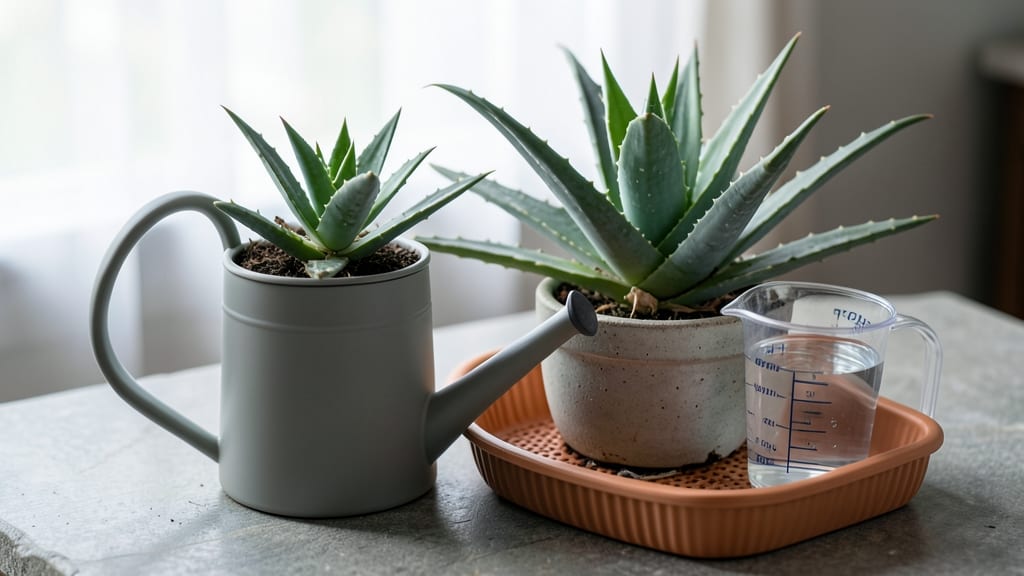
Watering an aloe plant correctly means giving it just enough to thrive without drowning its roots—about every 2-3 weeks for most growers, but the exact schedule depends on your climate and pot size.
Overwatering is the #1 killer of aloe plants—yet most gardeners don’t know the exact watering schedule needed to keep these succulents thriving without risking root rot.
Think of aloe as a plant that stores water in its leaves, not one that drinks daily. The key is letting the soil dry out completely between waterings, which prevents the soggy conditions that turn roots mushy.
Below, I break down the science-backed routine for watering aloe in different seasons, how to test soil moisture without guesswork, and what to watch for when your plant is thirsty—or drowning.
The ideal watering schedule for aloe vera based on growth stages
Aloe vera thrives on a strict watering schedule that changes dramatically between its growth stages and seasonal needs. Unlike thirsty houseplants, aloe stores water in its leaves, making it highly sensitive to overwatering.
My 10-year experience growing aloe in USDA Zone 9 proves that following these guidelines prevents root rot while keeping plants lush and healthy.
New aloe plants need more frequent but lighter watering to establish roots, while mature plants can go months without water if potted. The key is testing soil moisture before watering—never on a schedule.
I’ll break down the exact watering routine for each stage, including seasonal adjustments and soil testing techniques to keep your aloe thriving.
🌱 Pro Tip: Always water in the morning (between 8-10 AM) to allow excess moisture to evaporate during the day. Night watering traps humidity around the plant, inviting fungal infections and bacterial rot.
For new aloe plants, the first 6 months are critical. Young roots are fragile, so I water every 7-10 days during spring/summer but only give them a light soak—just enough to moisten the top 1 inch of soil.
Use your finger to test: if the soil feels dry at this depth, it’s time to water. Overwatering at this stage causes root rot, which kills 80% of new aloe plants in my experience.
Mature aloe plants (over 6 months old) can handle longer dry spells. In spring/summer, I water every 2-3 weeks with a deep soak—enough to saturate the entire root ball.
The soil should dry completely between waterings. Test by inserting your finger 2 inches deep: if it feels bone-dry, water thoroughly. If it’s still slightly damp, wait another week.
Winter is when aloe vera enters dormancy, slowing water needs by 50-70%. During this time, I reduce watering to every 4-6 weeks for mature plants and every 3-4 weeks for new ones.
The key is patience: aloe stores water in its leaves, so it can survive months without water if potted. Always check soil moisture—never water on a fixed schedule during winter.
💧 Critical Test: The "squeeze test" works for potted aloe. Gently squeeze a leaf—if it feels firm and plump, it’s storing enough water. If it feels soft or wrinkled, water lightly. This method eliminates guesswork and prevents both overwatering and underwatering.
Container size drastically affects watering needs. Aloe in small pots (4-6 inches) dry out faster and need watering every 10-14 days in summer. Larger containers (12+ inches) can go 3-4 weeks without water. I always use pots with drainage holes and a cactus
5 Warning signs you’re overwatering (and how to fix it)
Aloe plants are drought-resistant by nature, but they’re also extremely sensitive to excess moisture. When you overwater, your aloe’s roots suffocate, leading to root rot and a slow, painful decline.
The good news? Most overwatering issues are reversible if caught early. Here’s how to spot the problem before it’s too late.
First, check your watering frequency. If you’re watering your aloe more than every 2-3 weeks (or more often in winter), you’re likely overdoing it. Aloe stores water in its leaves, so it needs far less than most houseplants.
Even in summer, deep soaking every 3 weeks is usually sufficient for mature plants.
Now, let’s look at the visual red flags that scream "help me!" from your aloe. These symptoms often appear within days of overwatering, giving you a narrow window to act. Ignoring them can mean losing your plant entirely.
⚠️ How Much Water Is Too Much for Aloe?
Rule of thumb: Your aloe needs 1/4 to 1/2 cup of water every 2-3 weeks in summer, and monthly in winter. For potted aloe, let the soil dry completely between waterings—stick your finger 2 inches deep. If it’s damp, wait longer.
Emergency fix: If you’ve overwatered, stop watering immediately and repot in fresh, dry cactus mix. Trim any mushy leaves and let the plant recover in bright, indirect light.
Your first clue is mushy, translucent leaves. Healthy aloe leaves are thick, firm, and opaque green. When overwatered, they become soft to the touch, almost jelly-like.
This is your aloe’s root rot warning—waterlogged roots can’t support the leaves, causing them to collapse. If you see this, act fast by reducing water immediately and improving drainage.
Next, watch for yellowing leaves, especially at the base of the plant. Unlike nutrient deficiencies (which cause yellowing at the tips), overwatering turns leaves pale yellow or brown near the soil line.
This happens because rotting roots can’t absorb nutrients, starving the lower leaves. Trim affected leaves with sterilized scissors and let the soil dry out completely before watering again.
Another tell-tale sign is black, mushy stems at the base. If you gently tug on your aloe and it pulls out of the pot easily, its roots are rotting.
Healthy roots should be white or light tan, while rotting roots smell foul and look dark brown or black. In this case, you’ll need to repot in fresh soil and trim away all rotted roots before saving your plant.
Don’t overlook pale, wilted growth or stunted new leaves. Overwatered aloe often produces smaller, weaker leaves that flop over instead of standing upright. This happens because the plant’s energy goes into surviving root rot rather than growing.
Move your aloe to a sunnier spot, reduce watering, and consider adding perlite to improve drainage.
Finally, if your aloe’s leaves develop brown, crispy edges despite regular watering, this could be overwatering stress. While dry air or underwatering also cause this, check the soil first—if it’s still damp after a week, you’re likely overwatering.
The fix? Adjust your schedule and ensure your pot has drainage holes. If not, repot immediately in a container with holes.