
Watering
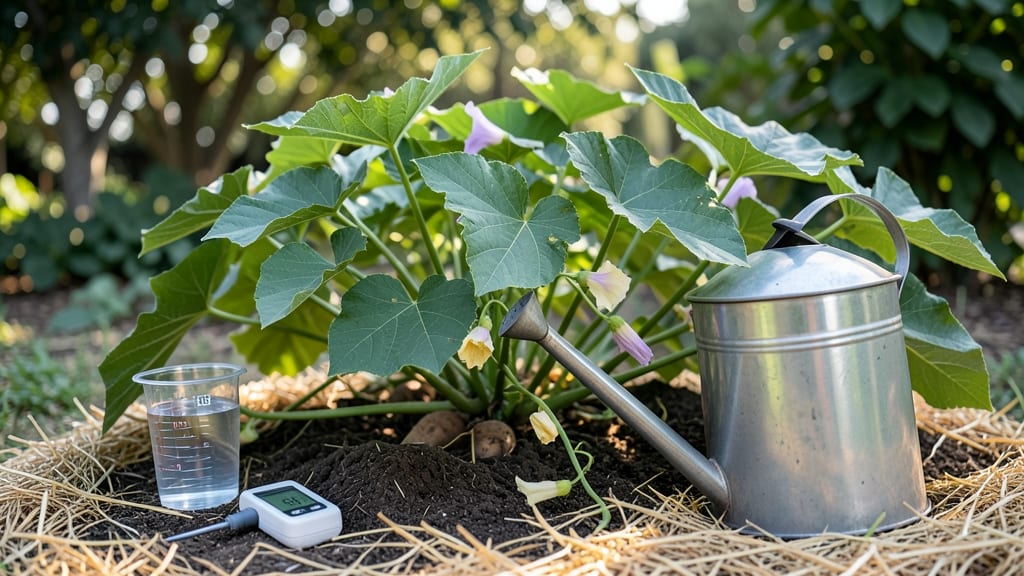
Sweet potatoes need 1 to 2 inches of water per week—but timing and technique make all the difference between plump tubers and rot.
Here’s the catch: these drought-tolerant 🍠 plants despise soggy soil, yet shallow watering leaves their roots scrambling. Too much, and you’ll dig up mushy tubers; too little, and they’ll shrivel before harvest. The key? Deep, infrequent watering that matches their growth stage—something most gardeners get wrong.
Whether you’re dealing with sandy soil that drains too fast or heavy clay that holds moisture like a sponge, I’ll break down the exact watering schedule by season, the signs your plants are thirsty (or drowning), and how to adjust without guessing.
By the end, you’ll know when to water, how deep to go, and which tools (like mulch or drip irrigation) can save you hours of trial and error. No more wasted effort—just sweet, firm harvests every fall.
Sweet potato watering schedule: exact inches and frequency by growth stage
Sweet potatoes thrive on consistent moisture but despise soggy soil. The key is deep, infrequent watering that keeps roots happy without inviting rot. Unlike their starchy cousins, sweet potatoes need a delicate balance—too little stunts growth, too much turns tubers to mush.
Let’s break it down by each critical growth stage so you can water like a pro.
From seedlings to vine spread, your watering approach must evolve. Young plants need gentle hydration, while mature vines demand deep soaks to fuel tuber development. Even the harvest stage has its own rules—cutting back water too soon can leave you with small, underdeveloped tubers.
Master these stages, and you’ll harvest plump, sweet potatoes every time.
Your seedlings (weeks 0-4) are the most delicate. Water lightly every 2-3 days with just 0.5-1 inch of water. Overwatering now can drown tender roots, while underwatering stresses young plants.
Aim to keep the top 1-2 inches of soil consistently moist—like a wrung-out sponge. Use a spray nozzle or drip irrigation to avoid disturbing the soil around fragile slips.
Once vines establish (weeks 4-8), increase water to 1-1.5 inches every 3-5 days. This stage is all about root expansion. Let the soil dry slightly between waterings—about 3-4 inches deep.
Check with your finger: if the topsoil feels dry but deeper layers stay moist, you’re on track. Mulch heavily now to lock in moisture and prevent crusting.
During active tuber development (weeks 8-12), deep watering becomes critical. Give your plants 1.5-2 inches every 5-7 days, ensuring moisture reaches 6+ inches deep. This encourages large, sweet tubers without waterlogging.
Morning watering is best—it prevents fungal diseases that thrive in damp evening soil. If your region hits 90°F+, increase frequency to every 4-5 days.
As harvest approaches (week 12+), reduce watering to 1 inch every 7-10 days. Let the topsoil dry slightly between waterings to harden tuber skins and prevent rot. This final stage is about curing the tubers naturally.
If you harvest while soil is too wet, your sweet potatoes may spoil quickly. Time it right, and you’ll get firm, glossy tubers ready for storage.
Pro tip: Use a moisture meter for precision. Stick it 3-4 inches deep during vine stages—aim for 40-50% moisture. If it reads higher, hold off watering. For organic gardeners, compost tea can improve soil moisture retention without synthetic additives.
Adjust your schedule based on rainfall too—skip watering if you’ve had 1 inch of rain in 3 days.
Watch for leaf color as your guide. Dark green leaves mean adequate moisture; yellowing edges signal underwatering. Meanwhile, wilted leaves that don’t recover by evening? You’re likely overwatering.
Sweet potatoes are drought-tolerant, but they’ll never forgive waterlogging. When in doubt, let the soil dry a little more than you think it needs.
🍠
Signs your sweet potatoes are overwatered (or underwatered) and how to fix it
Your sweet potatoes might look healthy above ground, but their tubers could be silently suffering from too much—or too little—water. Overwatered plants show yellowing leaves, mushy stems, and a foul smell near the base, while underwatered ones wilt by midday and develop crispy, brown edges.
Both conditions stress the plant, reducing your harvest potential.
I’ve learned the hard way that sweet potatoes need well-draining soil and deep watering—not frequent shallow soaks. The key is checking the soil 2 inches deep before watering.
If it’s damp, wait. If it’s bone-dry, it’s time to hydrate. Let’s diagnose your plants and fix these issues before your harvest season arrives.
How much water do sweet potatoes need? Aim for 1 to 2 inches per week, but adjust based on soil type and weather. Sandy soil drains fast—water every 2-3 days. Clay soil holds moisture—water every 5-7 days. Always water deeply in the morning to prevent fungal diseases.
Start by examining the leaves of your sweet potatoes. Yellowing leaves with brown spots at the edges often signal overwatering. This happens when roots suffocate in soggy soil, cutting off oxygen.
Meanwhile, wilting leaves that don’t perk up after watering point to underwatering. Both issues can be fixed by adjusting your watering routine and improving soil drainage.
For overwatered plants, reduce frequency and improve drainage by mixing in compost or perlite. Let the top 2 inches of soil dry out between waterings.
If your soil feels compacted, loosen it gently with a fork to help roots breathe. Underwatered plants need a deep soak—aim the hose or watering can at the base until water runs out the bottom of the hole where the plant sits.
Don’t ignore the vines either. Healthy vines should be green and sturdy. If they’re limp or blackened, it’s a red flag for rot or fungal infection, often caused by excess moisture.
Trim back any damaged vines and space plants 12-18 inches apart to improve airflow. This simple step can prevent future watering disasters.
Weather plays a huge role in how often you water. During hot, dry spells, increase frequency to every 2-3 days. In cool, rainy weather, cut back to once a week or less.
Use a moisture meter or the finger test to avoid guesswork. Stick your finger into the soil—if it’s dry past 2 inches, it’s time to water.
Finally, mulch your sweet potatoes with straw or wood chips to retain moisture without overwatering. Mulch acts like a sponge, releasing water slowly to the roots. This method keeps soil evenly moist and reduces the risk of tuber rot.
With these adjustments, your sweet potatoes will thrive, and you’ll enjoy a bountiful harvest of plump, sweet tubers.