
Watering
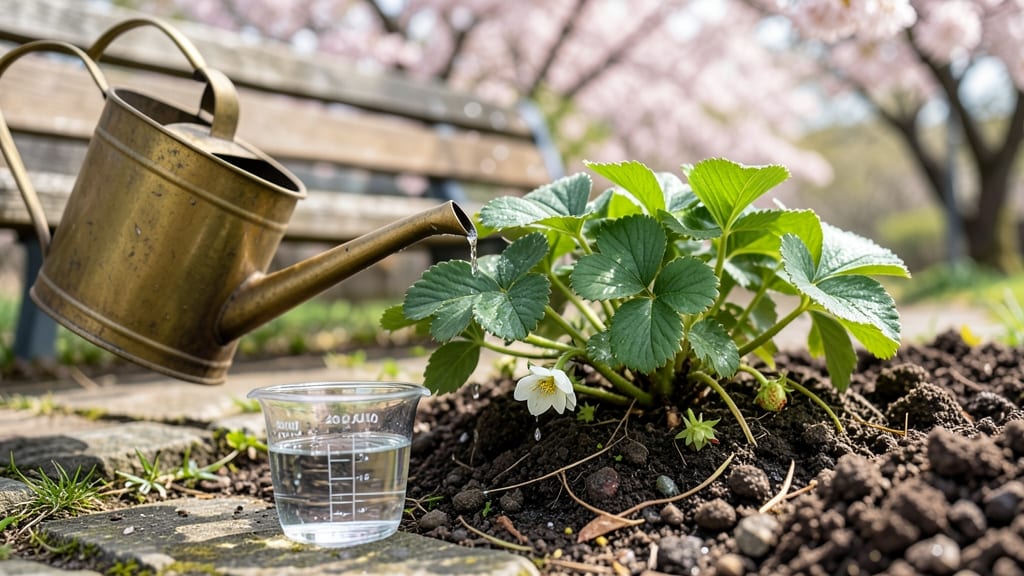
A strawberry plant needs consistent moisture—about 1-2 cups of water per plant every 3-5 days—to grow strong roots and produce sweet berries.
But here’s the catch: watering strawberries wrong can mean the difference between a bountiful harvest and wilted disappointment. Too little, and your plants struggle to survive; too much, and you risk root rot. The key is getting the balance right, especially as your plants move through different growth stages.
In this guide, I’ll break down the exact watering schedule for seedlings, flowering, and fruiting phases—plus how to adjust for dry climates or humid summers. You’ll learn how to read your soil, when to mulch for moisture retention, and the best times of day to water for maximum efficiency.
By the end, you’ll have a foolproof system to keep your 🍓 strawberries thriving without guessing. Let’s get started!
Strawberry plant watering needs by growth stage: exact weekly schedule
Strawberries are thirsty plants that need precise watering at every stage to produce sweet, juicy fruit. Unlike many vegetables, strawberries hate soggy roots but also struggle in drought. The key is consistent moisture—never letting the soil dry out completely while avoiding waterlogged conditions.
Let’s break down exactly how much water your strawberries need each week, from seedlings to dormancy, so you can adjust your watering routine like a pro.
Most gardeners overwater strawberries out of fear of underwatering, which leads to root rot and moldy crowns. The solution? Use the finger test: Stick your index finger 1 inch into the soil. If it feels dry, water deeply.
If it’s damp, wait another day. This simple trick saves strawberry plants from both thirst and suffocation. Let’s dive into the stage-by-stage schedule that’ll keep your plants thriving all season.
| Growth Stage | Weekly Water Needs | Soil Moisture Goal | Key Visual Cues |
|---|---|---|---|
| Seedlings (First 4 Weeks) | 1-1.5 inches per week (3-4 times) | Moist but not soggy | Wilted leaves = needs water; yellowing = overwatered |
| Vegetative Growth (Weeks 5-8) | 1.5-2 inches per week (4-5 times) | Evenly moist 1-2 inches deep | Drooping leaves = thirsty; mold on crown = too much |
| Flowering Stage (Weeks 9-12) | 2-2.5 inches per week (5-6 times) | Deeply moist at root level | Dropped buds = underwatered; gray mold = overwatered |
| Fruiting Stage (Weeks 13-16) | 2.5-3 inches per week (6-7 times) | Consistently moist, no puddles | Small, hard berries = thirsty; split berries = too much |
| Dormant Stage (Fall-Winter) | 0.5-1 inch every 2 weeks | Lightly moist, no standing water | Shriveled leaves = too dry; blackened crown = rot |
During the seedling stage, strawberries need gentle but frequent watering—about 1-1.5 inches per week. This helps their shallow roots establish without drowning. I water mine every other day in the morning, using a spray nozzle to avoid disturbing the soil.
If the top inch of soil feels dry, it’s time to water again. Overwatering now can cause seedling rot, so always let excess water drain away.
The vegetative growth stage (weeks 5-8) demands more water—1.5-2 inches weekly. This is when your strawberries build leafy canopies and develop runners. I increase frequency to 4-5 times per week, focusing on deep watering rather than light sprinkles.
A drip irrigation system works wonders here, delivering water slowly at the base of the plant where roots thrive. Mulch with straw to lock in moisture and keep soil cool.
When flowering begins (weeks 9-12), strawberries need 2-2.5 inches of water weekly. This is critical for fruit set—without enough water, buds drop off, and you’ll end up with fewer berries. I water every morning and check for drooping leaves by midday.
If leaves curl or wilt, it’s a sign to water immediately. Avoid wetting the flowers to prevent gray mold, a common fungal issue.
The fruiting stage (weeks 13-16) is the most demanding—your strawberries need 2.5-3 inches of water weekly. This is when berry size and sweetness are determined. I use a soaker hose to deliver water slowly and deeply, ensuring roots get hydration without waterlogging. Split berries?
That’s a sure sign of too much water too quickly. To fix it, reduce frequency slightly and water in shorter sessions.
As fall approaches and strawberries enter dormancy, water needs drop dramatically. Cut back to 0.5-1 inch every 2 weeks to prevent root rot in cold, wet soil.
I stop watering entirely if rain provides enough moisture. Mulch heavily with straw or leaves to insulate roots. Blackened crowns or mushy stems in winter mean overwatering—a common mistake when gardeners think dormant plants need more hydration.
Pro tip: Morning watering is non-negotiable. Watering
Signs of overwatering vs. underwatering strawberry plants (with fixes)
Strawberry plants are surprisingly delicate when it comes to water—too much or too little can turn your lush green foliage into a sad, struggling mess. Overwatering creates soggy soil that suffocates roots, while underwatering leaves plants dehydrated and stunted.
Both mistakes show up in your strawberries' leaves, stems, and overall growth patterns.
I’ve seen firsthand how yellow leaves or mushy crowns can signal trouble, but the fixes are simple once you know what to look for. Let’s break down the key differences so you can rescue your plants before they’re beyond saving.
Overwatering vs. Underwatering Strawberries
Overwatering
- Yellow leaves (especially lower leaves)
- Mushy, rotting crown or roots
- Fungal growth (mold, mildew)
- Slow growth despite frequent watering
Fix:
Stop watering immediately. Let soil dry completely between waterings. Improve drainage with sand or perlite.
Underwatering
- Dry, crispy leaf edges
- Wilted leaves that don’t perk up
- Stunted growth or small leaves
- Hard, dry soil around roots
Fix:
Water deeply once a week (1-2 cups per plant). Use mulch to retain moisture. Water in the morning to reduce evaporation.
One of the easiest ways to diagnose the issue is by checking your soil moisture. Stick your finger about 1 inch deep—if it’s damp, you’re likely overwatering. If it’s bone-dry, it’s time to hydrate. Strawberries prefer soil that’s consistently moist but not soggy, especially during fruiting.
For overwatered plants, I’ve had success with a 50/50 mix of potting soil and perlite to improve drainage. If your plants are underwatered, focus on deep watering sessions rather than light, frequent sprinkles. This encourages roots to grow deeper, making them more resilient.
Don’t forget to adjust your watering based on the season. In summer, strawberries may need daily watering, while winter’s chill slows their thirst to every 10-14 days. Pay attention to your plants—they’ll tell you what they need if you know what to watch for.
If you catch these signs early, your strawberries can bounce back quickly. The key is consistency—neither too much nor too little. With the right balance, you’ll be enjoying juicy, sweet berries in no time! 🍓