
Watering
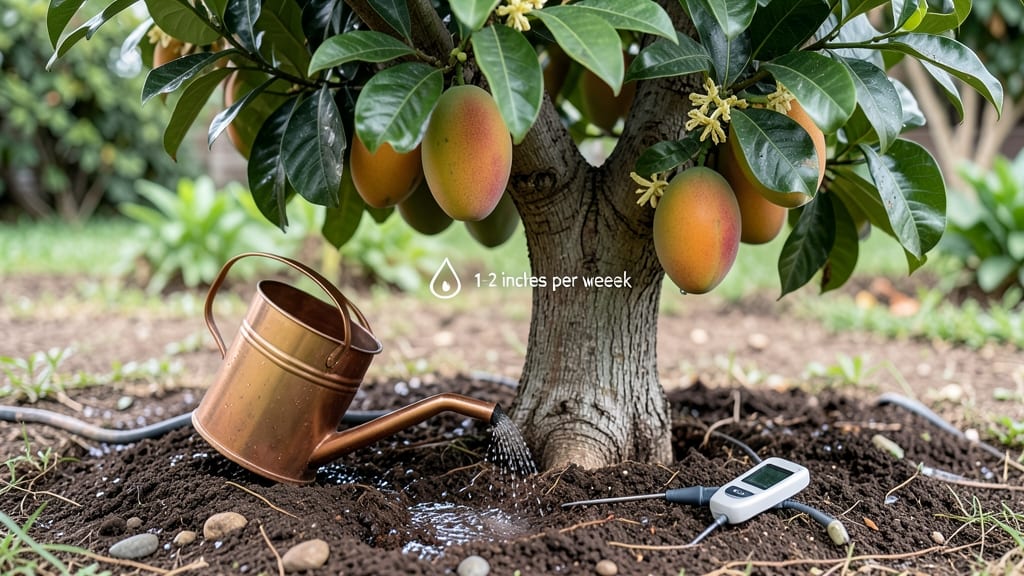
A mango tree needs deep, consistent watering—about 15-20 gallons per week for mature trees in hot climates, but the real challenge is getting it right as seasons shift.
Struggling to keep your mango tree lush and fruitful? Watering is the #1 factor that determines whether your tree thrives or withers—yet most gardeners get it wrong due to seasonal changes and soil conditions.
In the dry heat of summer, your 🥭 mango tree might beg for water daily, but overdoing it drowns roots and invites fungal diseases. Meanwhile, winter’s lighter needs catch even experienced growers off guard.
Below, I break down the exact watering schedule by season, how to check soil moisture like a pro, and the 3 signs your tree is thirsty—or drowning—so you can adjust before it’s too late.
Mango tree watering requirements by season: exact monthly guidelines
Watering your mango tree correctly is the difference between a lush, fruit-bearing giant and a struggling, weak plant. Unlike many trees, mangoes demand precise moisture control, especially during their fruiting stages. The challenge? Adjusting for seasonal shifts—from monsoon deluges to scorching dry spells.
I’ve grown mangoes in both tropical Florida and subtropical California, and I’ve learned that one-size-fits-all watering fails. Let’s break it down by month so you can tailor your approach.
First, understand that mango roots spread deep (up to 6 feet) but need consistent topsoil moisture to thrive. In hot, dry seasons, your tree may need daily watering, while in monsoon months, you’ll need to prevent waterlogging.
The key is soil moisture checks: stick your finger 2-3 inches deep—if it’s dry, water; if damp, wait. For container-grown mangoes, this rule applies even more strictly since pots dry out faster.
🌱
| Season | Month | Watering Frequency | Water Amount (Gallons) | Soil Moisture Goal | Climate Adjustments |
|---|---|---|---|---|---|
| Monsoon | June | Every 5-7 days | 15-20 | Damp (not soggy) | Reduce if heavy rains |
| July | Every 7-10 days | 15-20 | Damp (not soggy) | Monitor for fungal risks | |
| August | Every 7-10 days | 15-20 | Damp (not soggy) | Avoid waterlogging | |
| September | Every 7-10 days | 15-20 | Damp (not soggy) | Transition to dry season | |
| Dry Season | October | Every 3-5 days | 20-25 | Moist (2-3" deep) | Increase for containers |
| November | Every 4-6 days | 15-20 | Moist (2-3" deep) | Reduce slightly | |
| December | Every 5-7 days | 10-15 | Moist (1-2" deep) | Light watering | |
| January | Every 7-10 days | 10-15 | Moist (1-2" deep) | Minimal watering | |
| Fruiting Season | February | Every 3-4 days | 20-25 | Moist (3" deep) | Critical for fruit set |
| March | Every 3-4 days | 20-25 | Moist (3" deep) | Daily in heatwaves | |
| April | Every 2-3 days | 25-30 | Moist (3-4" deep)
Signs your mango tree is overwatered or underwatered (with fixes)Your mango tree may look lush, but subtle watering mistakes can silently sabotage its health. Overwatering and underwatering both trigger distinct symptoms—often before it's too late to save the tree. The key is learning to read your tree's signals and adjusting before stress sets in. First, check the soil moisture by sticking your finger 2-3 inches deep. If it feels damp, hold off on watering. If dry, it's time to hydrate. But visual cues like leaf color and leaf drop often appear first, giving you an early warning system. ⚠️ Critical Watering WarningMango trees need 15-20 gallons of water per deep soak for mature trees, but frequency varies by season. In summer, water 2-3x weekly; in winter, reduce to monthly. Containers dry faster—check soil daily in hot weather. Yellowing leaves often signal overwatering, while brown, crispy edges mean underwatering. Root rot from excess moisture is irreversible—act fast if you spot mushy stems or fungal growth. If your mango tree leaves turn yellow but stay attached, you're likely overwatering. This chlorosis occurs when roots suffocate in soggy soil, blocking nutrient uptake. Leaf drop can also happen if roots can't absorb water fast enough, but check for pests first—aphids or mites cause similar shedding. For underwatered trees, look for dry, brittle leaves that curl at the edges. The tree may also drop fruit prematurely or produce small, hard mangos. Deep watering is critical—aim for the root zone, not just surface moisture. Use a soaker hose or drip irrigation to encourage deep root growth. To fix overwatering, improve drainage by amending soil with perlite or sand. If root rot has set in, prune affected roots and repot in fresh, well-draining mix. For underwatered trees, mulch heavily (3-4 inches) to retain moisture and reduce evaporation. Long-term, test your soil every 6 months to monitor moisture retention. Mango trees thrive in slightly acidic soil (pH 5.5-6.5) with good aeration. Adjust your watering schedule based on seasonal heat—trees in full sun need more frequent watering than those with afternoon shade. Remember: Consistency is key. Mango trees hate fluctuating moisture, so stick to a schedule once you've dialed it in. With the right balance, your tree will reward you with juicy, sweet fruit for years to come. 🥭 |