
How To
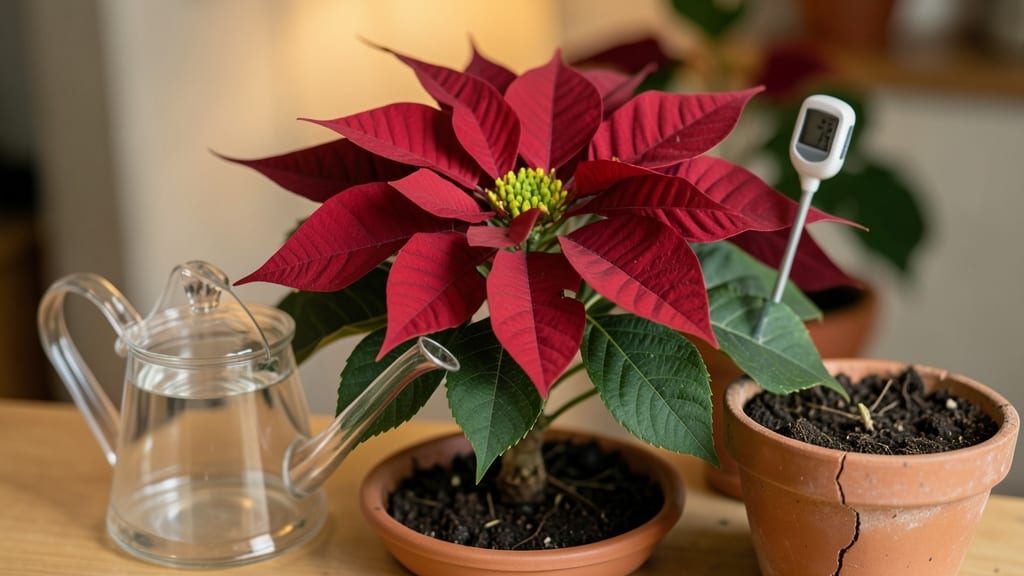
The 1-2 inch dry test: poinsettia watering schedule explained
Mastering the watering schedule for poinsettias starts with one simple trick: the 1-2 inch dry test. This foolproof method ensures your poinsettia stays hydrated without drowning its roots. Unlike thirsty succulents, poinsettias prefer consistent moisture—but too much water turns their vibrant leaves into a sad, mushy mess.
The key? Checking soil moisture before watering, not sticking to a rigid calendar.
Poinsettias thrive in bright indirect light and moderate humidity, but their water needs shift with seasons. In summer’s heat, you’ll water more often, while winter dormancy slows evaporation.
Even the soil type matters—sandy soil dries faster than rich potting mix. Let’s break down the exact steps to keep your poinsettia’s roots happy year-round.
How Much Water for Poinsettias: Step-by-Step Guide
- Step 1: Insert your finger 1-2 inches into the soil. If it feels dry at this depth, it’s time to water.
- Step 2: Water until excess drains from the pot’s bottom. Poinsettias hate soggy roots!
- Step 3: Empty the saucer 15 minutes later to prevent root rot from standing water.
- Step 4: Adjust frequency: summer = weekly, winter = bi-weekly.
- Step 5: Use room-temperature water to avoid shocking the roots.
For sandy soil or small pots, you may need to water every 5-6 days in summer, while larger containers with peat-based mixes can go 7-10 days between waterings.
Always check the soil’s moisture level—never guess! A quick finger test beats relying on memory, especially when indoor humidity drops in winter.
Watch for visual cues like wilting leaves or dry soil pulling away from pot edges—these mean your poinsettia is thirsty. On the flip side, yellowing leaves or mushy stems signal overwatering. The 1-2 inch rule keeps you in the sweet spot between drought and decay.
Seasonal shifts demand attention. During active growth (spring-fall), poinsettias drink more, while winter dormancy slows their metabolism. Reduce watering by half in December-January unless your home stays toasty. Pro tip: Group plants together to create a microclimate with stable humidity—poinsettias love company!
Misting the leaves lightly once a week mimics their tropical origins, but avoid soggy foliage. Pair this with bright indirect light (like an east-facing window) to prevent leggy growth. When in doubt, underwater slightly—poinsettias forgive occasional dry spells better than they forgive soggy roots.
Soil type plays a sneaky role. Peat-heavy mixes retain moisture longer, while cactus blends dry out fast. If your poinsettia’s pot lacks drainage holes, upgrade it—root rot is the silent killer of these holiday stars. A terracotta pot also helps wick away excess moisture.
Here’s a quick seasonal cheat sheet:
- Spring: Water when top 1 inch feels dry
- Summer: Water when top 2 inches feel dry
- Fall: Reduce to 10-day intervals as growth slows
- Winter: Water only when soil is completely dry (every 2-3 weeks)
Remember: Poinsettias are tropical but adaptable. With the 1-2 inch dry test, you’ll nail their watering needs—no more guesswork, just vibrant red bracts all season long. 🎄
Signs your poinsettia is overwatered or underwatered (with fixes)
Your poinsettia’s vibrant red bracts can quickly turn into a sad, wilted mess when watering goes wrong. The key is spotting the early warning signs—yellow leaves, drooping stems, or crispy edges—before they become irreversible. Let’s decode these symptoms and fix them fast.
Poinsettias hate soggy roots but also wilting from thirst. Overwatering causes root rot, while underwatering leads to leaf drop and stunted growth. The good news?
Both issues are fixable with the right adjustments. Start by checking the soil moisture with your finger—it should feel damp but not drenched.
| Issue | Signs | Fix |
|---|---|---|
| Overwatered | Yellow leaves, mushy stems, foul smell | Stop watering, repot in fresh well-draining soil, trim dead roots |
| Underwatered | Dry, crispy edges, drooping leaves, slow growth | Water deeply until it drains, place in humid spot, avoid direct sun |
| Root Rot | Black stems, wilting despite wet soil | Remove plant, trim rotten roots, replant in sterile soil |
| Pests (from stress) | Sticky leaves, white flies, spider mites | Wipe leaves with soapy water, isolate plant, use neem oil |
If your poinsettia leaves are turning yellow, it’s often a sign of overwatering. Let the top 1-2 inches of soil dry out between waterings, and ensure the pot has drainage holes. For underwatering, water thoroughly until it exits the drainage hole, then empty the saucer to prevent soggy roots.
Drooping stems? This could mean either too much water (causing root suffocation) or not enough (leaving roots parched). Try the finger test: stick your finger 1 inch into the soil.
If it’s dry, water; if it’s wet, wait. Adjust your watering schedule based on your home’s humidity—dry air speeds up moisture loss.
For crispy leaf edges, increase humidity by placing the pot on a tray of pebbles with water (but keep the pot elevated). Mist the leaves lightly in the morning, but avoid wetting the colored bracts too much, as this can cause staining.
A humidifier near the plant also works wonders during winter’s dry air.
Remember, poinsettias are tropical plants that thrive on consistency. Stick to the 1-2 inch dry test, and your plant will reward you with bold, vibrant blooms all season long. 🎄