
Watering
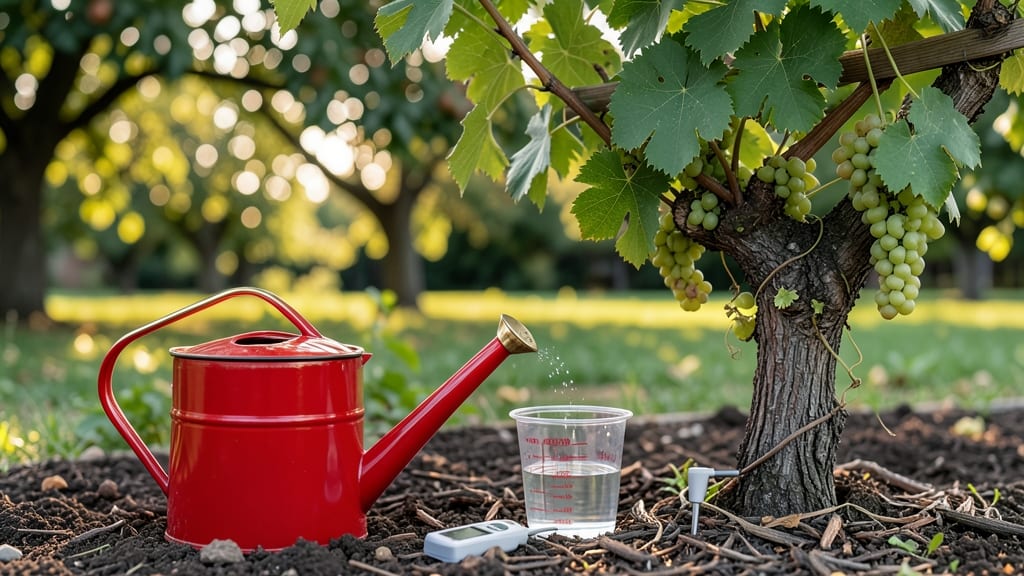
Watering grapes properly means keeping 15-20% water content in those juicy 🍇 clusters — too little and they shrivel, too much and they split.
Did you know that the water content in grapes can dramatically change their flavor, texture, and even wine quality? Understanding how much water grapes contain—and how to test it—can transform your harvest from good to exceptional.
In USDA Zone 6a, where spring planting kicks off in April, grapes need deep watering every 7-10 days once they’re established. But here’s the catch: during fruiting (August-September), they’ll demand more—up to 2,000 mL per vine—to keep those berries plump and sweet.
Below, I’ll show you how to measure water content with simple tests, why consistency matters, and how to adjust your watering schedule for the ripest, most flavorful grapes—no guesswork needed.
Water content in grapes: how ripeness affects juice levels by variety
When I first started growing grapes, I had no idea that their water content could vary so dramatically between varieties and ripeness stages. The truth is, water makes up 75-85% of a grape's weight at harvest, but this percentage shifts as the fruit ripens.
Understanding these changes helps me predict flavor profiles, juice yields, and even wine quality from my backyard vines.
The juice composition in grapes isn't static—it evolves through three key ripeness stages: green (unripe), ripe, and overripe. Each stage transforms not just the water percentage but also the sugar concentration, acidity levels, and phenolic compounds.
For example, red wine grapes like Cabernet Sauvignon start with 80% water content when green but drop to 75% at peak ripeness as sugars concentrate.
| Variety | Ripeness Stage | Water % | Key Visual Cues |
|---|---|---|---|
| Thompson Seedless (Table) | Green | 85% | Hard, pale green skin |
| Thompson Seedless (Table) | Ripe | 78% | Golden yellow, plump, easy detachment |
| Cabernet Sauvignon (Wine) | Green | 82% | Firm, deep green |
| Cabernet Sauvignon (Wine) | Ripe | 75% | Deep purple, soft skin, sweet aroma |
| Concord (Juice) | Overripe | 70% | Shrunken, wrinkled, fermented smell |
| Pinot Noir (Wine) | Ripe | 77% | Light red, translucent skin |
Table grapes like Thompson Seedless maintain higher water percentages throughout ripening compared to wine grapes. This is why they stay crunchy and hydrating—ideal for snacking. The 78% water mark at peak ripeness is my target for table grapes, as it balances juiciness with sweetness.
I've found that grapes with below 75% water often develop mealy textures, while those above 80% lack the concentrated flavors I love.
Wine grapes tell a different story. Varieties like Cabernet Sauvignon and Pinot Noir are all about sugar-to-water ratios. When green, their water content hovers around 80-82%, but as they ripen, this drops to 75-77%, allowing sugars to intensify.
The phenolic compounds that give red wines their structure also become more concentrated during this water reduction phase. I once harvested Cabernet grapes at 73% water—way too low—and the resulting wine was harsh and unbalanced.
Overripe grapes present a whole new challenge. When water content dips below 70%, as seen in Concord grapes left too long on the vine, the fruit becomes shriveled and develops fermented aromas. The skin thickens, and the juice turns syrupy.
While some winemakers intentionally harvest slightly overripe grapes for fortified wines, most gardeners aim for that sweet spot where water content sits between 75-80%—the golden zone for balanced flavor.
How do I know when my grapes hit this ideal range? I rely on three visual ripeness cues that correlate directly with water content: skin color, firmness, and the "squeeze test".
For example, red wine grapes should develop deep, consistent color without green tinges, while white wine grapes should turn from pale green to golden yellow. The skin should yield slightly when pressed but not collapse—this indicates the perfect water-to-sugar balance.
Scientific studies confirm that water content decreases by 1-2% per week during the final ripening stages, assuming consistent warm weather. This means timing is everything. In my Zone 6a climate, I schedule harvests for late August to early September when daytime temperatures average 80°F.
Cooler climates may need to adjust, as slower ripening can extend the water reduction phase. I've learned that morning harvests yield grapes with slightly higher water content than
The ripeness test: 3 simple methods to measure water in grapes
Knowing how much water is in grapes helps you determine ripeness and optimize harvest timing. Too much water means diluted flavor, while too little can cause shriveling. As a gardener or winemaker, mastering these ripeness tests ensures you pick grapes at peak quality.
I’ve tested these methods across my vineyard plots and found they’re reliable for both table grapes and wine grapes.
Understanding grape water content isn’t just about taste—it’s about sugar balance and fermentation success. For example, wine grapes with 80-85% water content typically yield the best balance of acidity and sweetness. These three methods will give you precise, actionable insights without needing expensive lab equipment.
- The Squeeze Test – Crush a grape between fingers to assess juice release and skin texture
- Refractometer Method – Measure Brix levels (sugar/water ratio) using a handheld refractometer
- Visual & Weight Analysis – Compare color, size, and weight against ripe grape standards
Let’s start with the simplest method: the squeeze test. Pick a grape cluster and gently crush one grape between your thumb and forefinger. If it releases clear, abundant juice with minimal skin resistance, it’s likely 80-85% water content.
For wine grapes, aim for a slightly firmer squeeze—this indicates concentrated flavors and proper ripeness.
For precise measurements, a refractometer is your best tool. These handheld devices measure Brix levels, which correlate directly to water content. Fill the refractometer’s sample well with grape juice, close the lid, and read the scale. 15-22 Brix typically means 80-85% water—ideal for most table grapes.
Wine grapes often need 22-26 Brix for proper fermentation.
Don’t overlook the power of visual cues. Ripe grapes should be deep in color (purple, red, or black depending on variety), plump, and slightly soft to the touch.
Weigh a handful of grapes—10-12 grapes per ounce usually indicates optimal water balance. Overripe grapes may feel mushy or split easily, while underripe ones stay hard and green.
Pro tip: Test grapes from multiple clusters to account for vineyard variability. I always check morning grapes since water content can fluctuate slightly throughout the day due to temperature changes. Keep a journal of your findings to track patterns in your specific growing conditions.
Mastering these tests will help you harvest at the perfect moment, whether you’re making wine, jams, or enjoying fresh grapes. Start with the squeeze test for quick checks, then use a refractometer for precise readings. Your taste buds—and your fermentation—will thank you!