
Light Requirements
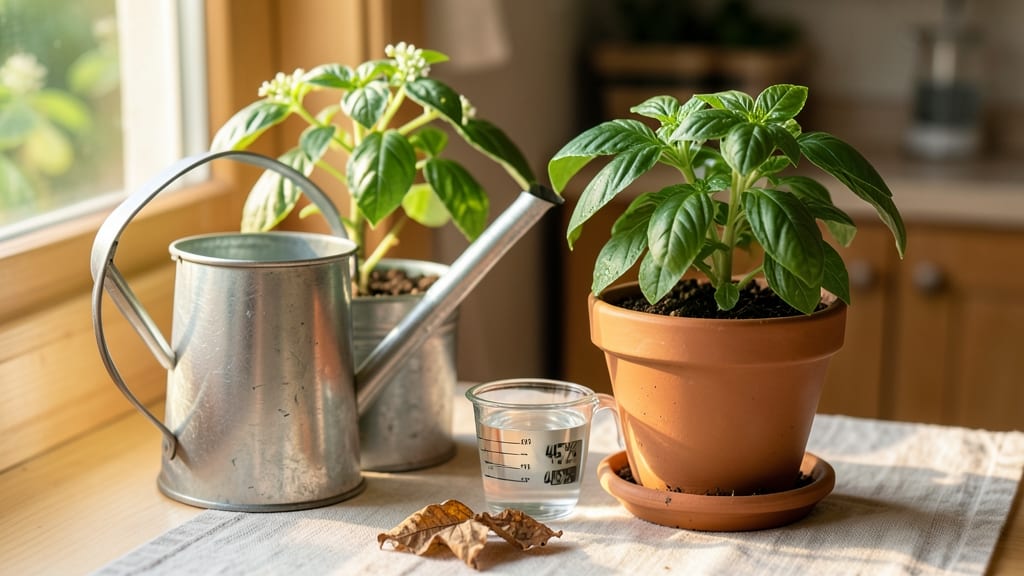
How often do herbs need to be watered? They require watering every 2-7 days, depending on the type, pot size, and how fast your soil dries out.
Overwatering or underwatering herbs can turn your kitchen garden from fragrant to flopped—but the finger-poke method reveals the exact moisture balance your basil, rosemary, and thyme crave.
Too little water and your herbs wilt, turning crispy at the edges. Too much, and you’ll drown their roots in soggy soil, inviting mold and rot. The key? Checking moisture before you water.
In this guide, I’ll break down the perfect watering schedule for different herbs, how to tell when they’re thirsty (without guessing), and seasonal tweaks to keep your plants thriving all year.
The finger-poke method: exact watering schedule for different herbs
Mastering the finger-poke method transforms guesswork into precision when watering your herb garden. Instead of rigid schedules, this hands-on approach lets you feel the soil moisture directly—preventing both soggy roots and thirsty plants.
The key? Insert your finger 1-2 inches deep into the soil. If it feels dry, it's time to water.
Herbs vary wildly in their thirst. Basil, for example, wilts faster than rosemary because it thrives in consistently damp soil, while rosemary's Mediterranean roots prefer dry spells. Understanding these differences keeps your plants lush and productive—not just surviving.
| Herb | Soil Test | Watering Interval | Seasonal Adjustments |
|---|---|---|---|
| Basil | Dry at 1" depth | Every 2-3 days | Reduce to every 4 days in winter |
| Rosemary | Dry at 2" depth | Every 7-10 days | Increase to every 14 days in summer heat |
| Parsley | Dry at 1.5" depth | Every 5-7 days | Water daily in extreme heat |
| Thyme | Dry at 2" depth | Every 7-10 days | Reduce to every 2 weeks in winter |
| Mint | Dry at 1" depth | Every 2-3 days | Increase frequency in containers |
For basil, check soil moisture daily during summer's peak heat. This tender herb needs consistent moisture to prevent bolting (when it flowers prematurely and loses flavor).
Stick your finger in the soil near the base—if it feels like a dry sponge, water thoroughly until it drains from the pot's bottom.
Meanwhile, rosemary and thyme are drought-tolerant Mediterranean natives. Their roots store water, so they prefer infrequent deep watering. Wait until the soil is bone-dry at 2 inches deep before watering. Overwatering these herbs leads to root rot, which is irreversible.
Seasonal shifts demand flexibility. In summer's heat, herbs evaporate moisture faster—parsley may need daily checks, while oregano might require watering every 3-4 days. Conversely, winter's cooler temps slow evaporation, so reduce watering to every 10-14 days for most herbs.
Humidity plays a sneaky role too. In humid climates, like the Southeast U.S., herbs stay moist longer, so extend intervals by 1-2 days. Conversely, in arid regions, like Arizona, water more frequently to compensate for rapid moisture loss.
A simple rule: adjust your schedule based on weather forecasts and your local climate.
Containers complicate things because they dry out faster than in-ground soil. If your herbs are potted, water them 20-30% more often than in-ground plants. For example, a potted basil might need watering daily in summer, while in-ground basil thrives on every-other-day watering.
Always check the soil—never rely on a schedule alone.
Pro tip: Water in the early morning (before 10 AM) to reduce evaporation and fungal risks. Avoid evening watering, as damp foliage overnight invites powdery mildew. Use a watering can with a narrow spout to direct moisture to the soil, not the leaves.
Watch for wilting leaves as a last-resort signal. By the time herbs wilt, they're already stressed. Prevent this by staying ahead with the finger-poke method. With practice, you'll develop an instinct for when each herb needs a drink—no guesswork required.
Remember: healthy herbs are happy herbs. The finger-poke method ensures you're watering with confidence, not chaos. Soon, your kitchen garden will be the envy of the neighborhood—fragrant, flavorful, and perfectly hydrated.
Signs your herbs are overwatered or underwatered (and how to fix it)
Your herbs are silently screaming for help when their leaves turn yellow or stems wilt—but these visual cues often go unnoticed until it's too late. Overwatering and underwatering share similar symptoms, making it tricky to diagnose without knowing what to look for.
The key is checking the soil moisture and leaf condition before assuming your watering schedule is perfect.
For example, droopy basil leaves might mean thirst, but they could also signal root rot from soggy soil. Meanwhile, crispy parsley edges scream underwatering, while moldy soil screams overwatering. Each herb has unique needs—rosemary hates damp roots, while cilantro wilts faster than you can say "pesto."
Let's decode these clues so you can rescue your herbs before they throw in the trowel.
🚨 Watering Warning!
Herbs need: 1-2 inches of water per week, but potted herbs dry faster—check soil daily in summer. Morning watering prevents fungal growth, while evening water risks root rot. Finger-poke test: Insert finger 1 inch deep—if dry, water; if soggy, wait.
Seasonal rule: Spring/Fall: Every 3-5 days | Summer: Daily check | Winter: Bi-weekly. Drainage holes are non-negotiable!
Yellowing leaves are the most common red flag, but don't panic—it's not always water-related. Check the leaf color pattern: Uniform yellow often means overwatering, while brown edges signal underwatering.
For basil, yellow leaves with crispy edges? That's a sunburn + thirst combo. Thyme, however, turns yellow from overwatering but stays crispy from underwatering—confusing, right?
Mold or fungus on soil or stems is a clear overwatering sign.
If you see white, fuzzy growth or a musty smell, your herbs are drowning. Pull affected plants immediately, repot in fresh well-draining soil, and let the roots dry out for 24 hours before watering again. Rosemary and oregano are especially prone to this—never let their pots sit in saucers of water.
Wilted stems don't always mean thirst—sometimes they're overwatered. Press a stem: if it snaps easily, it's underwatered. If it's mushy, it's rotting from too much water. Mint and parsley wilt fastest, so check their soil daily in summer.
For wilting herbs, trim the stems at a 45-degree angle, place in room-temperature water for 2 hours, and replant in drier soil.
Fixing underwatered herbs is simpler: water deeply until it drains from the bottom, then mulch around the base to retain moisture.
For overwatered herbs, reduce frequency and improve drainage by adding perlite or sand to the soil. Group herbs by needs—keep drought-tolerant rosemary away from moisture-loving cilantro—to avoid mixed signals in your watering routine.
Remember, consistency is key. Herbs prefer steady moisture over sporadic drenching. Use a moisture meter for accuracy, and adjust based on pot size, climate, and season. With these fixes, your herbs will bounce back faster than you can say "harvest time!" 🌱