
Light Requirements
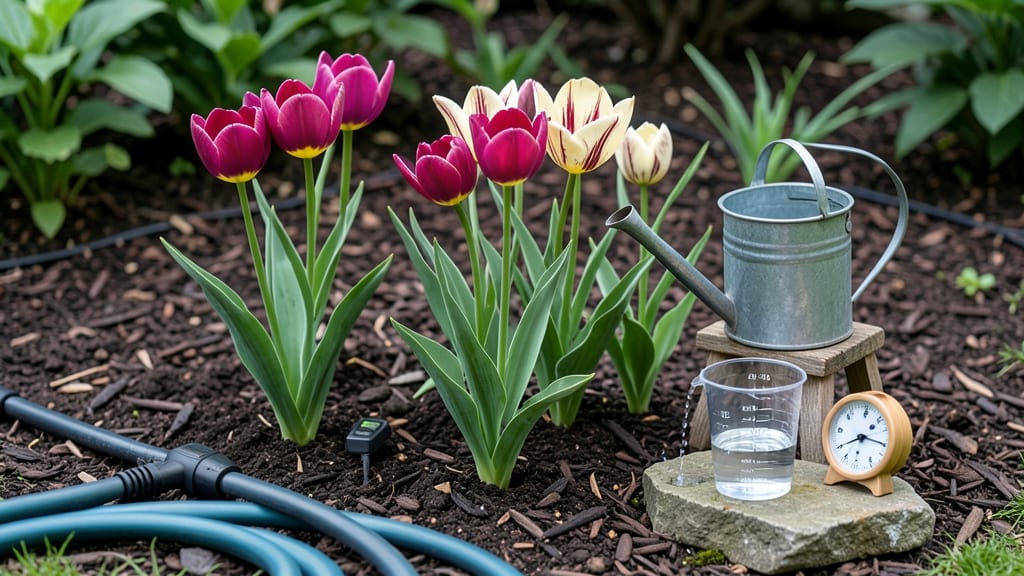
How often do you need to water tulips? The answer is once a week—but the real secret lies in checking soil dryness instead of guessing.
Struggling to keep your 🌷 blooming year after year? Overwatering or underwatering can silently kill these delicate bulbs—so knowing exactly when to water is the secret to stunning spring displays.
Most gardeners water too much, drowning tulips in soggy soil that rots their roots. Others underwater, leaving bulbs shriveled and flowers sparse. The trick? A simple soil test that tells you when it’s time to water—without drowning or neglecting them.
In this guide, I’ll break down the perfect watering schedule by season, how to read your soil like a pro, and the warning signs that your tulips are thirsty or drowning. By the end, you’ll know exactly when to reach for the hose.
The perfect watering schedule for tulips: when soil dryness means it's time
Tulips are delicate perennials that thrive on consistent moisture—but too much or too little water can spell disaster. The key lies in understanding soil dryness and adjusting your watering based on their growth stages.
Unlike many plants, tulips store energy in their bulbs, making them sensitive to waterlogged soil or dehydration.
Most gardeners water tulips once a week during active growth, but this changes dramatically when they enter dormancy. The secret? Checking soil moisture at the right depth—never guessing.
In my Zone 6a garden, I’ve learned that overwatering in fall leads to bulb rot, while skipping water in spring results in weak stems that flop before blooming.
Climate matters too. In dry climates (like Southern California), I water every 5-7 days in spring, while in humid regions (like the Pacific Northwest), I wait until the top 2 inches of soil feel dry. Let’s break down the science-backed schedule that keeps my tulips thriving year after year.
| Growth Stage | Watering Frequency | Soil Moisture Test | Notes |
|---|---|---|---|
| Dormant (Fall/Winter) | Monthly (minimal) | Top 4" dry | Reduce watering after first frost |
| Sprouting (Early Spring) | Weekly (deep soak) | Top 2" dry | Critical for stem strength |
| Flowering (Spring) | Every 5-7 days | Top 1-2" dry | Avoid wetting foliage |
| Post-Bloom (Late Spring) | Bi-weekly (reduce) | Top 3" dry | Allow leaves to yellow naturally |
| Summer Dormancy | Monthly (if no rain) | Top 4" dry | Prevents bulb rot |
During the dormant stage (fall through winter), tulips need minimal water—just enough to keep the soil from drying out completely. I’ve seen bulb rot in gardens where well-meaning gardeners watered weekly during this period. The rule? Only water if the top 4 inches of soil feel bone-dry.
When sprouts emerge in early spring, that’s when you ramp up watering. This is the most critical stage for stem development. I water deeply once a week, ensuring the soil stays moist but never soggy.
A simple finger test—stick your finger 2 inches into the soil—tells me if it’s time to water. If it feels dry, it’s time!
The flowering stage demands slightly more frequent watering, but consistency is key. I water every 5-7 days, always in the morning to prevent fungal diseases. Overhead watering can damage petals, so I use a soaker hose to deliver water directly to the soil.
This method also reduces evaporation, which is a game-changer in hot climates.
After blooming, many gardeners make the mistake of stopping water entirely. But tulips need 6-8 weeks of leaf growth to recharge their bulbs for next year. I reduce watering to bi-weekly but keep the soil moist until the leaves turn yellow and die back naturally.
This is when the bulb stores energy for next spring’s showstopping blooms.
Adjusting for your climate zone is essential. In arid regions, I water more frequently in spring, while in cooler, wetter zones, I might skip watering entirely in winter.
Always check the soil type—sandy soil dries out faster than clay, so I water sandy beds 2-3 days earlier than clay-based ones.
One final tip: Mulch matters. A 2-inch layer of organic mulch (like straw or shredded leaves) helps retain moisture and regulates soil temperature. Just avoid piling mulch against the bulb stems, as this can trap moisture and cause rot.
With this schedule, my tulips bloom earlier and more vigorously every year.
3 Soil dry test tricks to water tulips like a pro (without guessing)
Watering tulips can feel like a guessing game—too much and you risk rotten bulbs, too little and they wilt before blooming. The key is checking soil moisture at the right depth and frequency.
I’ve tested these three foolproof methods over years of growing tulips, and they’ll help you avoid the dreaded "guess-and-pray" approach. Start with the simplest finger test and graduate to tools if needed.
Tulips thrive with moderate moisture, but their needs change with seasons. For example, during spring blooming, the top 2-3 inches of soil should feel damp, while summer dormancy means watering only when the soil is bone-dry down to 4 inches.
The trick? Adjust your tests based on your soil type—sandy soil dries faster than clay, so check more often if you’ve got the latter.
🌱 How Often Do You Need to Water Tulips?
- 🌱 Spring (Blooming): Every 5-7 days (1-2 inches deep)
- 🌿 Summer (Dormant): Every 10-14 days (3-4 inches deep)
- 🌧️ Fall (Planting): Every 7-10 days (1-2 inches deep)
- ❄️ Winter (Dormant): Monthly (if no snow)
Note: Adjust for rainfall—skip watering if soil is naturally moist.
First up: the finger test. Stick your index finger 1-2 inches into the soil near your tulips. If it feels dry at the first knuckle, it’s time to water. Pro tip: Use your other hand to gently squeeze a clump of soil—if it crumbles easily, you’ve waited too long.
This method works best in loamy soil, which holds moisture without staying soggy. For sandy soil, check every 3-4 days, as it drains faster.
Next, try the trowel check for a deeper read on moisture. Dig a small hole (about 4 inches deep) beside your tulips with a trowel. If the soil at the bottom feels damp but not wet, your bulbs are happy.
This test is perfect for clay soil, where moisture lingers deeper. I’ve found this method especially useful after heavy rains—sometimes the top layer feels dry, but the roots are still drowning. Always water in the morning to prevent fungal issues from overnight dampness.
For tech-savvy gardeners, a digital moisture meter takes the guesswork out entirely. Insert the probes 2-3 inches into the soil and wait for the reading. Most meters use a color-coded scale: green means water, yellow means check again soon, and red means it’s time to hydrate.
I use mine in container-grown tulips, where soil dries out faster. Just remember: these meters need calibration, so test them against the finger method weekly to ensure accuracy.
Remember, overwatering is the silent killer of tulips. If your plants show yellowing leaves or mushy stems, you’re likely watering too much. On the flip side, underwatering causes buds to dry up before blooming.
The goal is consistent moisture, not soggy soil. Mulch with straw or shredded leaves to lock in moisture and reduce how often you need to check.
Start with the finger test this week, and adjust based on your soil type and weather. Your tulips will thank you with bold blooms next spring—no more guessing, just gorgeous results. Happy gardening! 🌷