
Plants
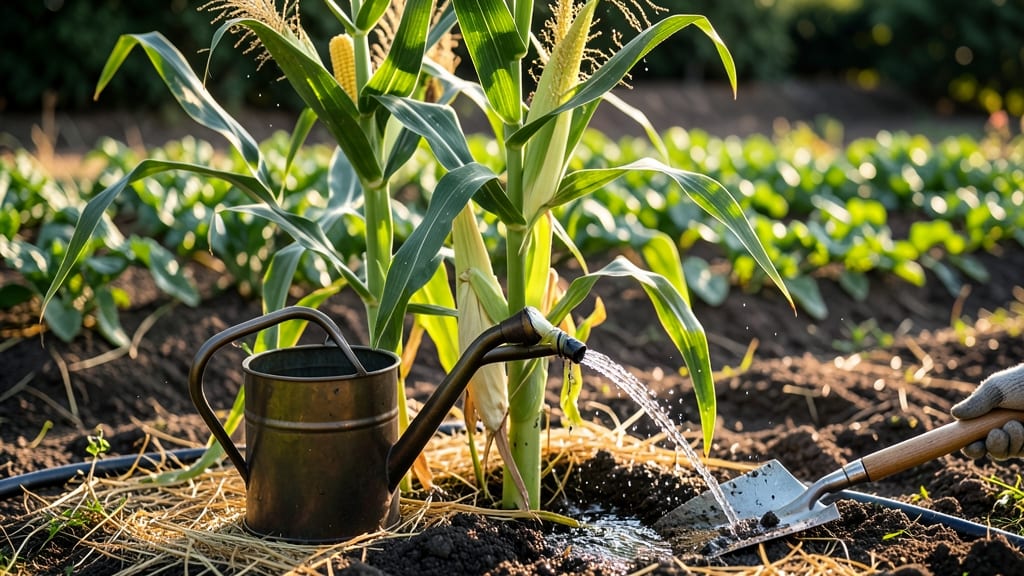
Watering corn plants the right way—how often, how deep, and when—is the secret to plump ears and strong stalks, not just survival.
Picture this: You’ve just planted your 🌽 seeds in Zone 6a, and the weather forecast promises 90°F heat by June. Too little water, and your plants wilt before they tassel.
Too much, and you’re inviting root rot before harvest. The line between success and failure isn’t guesswork—it’s a schedule tied to each growth stage.
Most gardeners water corn like they do tomatoes or lettuce, but corn’s needs change dramatically from germination to silking. A 1-inch weekly soak in April won’t cut it when your plants are knee-high in July.
Below, I break down the exact watering rhythm for every phase—plus the telltale signs your corn is thirsty or drowning.
You’ll learn how to adjust for rain, drought, and even your soil type—so you can skip the trial-and-error and walk away with ears that are heavy, sweet, and ready to harvest by September.
Corn watering schedule by growth stage: critical timing for each phase
Corn is one of those crops where watering consistency directly impacts kernel development. Too little water causes drought stress, while overwatering leads to root rot and poor ear formation. The key?
Adjusting your watering schedule based on corn’s four critical growth stages—from seedling to tasseling—where each phase demands a different moisture level. I’ve grown corn for over a decade, and I’ve learned that timing matters more than volume alone.
Most gardeners make the mistake of treating corn like other vegetables, watering it lightly every day. But corn’s deep roots need deep, infrequent watering to encourage strong stalk development. During germination, for example, you’ll want to keep the soil consistently moist but not soggy.
As the plant matures, you’ll gradually increase both frequency and depth. Let’s break it down by stage so you can tailor your watering routine for maximum yield.
| Growth Stage | Watering Frequency | Depth per Watering | Soil Moisture Target | Visual Cues |
|---|---|---|---|---|
| Germination (0-2 weeks) | Every 2-3 days | 1 inch total/week | Consistently moist | Seedlings emerge, first true leaves |
| Vegetative (3-6 weeks) | Every 2 days | 1.5 inches total/week | Top 6 inches moist | Plants reach 12-18 inches |
| Tasseling (7-9 weeks) | Daily (1.5-2 inches) | 2 inches total/day | Deep moisture (12+ inches) | Tassels emerge, silks appear |
| Ear Development (10-12 weeks) | Every 2-3 days (1.5 inches) | 1.5 inches total/week | Even moisture (no drought) | Ears form, kernels plump |
The germination stage (0-2 weeks) is where most gardeners go wrong. Seeds need consistent moisture to sprout, but overwatering can drown them. Aim for 1 inch of water per week, delivered every 2-3 days.
Use a spray bottle or gentle watering can to avoid displacing seeds. Once seedlings emerge, increase to 1.5 inches per week during the vegetative stage (3-6 weeks), when plants are actively growing leaves and stalks.
Here’s a pro tip: Check soil moisture by hand. Stick your finger 2 inches deep—if it feels dry, it’s time to water. During the vegetative stage, focus on keeping the top 6 inches of soil moist.
This encourages strong root development. I’ve seen corn plants wilt dramatically during this phase if they’re underwatered, only to recover fully once watering resumes. Wilting leaves are your first warning sign to adjust frequency.
The tasseling stage (7-9 weeks) is the most critical for watering. This is when corn plants need the most water—up to 2 inches per day if temperatures exceed 85°F. During this phase, corn is pollinating, and drought stress can cause poor kernel fill.
I once saw an entire cornfield with blind ears (ears with no kernels) because the grower skipped watering during tasseling. To avoid this, water deeply in the early morning to reduce evaporation and fungal risks.
As ears begin developing (10-12 weeks), you can slightly reduce frequency but maintain 1.5 inches per week. The goal is to keep the soil evenly moist without waterlogging. Overwatering now can lead to ear rot, while underwatering causes kernels to stay small and starchy.
Watch for silk browning—this signals pollination success and is your cue to maintain steady moisture until harvest.
One common mistake I see is watering at night, which promotes fungal diseases like corn smut. Always water in the morning so leaves have time to dry. Another tip: Use a soaker hose or drip irrigation to deliver water directly to the roots, minimizing leaf wetness.
For container-grown corn, expect to water every 2-3 days since pots dry out faster than ground soil.
To monitor your corn’s water needs, place a rain gauge near your plants. This helps track cumulative rainfall so you don’t overcompensate with extra watering. In my garden, I’ve used a simple tipping-bucket gauge to adjust schedules during rainy spells.
Remember, corn’s deep roots mean you should water until moisture reaches 12 inches deep
Common watering mistakes that kill corn yields (and how to fix them)
Even with perfect sunlight and rich soil, corn plants can fail spectacularly due to watering blunders. I’ve seen ear rot from soggy soil and stunted kernels from drought stress—both caused by simple watering mistakes.
The key? Consistency and timing. Let’s break down the most destructive habits and how to reverse them.
First, many gardeners assume light sprinkles are enough, but corn roots need deep hydration to reach maturity. Shallow watering encourages weak root systems that can’t support those 8-foot stalks. Then there’s the timing trap: watering at night creates the perfect environment for fungal diseases like leaf blight.
These errors aren’t just annoying—they directly slash your harvest by up to 40%.
⚠️ callout warning ⚠️
🚨 Red Flags: Are You Over/Under-Watering?
- Overwatering: Yellowing leaves, mushy stalks, or white fungal growth
- Underwatering: Wilting even with wet soil, dry silks, or ears that don’t fill
- Inconsistent watering: Uneven ear development or cracked kernels
Fix it:
Check soil 2 inches deep—it should feel moist but not soggy. Adjust frequency based on weather and growth stage.
Let’s start with the biggest killer: inconsistent watering. Corn plants have shallow roots early on, but as they grow, they develop deeper roots that need steady moisture. If you water every other day one week and then skip for a week, the plant can’t adjust fast enough.
This causes kernel abortion, where the plant simply stops filling ears mid-season. The fix? Stick to a morning schedule and adjust based on rainfall.
Another common mistake is watering too late in the day. I’ve lost entire rows to leaf blight because evening watering left foliage damp overnight. Fungal spores thrive in this moisture, and corn’s broad leaves provide perfect landing pads.
Always water by 10 AM to let leaves dry before nightfall. If you must water in the evening, use a soaker hose to target soil directly.
For large cornfields, many gardeners rely on sprinklers, but this often leads to uneven water distribution. The outer rows get drenched while the center stays dry. Instead, use drip irrigation or move sprinklers to different sections daily.
Even in home gardens, a 5-gallon bucket with holes punched in the bottom works wonders for precise, deep watering at the base of each plant.
Finally, don’t forget that corn’s water needs change with growth stages. Seedlings need 1 inch per week, but during tasseling and silking, they’ll drink 1.5–2 inches daily.
Skipping this adjustment leads to poor pollination and underdeveloped ears. Pay attention to the silks—if they’re dry and crispy, your plant is thirsty. If they’re soggy, you’re overdoing it.
By fixing these three mistakes—deep, consistent watering, morning timing, and stage-specific adjustments—you’ll see plump, disease-free ears ready for harvest. The best part? These changes take zero extra time, just smarter habits. Your corn will thank you at harvest time! 🌽