
Plants
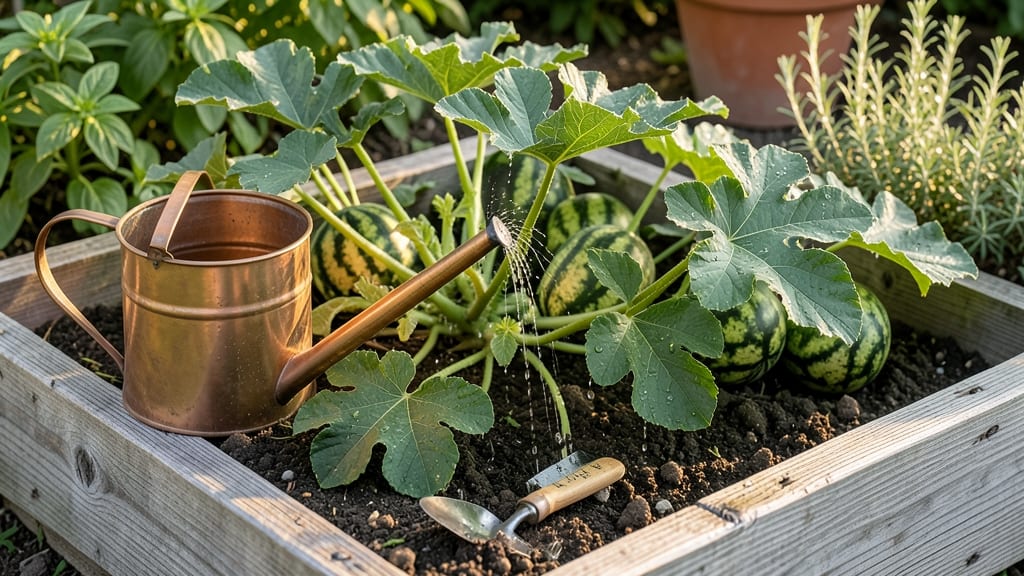
To water your watermelon plants correctly, aim for deep soaks every 2-3 days once they’re established — shallow sprinkles won’t cut it when those 🍉 vines are racing toward 10 feet.
Picture this: you’ve spent weeks nurturing your seedlings, only to watch them wilt or your fruit crack under the skin because the moisture game was off. The key isn’t just how often you water but how deeply—and when.
In Zone 6a, where spring planting kicks off in April, your watermelons will demand consistent hydration as they flower and fruit through summer. Skip the guesswork with science-backed intervals, soil checks, and the one mulching trick that keeps roots happy without drowning them.
Here’s your step-by-step guide to balancing water like a pro—no more shriveled rinds or bitter surprises at harvest time.
Watermelon watering schedule by growth stage: when and how much to apply
Watermelons are thirsty plants, but their water needs change dramatically from tiny seedlings to sprawling vines bearing fruit. I’ve learned the hard way that overwatering causes cracked melons while underwatering leads to bitter, shriveled fruit.
The key is deep, consistent moisture—never letting the soil dry out completely but avoiding soggy roots. Let’s break down the perfect watering routine for each stage of your watermelon’s life cycle.
First, test your soil’s moisture before watering. Stick your finger 1-2 inches deep—if it feels dry, it’s time to water. For container-grown watermelons, check daily since they dry out faster.
In-ground plants can wait 2-3 days between waterings, but adjust based on heat and humidity. Remember: morning watering (before 10 AM) is ideal to reduce evaporation and fungal risks.
During the germination stage, watermelon seeds need gentle moisture—never let them dry out, but avoid drowning them. I use a spray bottle for the first week to keep the soil evenly damp without disturbing the seeds. Once seedlings emerge, deep watering becomes critical.
Aim for 1 inch of water every 2-3 days, ensuring the soil stays moist but not waterlogged. Overwatering now can cause damping-off disease, a fungal killer of young plants.
When your watermelons enter the vine development stage (typically weeks 5-8), their roots are spreading rapidly. This is when deep-soak watering pays off. I water every 3-4 days, applying 1.5-2 inches of water per session.
The goal is to encourage deep root growth, which helps the plant access moisture during dry spells. Mulching with straw or grass clippings is a game-changer here—it locks in moisture and keeps roots cool.
Flowering is the most sensitive stage for watermelons. Inconsistent watering can cause flowers to drop or fruit to develop poorly.
During this phase (weeks 6-10), I water every 2-3 days, delivering 2 inches of water per session. Morning watering is non-negotiable—it prevents fungal diseases like powdery mildew, which thrives in damp leaves.
If your flowers aren’t setting fruit, check for poor pollination (hand-pollinate with a small brush) or water stress (adjust your schedule immediately).
The fruiting stage (weeks 8-12) demands the most attention. Watermelons are heavy feeders, and their fruit needs steady hydration to grow sweet and juicy.
I water daily or every other day, soaking the soil 2-3 inches deep. Uneven watering here leads to cracked or split fruit, so consistency is key.
If you notice blossom-end rot (a sunken, dark spot on the fruit), it’s a sign of calcium deficiency—often caused by fluctuating moisture levels. To fix it, water more evenly and consider a calcium supplement like crushed eggshells.
As your watermelons near harvest, taper back slightly on watering. Reducing water 1 week before pickup concentrates sugars in the fruit, making it sweeter. I cut back to
Signs your watermelon plants are overwatered or underwatered (and how to Fix it)
Watermelon plants are surprisingly sensitive to water imbalances—yellowing leaves, wilting vines, and cracked fruit all scream for help. I’ve learned the hard way that overwatering creates soggy roots while underwatering shrinks your melons. The key is spotting these visual stress signals early before your harvest turns sour.
Start by checking the soil moisture 2 inches below the surface. Stick your finger in—if it feels damp, hold off on watering.
If it’s bone-dry, your plants are thirsty. Blossom-end rot (a sunken, dark spot on fruit) is a classic sign of inconsistent moisture, while powdery mildew on leaves often means too much water sitting on foliage.
🚨 callout warning ⚠️ How Often Should I Water My Watermelon Plants? Signs of Overwatering:
- Yellow leaves (especially lower ones)
- Mushy stems when pressed
- Root rot (black, foul-smelling roots)
Fix: Reduce watering to every 3-4 days, improve drainage, and mulch to retain even moisture.
Signs of Underwatering:
- Wrinkled leaves that feel dry
- Wilting even with moist soil
- Small, hard fruit
Fix: Deep-soak roots 1-2 inches daily during hot weather, focusing on the base. 💧
Cracked watermelons are a heartbreaker, but they’re often a sign of uneven watering. Rapid moisture swings cause the fruit to expand too quickly. To prevent this, water consistently—aim for 1-2 inches per week—and mulch heavily to lock in moisture. If you’ve already got cracked fruit, don’t waste it; compost it and adjust your routine.
Split vines or drooping flowers? These are red flags for hydration stress. Watermelons need steady moisture, especially when flowers form. If your vines look leggy and weak, it’s time to increase water and add a balanced fertilizer (like 10-10-10) to boost root strength. Avoid watering at night—fungal diseases thrive in damp foliage after dark.
For poor pollination, check your watering habits. Overwatering can drown pollen, while underwatering weakens plants so they can’t support bees. Morning watering (before 10 AM) keeps flowers dry for pollinators. If you see dropped blossoms, cut back slightly and hand-pollinate with a small brush if needed.
Remember, container-grown watermelons dry out faster than in-ground plants. If yours are in pots, water every 1-2 days and use self-watering containers to maintain consistency. The goal? Happy roots, happy melons—no soggy soil, no thirsty vines. With these fixes, you’ll be harvesting plump, sweet watermelons in no time. 🍉