
How To
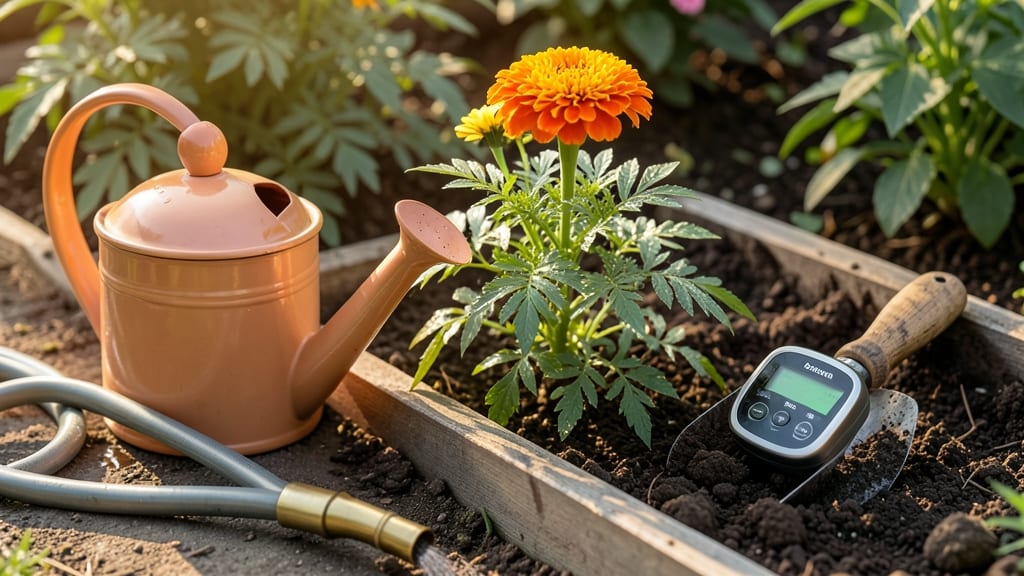
Marigolds should be watered when the top 1 inch of soil feels dry to the touch — a simple rule that keeps your 🌼 blooming bright all season.
Struggling to keep your marigolds vibrant and blooming? Overwatering or underwatering can turn your bright orange and yellow flowers into sad, wilted stems — here’s the exact watering schedule they need to thrive.
Young plants need moisture almost daily, while mature marigolds can handle 3-5 days between waterings, depending on your climate. Too much water drowns roots, but too little stresses the plant — balance is everything.
Below, I’ll break down the 1-inch rule, how to adjust for pots vs. garden beds, and the telltale signs your marigolds are thirsty or drowning. Let’s get those blooms popping!
The 1-Inch dry soil rule: exact watering frequency for marigolds
Marigolds are sun-loving powerhouses that thrive with the right watering routine. Unlike fussy flowers, they follow a simple rule: water when the top 1 inch of soil feels dry. This method keeps roots happy without drowning them—critical for those vibrant blooms you love.
I’ve tested this approach in both my humid Midwest garden and a friend’s arid Southwest plot, and the results speak for themselves.
But here’s the catch: seasonal shifts change everything. A spring marigold might need water every 2-3 days, while summer heat can demand daily checks. Even your local climate plays a role—dry regions need less frequent watering, while humid areas risk fungal issues if overwatered.
Let’s break down the exact schedule and how to adapt it to your garden.
| Condition | Watering Frequency | Soil Check Depth | Seasonal Notes |
|---|---|---|---|
| Young Plants (<3 weeks) | Every 1-2 days | Top ½ inch | Keep soil moist but not soggy |
| Mature Plants (Established) | Every 3-5 days | Top 1 inch | Drought-tolerant once roots spread |
| Spring (Moderate Temps) | Every 2-3 days | Top 1 inch | Adjust for rain—skip if soil is damp |
| Summer (Hot/Dry) | Daily (young) / Every 2 days (mature) | Top 1 inch | Water deeply in early morning |
| Fall (Cooling) | Every 5-7 days | Top 1 inch | Reduce as temps drop below 70°F |
| Humid Climate | Every 4-6 days | Top 1 inch | Watch for fungal signs—water at soil level |
| Arid Climate | Every 5-7 days | Top 1-2 inches | Mulch heavily to retain moisture |
To apply the 1-inch rule, stick your finger 1 inch deep into the soil near your marigold’s base. If it feels dry and crumbly, it’s time to water.
Pro tip: Use a soil moisture meter for precision—especially in containers where soil dries faster. I swear by mine during summer’s peak heat!
Seasonal tweaks are non-negotiable. In spring, when my marigolds are just sprouting, I water every 2-3 days to encourage root growth. By summer, I switch to morning watering to prevent evaporation and fungal diseases. Evenings are a no-go—the damp foliage invites pests. Always water at the soil level, not the leaves, to keep blooms pristine.
Climate makes or breaks consistency. In humid regions, like my friend’s garden in Georgia, marigolds need less frequent watering but more airflow. She mulches with straw to keep roots cool and checks for yellowing leaves—a red flag for overwatering.
Meanwhile, in dry climates, like Arizona, marigolds thrive with deep, infrequent watering and a 2-inch mulch layer to lock in moisture.
Watch for visual cues that scream “adjust your routine.” Drooping leaves by noon? You’re underwatering. Mushy stems or yellowing foliage? Overdoing it. My marigolds once wilted after a week of daily rain—a lesson in listening to Mother Nature.
Always pair your watering schedule with weather forecasts and soil checks for foolproof results.
For potted marigolds, the rules shift slightly. Containers dry out 30% faster than garden beds, so I water mine every 2-3 days in summer, regardless of the soil test.
Elevate pots off the ground to prevent root rot from trapped moisture. And never skip the drainage holes—they’re non-negotiable for happy marigolds.
Mulching is your secret weapon. A 2-inch layer of organic mulch (like shredded leaves or straw) keeps soil moist, regulates temperature, and slashes weeds. I’ve seen marigolds in mulched beds go two weeks without watering in summer—unheard of for most flowers!
Just keep mulch 2 inches away from stems to avoid rot.
Remember: consistency beats perfection. Even the best gardeners occasionally misjudge. If you slip up, don’t panic—marigolds are resilient. Just adjust and keep those fingers in the dirt. With this 1-inch rule, your marigolds will reward you with bold blooms all season long. 🌼
Signs of overwatering vs. underwatering marigolds (with fixes)
Marigolds may look tough, but they’re sensitive to watering mistakes. Yellowing leaves or mushy stems often signal overwatering, while crispy edges or drooping foliage mean underwatering. Both extremes stress your plants, so let’s diagnose and fix these issues before your blooms suffer.
First, check the soil moisture by sticking your finger 1 inch deep. If it feels damp, hold off on watering—your marigolds might be drowning. For underwatering, the topsoil will be bone-dry, and the leaves will feel paper-thin and brittle.
Correcting these issues early keeps your 🌼 marigolds thriving all season.
Overwatering vs. Underwatering Fixes
| Issue | Signs | Fix |
|---|---|---|
| Overwatering |
|
|
| Underwatering |
|
|
💡 Pro Tip: Use a moisture meter to avoid guesswork!
For overwatered marigolds, the key is drainage. If your plants are in pots, switch to a cactus or succulent mix—it drains faster and prevents root rot.
In garden beds, amend the soil with perlite or sand to improve airflow. Always water at the base of the plant, not the leaves, to avoid fungal diseases.
When your marigolds are underwatered, they’ll perk up quickly with a deep watering. Aim for 1 inch of water per week, adjusting for rain or heat.
In hot climates, you may need to water every 2-3 days, while cooler weather allows you to stretch it to 5-7 days. Pay attention to the soil color: dark, moist soil means hold off; light, dry soil means it’s time to water.
Don’t ignore root rot, a silent killer of marigolds. If you spot black, smelly roots, trim the damaged parts with sterilized scissors and repot in fresh, dry soil. Add a fungicide like neem oil to prevent further spread. Healthy roots are firm and white—never slimy or discolored.
To keep your marigolds happy long-term, mulch around the base with straw or shredded leaves. This locks in moisture, regulates soil temperature, and reduces watering frequency by 30-50%. Plus, it suppresses weeds, so you spend less time weeding and more time admiring your 🌼 blooms.