
Watering
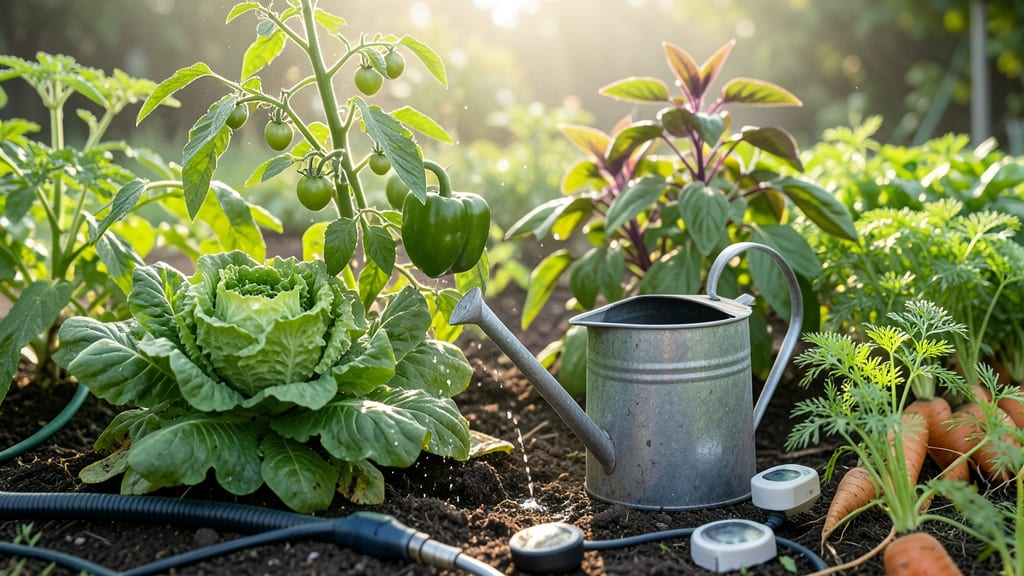
Watering a veggie garden too often or too little can ruin your harvest faster than pests or bad soil — the key is matching your schedule to your plants' needs and the season.
Overwatering or underwatering your veggie garden can mean the difference between a bountiful harvest and wilted disappointment — so why guess when you can follow a science-backed watering schedule?
Most gardeners assume "water every day" works for everything, but tomatoes, carrots, and lettuce all drink differently. In summer, your garden might need deep watering every 2-3 days, while winter could drop to once a week.
Below, I break down the exact watering frequency for 15 common vegetables, how to check soil moisture like a pro, and the easy adjustments that save water without stressing your plants.
Watering frequency by plant type: a science-based schedule for common vegetables
Mastering the art of watering your veggie garden isn’t about rigid schedules—it’s about understanding your plants’ unique needs. Leafy greens like lettuce and spinach thrive with frequent, shallow watering, while root crops such as carrots and potatoes prefer deep, infrequent soakings.
The key? Soil moisture checks and environmental adjustments based on sun, temperature, and humidity. Let’s break down the science-backed approach for your most common garden stars.
Every plant has a watering sweet spot determined by its growth stage, root depth, and environmental stress. Seedlings need consistent moisture to prevent transplant shock, while mature plants often tolerate brief dry spells.
For example, tomatoes and peppers require steady hydration to prevent blossom-end rot, whereas onions and garlic prefer drier conditions to avoid rot. Adjust your routine based on weather patterns—summer heat demands more frequent watering, while winter often requires minimal intervention.
Here’s the game-changing visual guide to watering frequency by plant type, including soil triggers and environmental tweaks:
| Plant Type | Watering Frequency | Soil Moisture Trigger | Environmental Adjustments |
|---|---|---|---|
| Leafy Greens (Lettuce, Spinach, Kale) | Every 1–2 days (shallow) | Top 1 inch dry | Mulch to retain moisture; water early morning |
| Root Vegetables (Carrots, Potatoes, Beets) | Every 3–4 days (deep) | Top 2 inches dry | Avoid overhead watering; use drip irrigation |
| Fruiting Plants (Tomatoes, Peppers, Cucumbers) | Every 2–3 days (deep) | Top 3 inches dry | Water at soil level; avoid wetting leaves |
| Herbs (Basil, Parsley, Cilantro) | Every 2–3 days (moderate) | Top 1–2 inches dry | Well-draining soil; water at base |
| Seedlings (All Types) | Daily (light misting) | Surface dry | Use seedling trays; shade cloth for heat |
For leafy greens, shallow watering keeps the topsoil moist without drowning their shallow roots. Stick your finger an inch deep—if it feels dry, it’s time to water. Root vegetables like carrots and potatoes need deeper watering to encourage downward growth.
Let the top 2 inches dry out between sessions, and always water at the base to avoid surface evaporation. Fruiting plants such as tomatoes and peppers demand consistency; uneven moisture leads to blossom-end rot or cracked fruits.
Aim for deep watering every 2–3 days, focusing on the soil, not the leaves.
Herbs like basil and parsley strike a balance—they dislike soggy soil but need steady hydration.
Water when the top 1–2 inches feel dry, and always direct the stream to the base to prevent fungal issues. Seedlings are the most delicate; they need daily misting or shallow watering to prevent transplant shock. Use a spray bottle or fine-mist nozzle to avoid disturbing their tender roots.
Pro tip: Group plants with similar water needs together in your garden layout for efficiency.
Adjust your watering schedule based on weather and season. In summer’s peak heat, increase frequency by 20–30% and water in the early morning to reduce evaporation. During humid conditions, reduce watering slightly to prevent fungal diseases like powdery mildew.
Winter often requires minimal watering—focus on soil moisture checks rather than set schedules. A simple trick: Use a soil moisture meter or the “squeeze test” (grab a handful of soil; if it crumbles, it’s dry enough).
Don’t forget the power of mulch. A 2–3 inch layer of straw or wood chips retains moisture, regulates soil temperature, and suppresses weeds.
For container gardens, ensure pots have drainage holes and water when the top inch of soil feels dry. Clay pots dry out faster than plastic, so adjust accordingly. If you’re using drip irrigation, set timers for 1–2 hours daily during peak heat, but monitor soil moisture to avoid overwatering.
Overwatering is just as damaging as underwatering. Yellowing leaves, mold, or wilting despite wet soil are red flags. Adjust your routine based on plant feedback—if your peppers develop blossom-end
Signs your veggie garden is overwatered or underwatered (and how to fix it)
Your veggie garden thrives on balance—too much or too little water can spell disaster for your leafy greens, root crops, and fruiting plants. Yellowing leaves, wilting, or mushy soil aren’t just random misfortunes—they’re clear signals your watering routine needs adjustment.
The key is learning to read your plants’ visual cues before problems escalate.
Start by checking the soil moisture with your finger. Stick it about 1 inch deep—if it’s dry, your plants need water. If it’s soggy, you’ve overdone it. Leaf color and texture also reveal the truth: crisp, vibrant leaves mean happy plants, while limp or discolored ones scream for help.
Understanding these signs will save you time, water, and heartache.
⚠️ How Often Should You Water a Veggie Garden?
General rule: Water deeply 1–2 times per week (adjust for climate). Morning watering (before 9 AM) prevents fungal diseases. Leafy greens like lettuce need frequent, shallow water, while root veggies (carrots, beets) prefer deep, infrequent soaking. Fruiting plants (tomatoes, peppers) thrive on consistent moisture—never let soil dry out completely.
Climate adjustments: Summer heat = water daily; winter chill = reduce to once a week. Always check soil before watering—dry topsoil ≠ thirsty roots.
Yellowing leaves with crisp edges often signal underwatering, while yellowing with soft, mushy leaves means overwatering. Wilting can go either way: droopy leaves in the morning suggest thirst, but wilting that persists all day points to root rot from excess moisture.
For tomatoes or peppers, blossom-end rot (a calcium deficiency) can appear when water levels fluctuate wildly.
Fix underwatered plants by watering deeply at the base of the plant, not overhead. Use mulch (straw or shredded leaves) to retain moisture and reduce evaporation. For overwatered plants, stop watering immediately and improve drainage by amending soil with compost or perlite.
If roots smell sour or look black, repot the plant in fresh, well-draining soil to prevent root rot.
Herbs like basil and cilantro wilt dramatically when thirsty but bounce back quickly after a drink. Carrots and radishes, however, show stress by cracking or forking—signs of inconsistent soil moisture.
Pay attention to these plant-specific clues to tailor your watering schedule. A self-watering system or drip irrigation can help maintain steady moisture levels once you’ve mastered the basics.
Remember, healthy soil is your best tool. Test your soil’s drainage by digging a hole—if water pools after 30 minutes, your garden needs amending. Aim for soil that feels like a slightly damp sponge: firm enough to hold shape but not soggy.
With practice, you’ll develop an instinct for when your veggies are thirsty vs. drowning.