
How To
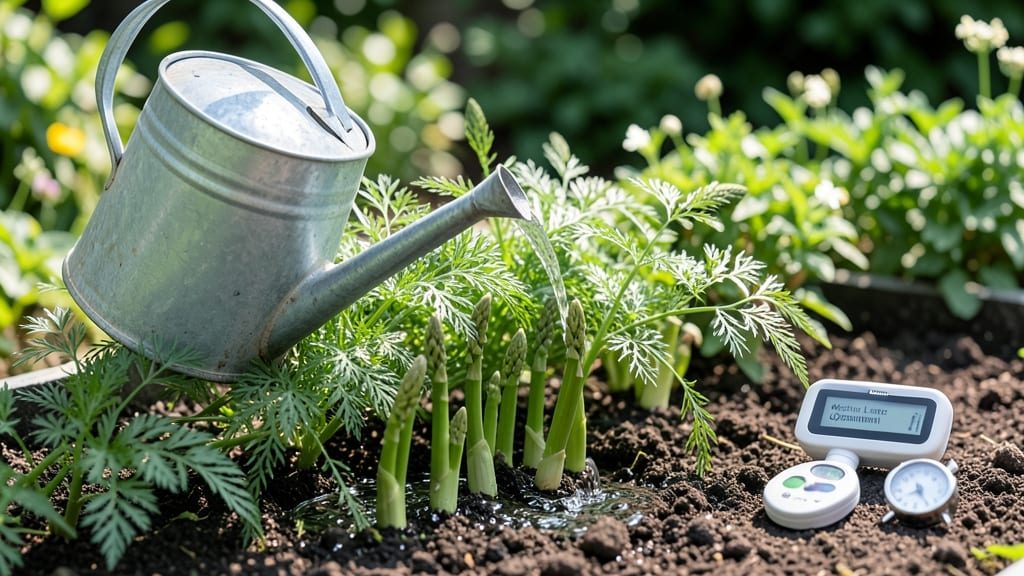
Watering asparagus often enough keeps your 🌱 plants thriving without drowning their delicate roots.
Struggling to keep your asparagus thriving? The secret isn’t just when you water—it’s how you test your soil first. Discover the precise watering schedule that transforms floppy stalks into a bountiful harvest, year after year.
Most gardeners overwater asparagus because they guess instead of check. But asparagus roots need consistent moisture—not soggy soil—that means deep watering once a week in spring, then adjusting for summer heat or winter chill.
Here’s how to read your soil like a pro, avoid common mistakes, and keep your asparagus productive for decades—no more wasted water or wilted spears.
Asparagus watering schedule by growth stage: soil moisture rules
Mastering your asparagus watering schedule starts with understanding its three distinct growth stages—each with unique moisture needs. Unlike many vegetables, asparagus demands consistent soil moisture at 1-2 inches deep, but the frequency shifts dramatically from crown establishment to spearing season.
I’ve learned the hard way that overwatering in spring can rot those delicate roots, while underwatering in summer turns ferns crispy faster than a forgotten houseplant. Let’s break it down by stage so you can avoid both extremes.
First, let’s address the soil moisture test I use before watering. Stick your finger 1-2 inches deep—if the soil feels like a damp sponge (clumps when squeezed but doesn’t drip), it’s ready. If it’s powdery or crumbly, water immediately.
This simple check replaces guesswork with science, and it’s how I’ve kept my 5-year-old asparagus patch thriving through droughts and downpours alike. The key? Morning watering (before 10 AM) to prevent fungal diseases that thrive in evening dampness.
During crown establishment (that first critical year), your asparagus is building roots like a teenager’s growth spurt—it needs frequent, deep watering to prevent stress. I water my new beds every 5-7 days in spring, aiming for 1-2 gallons per plant.
The goal? Keep the soil damp but never soggy. If your soil is clay-heavy, reduce frequency to avoid waterlogging, which can suffocate those young roots. In sandy soil, you might need to water daily until the plants establish.
When spears start shooting up in years 2-3, your watering shifts to consistency over frequency. At this stage, I monitor soil moisture daily but only water when the top 1-2 inches feel dry.
Overwatering now can cause spears to split or rot before harvest—something I learned after a particularly rainy spring left my stalks mushy. Aim for 1-2 inches of water per week, delivered in the morning to let foliage dry before evening.
This is also when mulching becomes non-negotiable—it’s the difference between crisp spears and sad, limp ones.
Summer’s fern growth phase is where many gardeners overcorrect by watering too much. Your asparagus ferns are drought-tolerant once established, but they still need deep, infrequent watering. I’ve found that bi-weekly deep soaks (2-3 gallons per plant) keep my ferns lush without wasting water.
The key is to water at the base, not overhead, to prevent fungal diseases like rust. If your area hits 90°F+ temperatures, increase to weekly watering—but always check soil moisture first. A quick finger test saves more water than you’d think.
As temperatures drop in fall and winter, asparagus enters dormancy, and your watering schedule should dramatically slow down. During this time, I only water monthly unless we’re in a prolonged drought. The goal is to keep the soil lightly moist at 2-3 inches deep, not saturated.
If frost is in the forecast, skip watering entirely—wet crowns can freeze and invite rot. This is also the perfect time to audit your soil. If you
5 Soil test hacks to avoid overwatering or drought stress in asparagus
Asparagus plants are surprisingly resilient, but their roots need consistent moisture—not soggy soil or bone-dry conditions. The key to perfect watering lies in testing soil moisture before reaching for the hose.
Most gardeners make the mistake of watering on a schedule (like every Tuesday), but asparagus roots thrive when watered based on soil conditions, not time.
Overwatering causes root rot and yellowing ferns, while underwatering leads to stunted spears and weak plants. Here’s how to test your soil like a pro to keep your asparagus happy and productive—without guessing.
- 1 Finger Check: Stick your finger 1-2 inches deep into the soil. If it feels dry and crumbly, water deeply. If it’s cool and moist, wait 2-3 days.
- 2 Weight Test: Lift a handful of soil—if it’s light as dust, water immediately. If it’s heavy and damp, skip watering to avoid waterlogging.
- 3 Color Clues: Dark, earthy brown soil means it’s moist. If it’s pale gray or white, water thoroughly. Black streaks signal overwatering.
- 4 Moisture Meter: Use a digital probe for precision. Aim for 40-60% moisture at 2 inches deep. $20 meters (like the XLUX) pay for themselves in saved water.
- 5 Clump Test: Squeeze a soil clump—if it holds shape, it’s moist. If it crumbles instantly, water immediately. Asparagus roots need even moisture, not dry pockets.
Pro tip: Morning watering (before 10 AM) reduces evaporation and fungal risks. Avoid watering fern foliage—direct streams can cause disease. Instead, water at the base of the plant for deep root hydration.
For sandy soil, water more frequently (every 5-7 days) because it drains quickly. In clay soil, space waterings to every 10-14 days to prevent waterlogging. Mulch with straw to lock in moisture and keep roots cool.
Remember: Asparagus roots grow 1-2 feet deep, so shallow watering won’t reach them. Always water until moisture seeps 6 inches down. With these hacks, you’ll avoid drought stress and overwatering, ensuring plump spears year after year. 🌱