
Watering
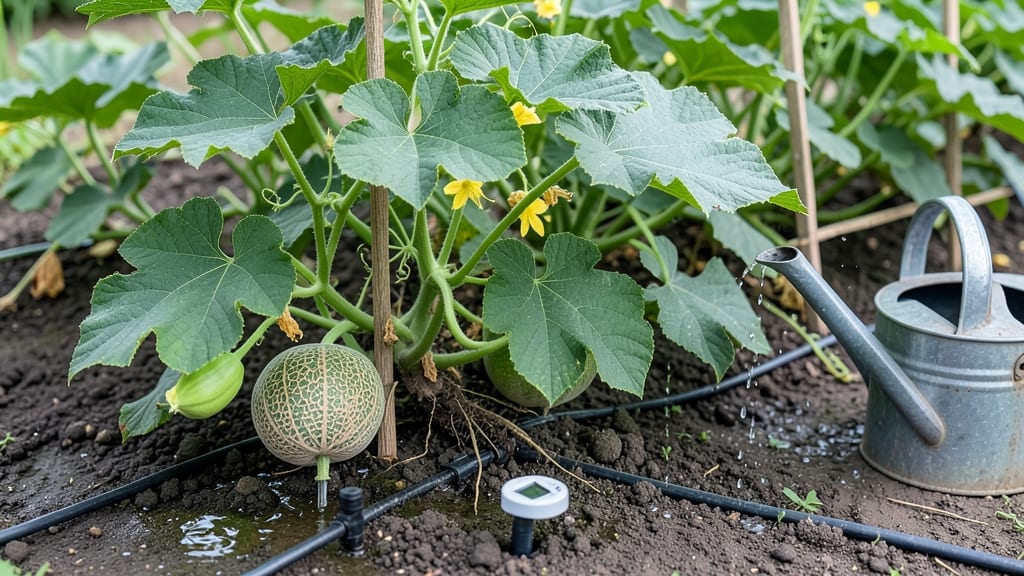
To water cantaloupe properly, focus on soil moisture and growth stages—overwatering or drying out the roots will turn your sweet harvest into a bitter disappointment.
Picture this: you’ve nurtured your 🍈 plants all spring, only to watch them wilt or rot because you guessed wrong on the watering schedule. The truth is, cantaloupes thrive on consistency, but they’re finicky about timing.
In this guide, I’ll break down the science-backed soil check method to determine when your plants truly need hydration, from seedlings to ripe fruit. You’ll learn how to adjust for heatwaves, droughts, and even your soil type—no more wasted water or shriveled melons.
By the end, you’ll master the balance between keeping roots moist and avoiding soggy soil, ensuring your cantaloupes grow juicy, flavorful, and perfectly ripe every time.
Cantaloupe watering schedule by growth stage: when to water for optimal ripeness
Growing cantaloupes requires precision with watering—too much causes blossom-end rot and fungal diseases, while too little leads to bitter fruit and cracked rinds. The key is adjusting your watering schedule based on your cantaloupe’s growth stage, soil moisture, and weather.
I’ve grown cantaloupes in USDA Zone 6a for years, and this stage-by-stage approach ensures sweet, juicy fruit every time.
Cantaloupes have three critical growth phases where water needs shift dramatically: seedling, flowering, and fruiting. Each stage demands a different balance of moisture to support healthy vines, vibrant blooms, and plump fruit.
Skipping this stage-specific care often results in poor yields or subpar flavor. Let’s dive into the exact watering schedule you need for each phase.
For visual learners, I’ve created a comparison table below that breaks down the ideal watering frequency, soil moisture targets, and key adjustments for each growth stage. This will help you avoid common mistakes like overwatering during fruiting (which splits fruit) or underwatering during flowering (which drops blossoms).
During the seedling stage, cantaloupes need frequent but light watering to encourage root development. I water mine every 2-3 days in the morning, ensuring only the top 1 inch of soil stays moist.
Overwatering at this stage can lead to damping-off disease, a fungal issue that kills young seedlings. To prevent this, I use a soaker hose or drip system to deliver water directly to the roots without wetting the foliage.
As your cantaloupes transition to the flowering stage (around 4-6 weeks), their water needs increase slightly. This is when you’ll see those iconic yellow blossoms appear, and consistent moisture is critical for successful pollination.
I water every 1-2 days, aiming to keep the soil moist to a depth of 2 inches. A quick soil check with your finger—if the topsoil feels dry, it’s time to water.
Avoid wetting the leaves to reduce the risk of powdery mildew, a common fungal problem in humid climates.
The fruiting stage is where most gardeners struggle with watering—too much causes cracked fruit, while too little leads to underdeveloped melons.
During this phase (weeks 7-10), I switch to a deep watering schedule every 2-3 days, ensuring the soil stays moist to a depth of 3-4 inches. The goal is to maintain steady moisture without oversaturating the soil.
I’ve found that watering in the early morning minimizes evaporation and gives the plants time to absorb moisture before the heat of the day.
One of the biggest mistakes I see is overwatering cantaloupes during the fruiting stage, which can cause the fruit to split open. To avoid this, I monitor the soil closely and adjust my watering based on rainfall.
If we’ve had a heavy downpour, I’ll skip my scheduled watering and wait until the soil dries slightly before the next session. This balance is key to growing cantaloupes with sweet, firm flesh and a perfect tan rind.
Another critical factor is mulching. I always apply a 2-3 inch layer of straw mulch around my cantaloupe plants to retain moisture, suppress weeds, and regulate soil temperature. Mulch helps reduce the frequency of watering by slowing evaporation, which is especially helpful in hot, dry climates.
Just be sure to keep the mulch a few inches away from the plant stems to prevent rot.
Finally, pay attention to the weather conditions in your area. In hot, dry summers, cantaloupes may need watering every day or two, while cooler, humid weather might only require watering every 3-4 days.
I always adjust my schedule based on the forecast, adding extra water during heatwaves and scaling back during rainy periods. This flexibility ensures your cantaloupes get the consistent moisture they need without the risks of overwatering.
By following this stage-specific watering schedule, you’ll give your cantaloupes the best chance to thrive from seedling to harvest. The result? Juicy, sweet melons that slip easily from the vine with a fragrant aroma near the stem—proof that you’ve mastered the art of cantaloupe watering. Happy gardening! 🍈
The 3-Step soil check method to avoid overwatering cantaloupes
Cantaloupes need consistent moisture, but overwatering is a silent killer—it causes root rot, blossom-end rot, and cracked fruit. The key? Checking soil moisture before watering. Skip the guesswork and use this 3-step finger test to water only when your cantaloupes truly need it.
Start by testing the soil 2 inches deep near the plant’s base. This is where the root zone actively absorbs water. Use your finger (not a tool) to avoid compacting the soil—cantaloupes hate dense roots. If the soil feels dry and crumbly, it’s time to water.
🌱 Step-by-Step Soil Check for Cantaloupes
-
Step 1: Test Depth
Insert your finger 2 inches deep into the soil near the vine. Avoid disturbing the plant’s roots. -
Step 2: Check Moisture
If soil feels dry and crumbly, water immediately. If it’s damp but not soggy, wait 1-2 days. -
Step 3: Observe Visual Cues
Wilted leaves or sagging vines mean it’s time to water. Yellowing leaves signal overwatering—stop and let the soil dry slightly.
Water deeply until the soil is moistened 6 inches down. Cantaloupes have shallow roots but need hydration at depth. Use a soaker hose or drip irrigation to deliver water slowly—this prevents runoff and keeps roots happy.
Adjust your schedule based on weather and growth stage. Seedlings need even moisture, while flowering/fruiting plants tolerate slightly drier soil. In hot climates, check soil daily—evaporation speeds up, and cantaloupes wilt fast.
Pro tip: Mulch around your cantaloupe plants with straw or grass clippings to retain moisture. This reduces how often you need to water while keeping roots cool. Avoid thick mulch layers—1-2 inches is perfect.
Overwatering is the #1 mistake gardeners make with cantaloupes. By mastering this 3-step soil check, you’ll grow sweeter, riper fruit with fewer problems. Happy gardening! 🌱