
Watering
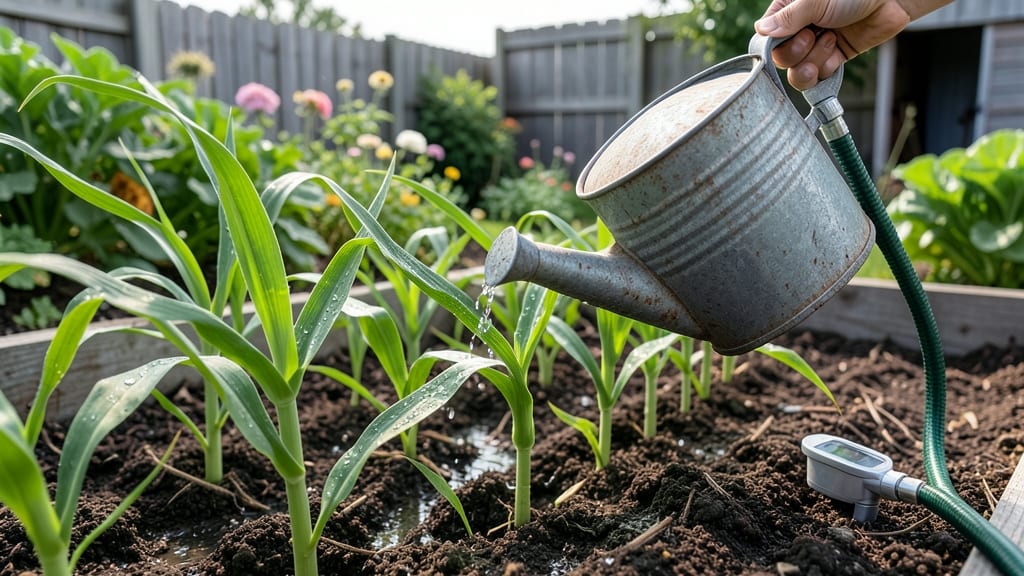
Watering corn seedlings the right way—keeping soil consistently moist but never soggy—is the difference between strong, tasseling stalks and floppy stems that snap in the breeze.
Here’s the catch: too little water and your 🌽 seedlings wilt before they even reach knee height; too much, and you’re inviting root rot before the first ear even forms.
The key? A schedule that changes as your plants grow, paired with a simple soil check that tells you exactly when to grab the hose.
In this guide, we’ll break down how often to water corn seedlings at each stage—from the moment they crack through the soil until they’re tall enough to block your view of the garden fence.
You’ll learn the three signs your seedlings are thirsty (and one sign they’re drowning), plus how to adjust for hot spells, clay soil, or container planting.
By the end, you’ll water with confidence, ensuring every plant gets the steady moisture it needs to grow into a bountiful harvest—not a sad, stunted disappointment.
Watering schedule for corn seedlings by growth stage: from germination to 6 inches tall
Corn seedlings are delicate in their early stages, and watering frequency directly impacts their survival and growth. During the first 1-2 weeks, seeds need consistent moisture to germinate, while young seedlings require careful attention to avoid overwatering or drought stress.
Understanding these growth-stage watering needs helps prevent weak stems or fungal diseases that can derail your crop before it even reaches 6 inches tall.
I’ve learned from experience that daily moisture checks are crucial during germination, but as seedlings emerge, the focus shifts to light soil dampness rather than saturation. For example, a 1-inch-deep watering every other day keeps the soil ideal for root development without causing rot.
Let’s break down the exact watering schedule for each phase, so you can give your corn seedlings the best start possible.
| Growth Stage | Watering Frequency | Soil Moisture Goal | Visual Cues |
|---|---|---|---|
| Germination (Seed to Sprout) | Daily (keep soil damp) | 1-2 inches deep, like a damp sponge | Seeds darken when dry; sprouts appear in 7-14 days |
| Seedling Emergence (1-2 inches tall) | Every other day (light soak) | Top 1 inch moist, deeper soil dry | Leaves perk up after watering; wilting indicates thirst |
| Early Growth (2-4 inches tall) | Every 2-3 days (deep water) | 2 inches deep, evenly moist | Stems stay stiff; yellowing leaves signal overwatering |
| Pre-Tassel (4-6 inches tall) | Every 3-4 days (1-2 inches/week) | Consistent moisture, no puddles | Healthy green leaves; roots spread 6+ inches deep |
During the germination phase, I prioritize keeping the soil consistently moist—never soggy—to encourage seeds to sprout within 7-14 days. A simple trick I use is placing a moist paper towel over the seeds until they crack open.
Once sprouts appear, reduce frequency to every other day but ensure the top inch of soil stays damp. Overwatering here can smother seedlings or invite fungal diseases like damping-off.
When seedlings reach 1-2 inches tall, shift to a light soak every other day, focusing on the soil around the roots rather than the leaves. I test moisture by sticking my finger 1 inch deep—if it feels dry, it’s time to water.
At this stage, wilting leaves are a clear sign of thirst, but yellowing or mushy stems signal overwatering. Aim for even moisture distribution to avoid uneven growth.
As your corn grows to 2-4 inches tall, deep watering becomes key. I water every 2-3 days, applying 1-2 inches of water per week to encourage root development.
A drip irrigation system or soaker hose works best here, as it delivers water directly to the roots without wetting the foliage—reducing disease risk. Mulching with straw also helps retain moisture and regulate soil temperature.
By the time your seedlings hit 4-6 inches, they’re ready for a more structured watering routine. At this point, I water every 3-4 days, ensuring the soil stays evenly moist but not waterlogged. Look for sturdy stems and vibrant green leaves as signs of healthy growth.
If you notice leaves curling or drying at the edges, it’s often a sign of underwatering or heat stress, especially in hot climates.
One common mistake I’ve seen is watering based on a schedule rather than soil conditions. Instead, I recommend checking moisture daily with your finger or a soil moisture meter.
Early morning is the best time to water, as it allows foliage to dry out during the day, reducing fungal spores. Avoid evening watering, which can leave leaves damp overnight and invite corn smut or blight.
For container-grown corn, adjust your watering frequency to every 1-2 days, as pots dry out faster than in-ground soil. I’ve found that self-watering containers or adding a layer of hydrogel crystals to the soil mix can help maintain consistent moisture.
Always ensure containers have drainage holes to prevent root rot—a silent killer of young seedlings.
Mastering the watering schedule for corn seedlings sets the foundation for a healthy, high-yielding crop. By paying close attention to growth stages and soil moisture, you’ll give your plants the best chance to develop strong roots and sturdy stems before they reach maturity.
Start with these guidelines, and soon you’ll be harvesting ears of sweet, homegrown corn!
Common watering mistakes that stunt corn seedling growth (and how to fix them)
Even with the right watering schedule, corn seedlings often suffer from overwatering or underwatering. Too much moisture suffocates roots, while too little causes drought stress, both leading to stunted growth. The key is maintaining consistent soil moisture without letting seedlings sit in soggy conditions.
I’ve seen firsthand how inconsistent watering weakens stems and delays early growth. Seedlings need steady hydration, but many gardeners either drown them or let them wilt between waterings. Let’s fix these common mistakes with practical solutions to keep your corn thriving.
⚠️ How Often to Water Corn Seedlings?
Daily checks are critical for the first 2 weeks after germination. Water lightly every morning, keeping the top 1 inch of soil damp but not soaked. Once seedlings reach 3-4 inches tall, reduce to every other day—but always water deeply to encourage root development.
Test soil moisture by sticking your finger 1 inch deep. If it feels dry, water immediately. If it’s still damp, wait another day. Overwatering is the #1 killer of young corn!
One of the biggest mistakes is watering at night, which increases fungal diseases like damping-off. Always water in the early morning so foliage dries quickly.
I’ve also noticed gardeners using sprinklers, which can wash away soil and disrupt young roots—stick to a gentle watering can or drip irrigation instead.
Another red flag is skipping mulch, which leads to moisture evaporation and temperature fluctuations. Apply a 2-inch layer of straw around seedlings to retain moisture and suppress weeds. This simple step can cut your watering needs by 30% while keeping roots cool.
If your seedlings show yellowing leaves or wilted stalks, it’s often a sign of root rot from overwatering. Pull one plant gently to check for blackened roots. If you see this, stop watering for 24 hours and let the soil dry slightly before resuming.
For underwatered plants, deep watering once daily for 3 days usually revives them.
Finally, avoid uneven watering—like only watering the rows you can see. Corn has shallow roots early on, so every plant needs equal access to moisture. Use a soaker hose or watering wand to distribute water evenly across the bed.
With these fixes, your seedlings will grow strong and straight instead of leggy and weak.