
Watering
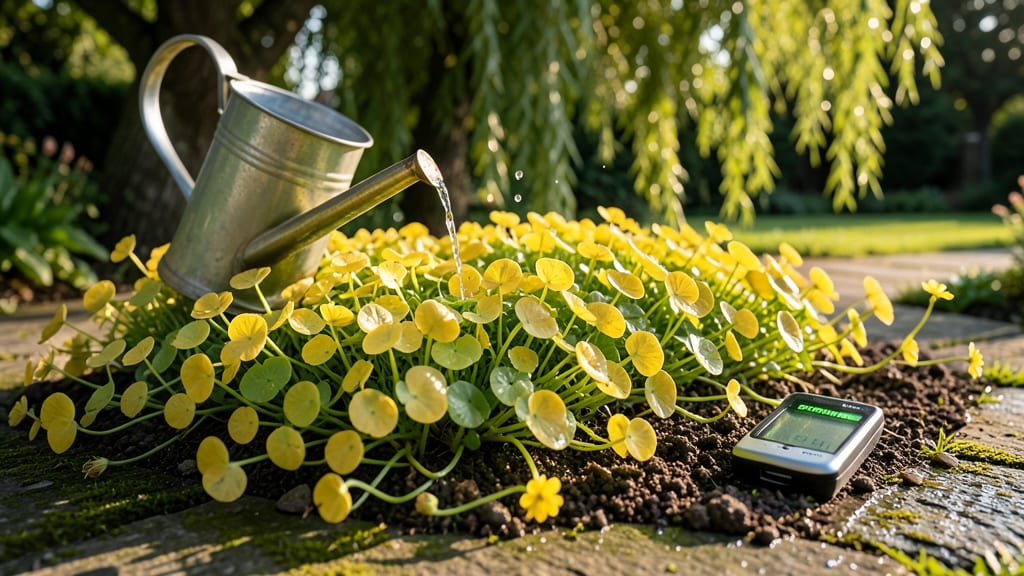
Watering Creeping Jenny 🌿 every 7 to 14 days keeps its golden-green foliage vibrant without risking root rot or wilting.
Here’s the catch: that schedule shifts with your climate, soil, and season. Too much water and you’ll smother its shallow roots; too little, and it’ll send up sad, leggy stems. I’ve seen both mistakes firsthand—one batch turned crispy, the other flopped like a soggy rug.
This guide cuts through the guesswork with a season-by-season breakdown, soil tests you can do with your fingers, and the telltale signs (yellowing edges? Mold at the base?) that your watering’s off.
By the end, you’ll know exactly when to reach for the hose—or skip it entirely—and keep your Creeping Jenny thriving year-round.
The 1-Week watering rule: how often to water creeping jenny for optimal growth
Mastering the watering schedule for Creeping Jenny (Lysimachia nummularia) starts with understanding its unique needs. This low-growing perennial thrives when soil stays consistently moist but never soggy—a balance that keeps its vibrant foliage lush year-round.
The 1-week watering rule serves as your foundation, but adjustments based on season, soil type, and climate are essential for success.
I’ve found that spring and fall are the easiest seasons to manage, while summer heat and winter dormancy require more attention. For example, during summer months in my Zone 6a garden, I water every 5-7 days to prevent wilting, while winter often drops to monthly watering once established.
Let’s break down the science behind these adjustments to keep your Creeping Jenny thriving.
| Season | Soil Type | Frequency | Watering Depth | Visual Cues |
|---|---|---|---|---|
| Spring | Sandy | Every 5-6 days | 1-2 inches | Soil feels dry 1" down |
| Spring | Clay | Every 7-8 days | 1 inch | Topsoil cracks slightly |
| Summer | Sandy | Every 3-4 days | 2 inches | Leaves wilt by noon |
| Summer | Clay | Every 5-6 days | 1.5 inches | Soil stays damp |
| Fall | Sandy | Every 7-10 days | 1 inch | Leaves stay vibrant |
| Winter | All | Every 4-6 weeks | 0.5 inch | No wilting visible |
Note: Adjust for high humidity or direct sun exposure by reducing frequency.
When I first planted Creeping Jenny in my partial-shade garden bed, I noticed how quickly sandy soil drains water. In these conditions, I water more frequently—every 5-6 days in spring—to ensure roots stay hydrated without waterlogging.
The key is to check soil moisture by inserting your finger 1 inch deep; if it feels dry, it’s time to water. For clay soil, which retains moisture longer, I extend the interval to 7-8 days in spring.
During summer heatwaves, even my established plants show signs of thirst faster. I’ve learned to water deeply in the early morning (before 10 AM) to reduce evaporation and fungal risks.
A simple trick is to lift a few stems—if they feel light and crispy, it’s a clear sign to water immediately. In contrast, overly soft or mushy stems indicate overwatering, which can lead to root rot.
One of the most common mistakes I see is ignoring humidity levels. In humid climates, like my Zone 6a region during summer, I reduce watering by 20-
Signs your creeping jenny is overwatered or underwatered (and how to fix it)
Creeping Jenny (Lysimachia nummularia) is surprisingly resilient, but even this hardy groundcover sends distress signals when its water needs aren't met. Yellowing leaves, mushy stems, or crispy edges aren't just cosmetic issues—they're your plant's way of saying "help!"
Understanding these signs lets you act fast and restore your creeping jenny's vibrant green carpet.
Let's start with the most common mistake: overwatering. This happens when well-meaning gardeners assume "more water = better growth." But creeping jenny's shallow roots suffocate in soggy soil, leading to root rot and fungal infections. The good news? These issues are reversible with the right adjustments.
This plant thrives on the 1-Week Rule: Water when the top 1-2 inches of soil feel dry. In containers, check daily—pots dry out faster! Morning watering prevents fungal growth, while evening water risks mold. Adjust frequency by season: weekly in summer, bi-weekly in spring/fall, and monthly in winter.
If your creeping jenny shows yellowing leaves with green veins, it's likely underwatered. This classic sign means the plant is conserving moisture by shedding chlorophyll. Check the soil—if it's bone-dry 1 inch down, it's time to water. For potted plants, wilting that doesn't recover after watering signals chronic dehydration.
On the opposite end, mushy stems and blackened leaves are red flags for overwatering. These symptoms appear when roots can't breathe, leading to anaerobic conditions. Immediately reduce watering and improve drainage by adding perlite or sand to heavy soils.
For container plants, ensure pots have drainage holes and never let them sit in saucers of water.
Another telltale sign is crispy leaf edges, which often appear in hot, dry conditions. Unlike overwatering, this issue occurs when humidity drops below 40% and roots can't keep up.
Increase watering slightly and consider mulching with straw to retain moisture. Grouping plants together also creates a microclimate that reduces evaporation.
For a quick diagnostic, perform the finger test: Stick your finger 1-2 inches into the soil. If it feels damp, wait another day. If it's dry, water thoroughly until moisture reaches 4-6 inches deep.
Remember, creeping jenny's shallow roots mean it needs frequent, light watering rather than deep, infrequent soakings.
When in doubt, observe your plant's growth pattern. Healthy creeping jenny spreads steadily with bright green, plump leaves. Slow growth or leggy stems suggest underwatering, while stunted, pale leaves point to overwatering. Adjust your schedule accordingly—your creeping jenny will thank you with a lush, year-round display.