
Watering
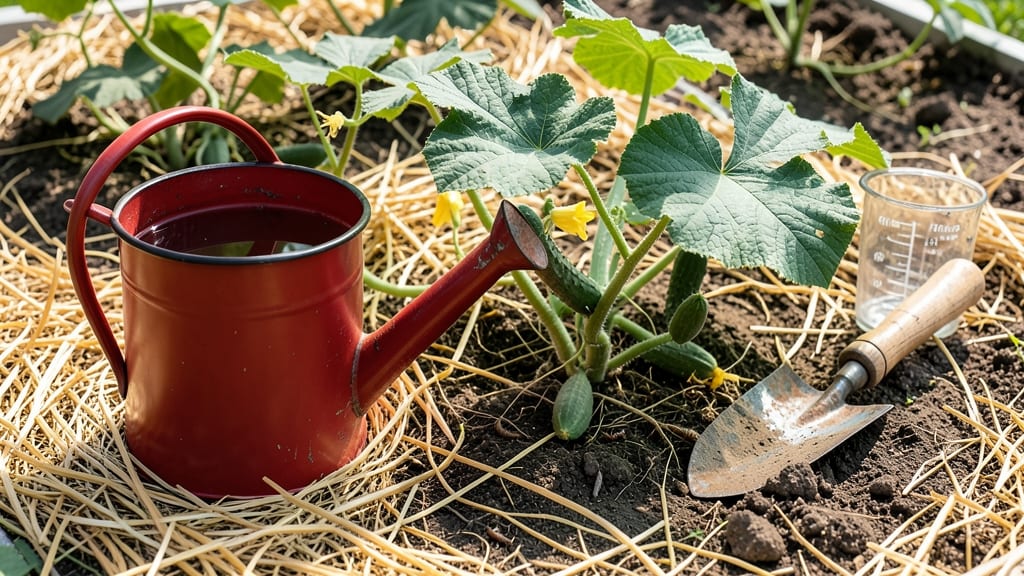
Watering cucumber seedlings the right way—every 1-2 days—sets the stage for a bountiful harvest or dooms them before they sprout.
Picture this: you’ve just planted your 🥒 seedlings, full of hope, only to watch them wilt or rot within days. The problem? Too much or too little water, and there’s no middle ground when it comes to young cucumbers.
They need consistent moisture, but soggy soil is just as deadly as dry.
I’ll show you how to read the soil, adjust for heat and humidity, and spot the early warning signs of over- or under-watering before it’s too late. No guesswork, just science-backed steps to keep your seedlings thriving.
From morning watering routines to the best tools for even moisture, you’ll learn exactly how to keep those delicate roots happy—so you can enjoy a garden full of crisp, homegrown cucumbers by summer.
Optimal watering schedule for cucumber seedlings based on soil and climate
Cucumber seedlings are delicate and demand precise watering to establish strong roots and vibrant growth. Too little water stunts their development, while too much can suffocate roots and invite disease. The key lies in understanding how your soil type and local climate influence their needs.
In sandy soil, water drains quickly, requiring frequent but shallow watering, while clay soil holds moisture longer, needing less frequent but deeper watering. Meanwhile, hot climates with low humidity demand more water, whereas cool, humid climates may require adjustments to prevent fungal issues.
Let’s break down the best practices for each scenario.
| Soil Type | Climate | Watering Frequency | Best Time to Water | Key Adjustments |
|---|---|---|---|---|
| Sandy | Hot & Dry | Every 1-2 days | Morning (6-9 AM) | Use mulch to retain moisture |
| Sandy | Cool & Humid | Every 2-3 days | Morning (6-9 AM) | Avoid evening watering to prevent fungal growth |
| Clay | Hot & Dry | Every 3-4 days | Morning (6-9 AM) | Water deeply to penetrate compacted soil |
| Clay | Cool & Humid | Every 4-5 days | Morning (6-9 AM) | Ensure good drainage to prevent waterlogging |
| Loamy | Hot & Dry | Every 2 days | Morning (6-9 AM) | Ideal balance; monitor soil moisture |
| Loamy | Cool & Humid | Every 3 days | Morning (6-9 AM) | Reduce frequency if rain is frequent |
Morning watering is almost always the best choice for cucumber seedlings. Watering in the early morning allows excess moisture to evaporate during the day, reducing the risk of fungal diseases like powdery mildew. Avoid watering in the evening, as damp foliage overnight creates a prime environment for pathogens.
If you’re growing cucumbers in containers or pots, they’ll dry out faster than in-ground plants. Check the top inch of soil daily—if it’s dry, it’s time to water. Containers also benefit from a self-watering setup, like a wick system, to maintain consistent moisture without overwatering.
Humidity plays a subtle but critical role. In high-humidity climates, reduce watering frequency slightly to prevent fungal infections. Conversely, in low-humidity areas, increase watering but pair it with mulch to lock in moisture.
A simple way to test soil moisture is to stick your finger about an inch deep—if it feels dry, water is needed.
Watch for signs of stress like wilting leaves or yellowing foliage, which often indicate underwatering or overwatering, respectively. Adjust your schedule based on these cues, and always prioritize consistency over occasional deep soakings. Your cucumber seedlings will reward you with robust growth and a bountiful harvest.
For extra protection, consider using drip irrigation or a soaker hose to deliver water directly to the soil. This method minimizes evaporation and ensures roots receive the moisture they crave without wetting the leaves, further reducing disease risk.
Early signs of overwatering vs underwatering in cucumber seedlings (with fixes)
Cucumber seedlings can't tell you when they're thirsty or drowning—so you need to learn their silent SOS signals. Yellowing leaves might mean either too much or too little water, but the location and texture give it away. Overwatered seedlings often show mushy stems and foul-smelling soil, while underwatered ones develop crispy leaf edges and drooping stems that don't bounce back when pressed.
One of the trickiest parts is distinguishing between overwatering and underwatering because both cause yellow leaves. The key difference? Overwatered leaves feel soft and spongy, while underwatered leaves turn dry and brittle.
Check the soil—if it smells like wet socks, you're overdoing it. If it's bone-dry an inch below the surface, your seedlings are begging for a drink.
💧 Watering Cucumber Seedlings: Pros & Cons
Pros: Reduces fungal risk, evaporates quickly, roots stay aerated
Cons: Encourages mold, slows evaporation, promotes root rot
Pros: Encourages deep root growth, prevents surface crusting, maintains even moisture
Cons: Creates weak roots, promotes surface evaporation, increases fungal risk
If your seedlings show white, fuzzy mold on the soil surface or stems, you're dealing with overwatering. This is often caused by poor drainage or watering at night. The fix?
Stop watering immediately, let the soil dry out for 24-48 hours, and repot if using containers with no drainage holes. For underwatered seedlings, water deeply until it runs out the drainage holes, then mulch with straw or shredded leaves to retain moisture.
Another red flag is stunted growth.
If your seedlings aren't growing taller than 2 inches in two weeks, they're likely suffering from water stress—either too much or too little. Overwatered plants may have small, pale leaves with yellowing veins, while underwatered ones develop thick, leathery leaves as a survival tactic.
In both cases, adjust your watering routine and monitor closely for 3-5 days to see improvement.
For mushy stems or blackened roots, your seedlings have root rot from overwatering. Trim away the soft, dark roots with sterilized scissors, repot in fresh, well-draining soil, and withhold water for 48 hours to let the roots recover.
If the damage is severe, start fresh with new seedlings—some plants don't bounce back from root rot. For wilting that doesn't recover after watering, the damage is often permanent.
Remember, consistency is key with cucumber seedlings. They prefer even moisture rather than daily light watering. Use your finger to check soil moisture—if the top 1-2 inches are dry, it's time to water. If it's still damp, wait another day.
And always water at the base of the plant, not the leaves, to prevent fungal diseases like powdery mildew. With the right balance, your seedlings will grow into vigorous vines ready for harvest in 75 days or less! 🌱