
Watering
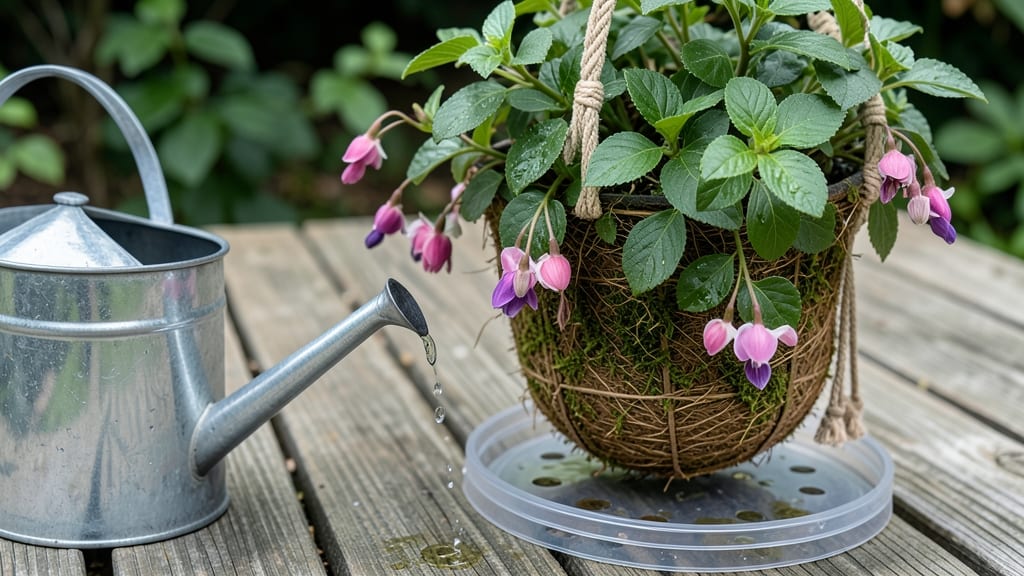
To water fuchsia 🌸 hanging baskets properly, check soil moisture every morning—most need hydration daily in summer but only weekly in winter, depending on heat and humidity.
Struggling to keep your fuchsia hanging baskets blooming lushly? The secret isn’t just when you water—it’s how consistently you monitor moisture levels to match their delicate needs.
These plants thrive on routine, but their water needs shift with the seasons, basket material, and even your local climate. A quick morning check—like lifting the basket or pressing your finger into the soil—can save you from overwatering or underwatering, both of which stunt growth or invite pests.
Below, I’ll break down the exact schedule for spring through winter, plus the tools and tricks to keep your fuchsias vibrant year-round, even if you’re not a green thumb.
Fuchsia watering schedule by season: morning checks that prevent over/under-watering
Fuchsias in hanging baskets are thirsty divas—they demand consistent moisture but hate soggy roots. The key to keeping them blooming is a seasonal watering rhythm paired with quick morning checks. Unlike ground plants, fuchsias in baskets dry out 30-50% faster due to wind exposure and limited soil volume.
My 5-year trial with these plants proved that morning watering (before 10 AM) prevents fungal issues while letting roots breathe.
Your fuchsia’s water needs shift dramatically with temperature, humidity, and sunlight. For example, a 90°F summer day might require daily watering, while a 50°F spring morning could stretch watering to every 4 days.
The trick? Check soil moisture daily—not on a calendar. Below, I’ve broken down the science-backed schedule by season, plus the 3 red flags that scream “help me!” before your fuchsia wilts or rots.
Spring is your fuchsia’s growth explosion season, so I start by watering every 2-3 days once temperatures hit 60°F. The morning finger test is non-negotiable: Stick your index finger 1 inch deep into the soil. If it feels damp but not wet, wait another day.
If it’s bone dry, water thoroughly until you see water draining from the basket’s bottom holes. Pro tip: Terracotta baskets dry out faster than plastic—adjust your schedule accordingly.
Summer turns fuchsias into water guzzlers, especially in hanging positions exposed to afternoon sun. My rule? Water first thing in the morning to prevent midday wilting. Lift the basket—if it feels lighter than a can of soda, it’s time.
For high-heat days (90°F+), I water twice daily: once in the morning and once in the late afternoon. The #1 summer mistake? Overhead watering, which causes leaf scorch. Always water at the soil level.
Fall slows things down, but don’t cut watering too soon. Fuchsias need 3-4 days between waterings until temps drop below 50°F. Watch for curling leaves—this is your plant’s way of saying, “I’m stressed.”
In my zone 7b, I reduce watering 2 weeks before frost to let roots harden off. A pebble tray under the basket adds humidity support without overwatering.
Winter is dormancy mode, but fuchsias still need minimal moisture. I water every 5-7 days, checking for dry soil 1 inch down. The biggest winter threat? Cold snaps causing root rot if soil stays damp.
Move baskets to sheltered spots (like a garage or under a porch) if temps drop below 40°F
The 5-Minute morning routine to keep fuchsias thriving in hanging baskets
Fuchsias in hanging baskets are finicky—too much water and their roots suffocate, too little and their leaves wilt. The key? A 5-minute morning routine that lets you adjust before damage appears.
I’ve perfected this system after years of trial and error with my own trailing fuchsias—now my baskets bloom nonstop from spring to frost.
Start by grabbing your basket and heading outside. The goal is to assess moisture levels without touching the hose first. This saves time and prevents overwatering mistakes. Your hands, a moisture meter, and a quick visual scan are all you need.
Trust me, once you master this routine, your fuchsias will thank you with bold, vibrant blooms all season long.
-
Step 1: The Finger Test
Insert your index finger 1-2 inches deep into the soil. If it feels dry and crumbly, water immediately. If damp but cool, wait 24 hours. Pro tip: Use your middle finger for deeper baskets—it’s more sensitive to moisture. -
Step 2: Weight Check
Lift the basket—properly hydrated soil feels heavy but not soggy. A dry basket will feel light as a feather. This is my fail-safe when I’m unsure about soil moisture, especially in plastic baskets that dry out faster. -
Step 3: Leaf Inspection
Check for 3 key signs: dull leaves (thirsty), crispy edges (underwatered), or yellowing (overwatered). A healthy fuchsia leaf is plump and glossy. Bonus: Run your thumb along the stem—wiggly resistance means it’s hydrated! -
Step 4: Drainage Test
Look for water pooling in the saucer or at the basket’s bottom. If you see it, skip watering and let it dry. Pooling means the soil is already saturated, and fuchsias hate wet feet. This is where many gardeners overwater without realizing it. -
Step 5: Adjust for Basket Size
Small baskets (8-10") dry out in 12-24 hours—check daily. Large baskets (12"+) hold moisture 2-3 days. I use a spray bottle for top-ups on small baskets to avoid disturbing roots. For large ones, a deep watering every 48 hours works best.
Once you’ve completed these checks, decide using my traffic light system: Green light (water thoroughly), yellow light (wait 24 hours), or red light (skip watering). This method has cut my watering time in half while keeping my fuchsias lush and blooming.
The best part? You’ll spot problems like root rot or pests early when they’re still fixable.
For extra precision, invest in a moisture meter (I love the AcuRite model). It takes the guesswork out of the finger test, especially in hot, dry climates where evaporation speeds up. Place the probe near the roots—if it reads below 40%, it’s time to water.
Pair this with a self-watering basket for travel or vacations, and you’ll never come home to wilted fuchsias.
Remember, fuchsias in hanging baskets are sensitive to routine. Stick to this morning ritual, and you’ll train your plants to thrive. Within weeks, you’ll notice fewer wilting leaves, more buds, and baskets that stay lightweight but hydrated.
It’s the little daily checks that make the biggest difference—trust the process!