
Watering
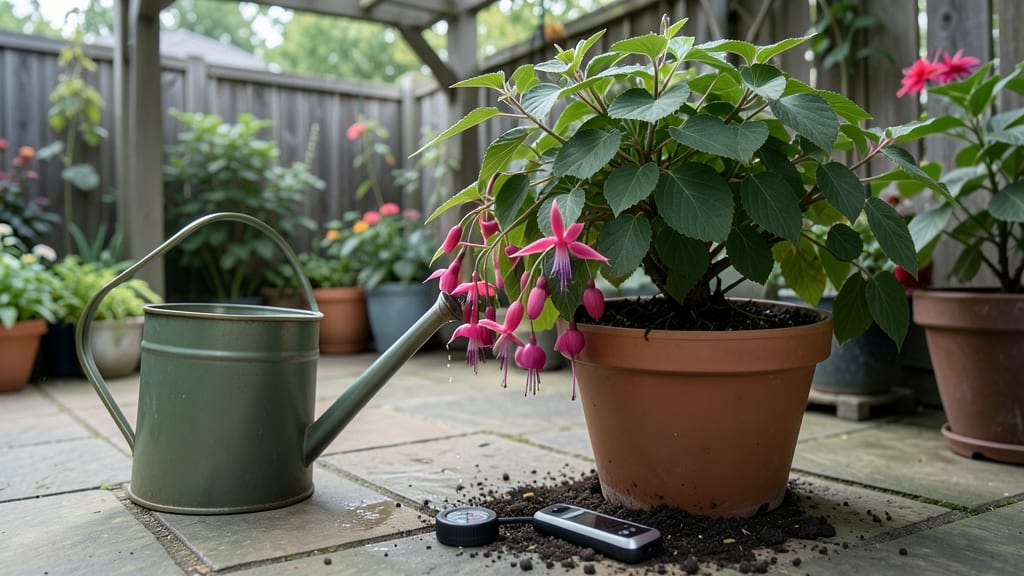
Watering a fuchsia plant the right way keeps its 🌸 flowers lush and vibrant all season—too much or too little, and you’ll end up with droopy stems or root rot.
Struggling to keep your fuchsia plants vibrant and blooming? Overwatering or underwatering can turn their stunning flowers into a sad, wilted mess. The key is a schedule that adapts to your soil type and the season, not just a one-size-fits-all rule.
If your fuchsia’s leaves start curling or the soil feels bone-dry between waterings, it’s likely thirsty. But if the pot stays soggy for days, you’re drowning those delicate roots. The solution? A tailored approach that matches your climate and pot size—something I’ll break down step by step.
By the end, you’ll know exactly how often to water your fuchsia in spring, summer, and fall, plus how to adjust for well-draining or heavy soils. No more guesswork—just happy, blooming plants that thrive.
Fuchsia watering schedule by soil type: dry vs. well-draining soil
Fuchsias thrive when their soil moisture stays consistent, but the watering frequency changes dramatically based on your soil type. Sandy soil drains too quickly, while clay holds moisture too long—both extremes can stress your plants.
Let’s break down the ideal watering schedule for each soil type to keep your fuchsias blooming beautifully.
Your fuchsia’s root health depends entirely on soil drainage. In sandy soil, water disappears like magic, while clay soil can suffocate roots if overwatered. Loamy soil—often called the "goldilocks" of gardening—strikes the perfect balance. Understanding these differences will save you from root rot or wilting plants.
Here’s the key: check soil moisture before watering. Stick your finger 1-2 inches into the soil. If it feels dry, it’s time to water. If it’s damp, wait another day. This simple trick prevents both overwatering and underwatering, no matter your soil type.
For sandy soil, I recommend adding organic matter like compost or peat moss to improve moisture retention. This helps fuchsias hold onto water longer, reducing how often you need to water. A 50/50 mix of sand and compost works wonders for these fast-draining soils.
If your garden has clay soil, amending it with perlite or coarse sand can improve drainage. This prevents water from pooling around roots, which is crucial for preventing fungal diseases. Raised beds are another great solution for clay-heavy areas, giving roots better airflow.
Always water at the base of the plant, not the leaves. This reduces the risk of leaf diseases like powdery mildew, which fuchsias are prone to. Use a watering can with a narrow spout to direct water precisely where it’s needed—right at the soil line.
In loamy soil, your fuchsias will be happiest with a consistent routine. Aim for a deep watering that saturates the soil 4-6 inches down. This encourages strong root growth and helps the plant access nutrients more efficiently during its blooming season.
During hot summer months, even well-draining soil can dry out faster. Monitor your fuchsias closely and adjust your schedule. If the top inch of soil feels dry, it’s time to water—regardless of your soil type. Mulching with straw or wood chips can help retain moisture longer.
Remember, container-grown fuchsias dry out much faster than those in the ground. If your plant is in a pot, you may need to water daily during summer heatwaves, especially if it’s in full sun. Terracotta pots dry out quicker than plastic, so adjust accordingly.
By tailoring your watering schedule to your soil type, you’ll give your fuchsias the perfect balance of moisture they crave. Happy gardening—your blooms will thank you! 🌸
Seasonal watering adjustments for fuchsias: spring to winter guide
Fuchsias thrive when their watering routine matches the season—spring’s active growth demands more frequent hydration, while winter’s dormancy requires near-drought conditions. The key is adjusting your schedule to prevent root rot in summer heat or leaf drop when temperatures dip.
I’ve grown fuchsias in both containers and garden beds, and the biggest mistake I see is treating them the same year-round. Your plant’s water needs shift dramatically between seasons, so let’s break it down by growth phase and weather conditions to keep those 🌸 blooms thriving.
- Spring (April-June): Water every 2 days as roots establish. Morning watering prevents fungal growth from evening dampness.
- Summer (July-August): Increase to daily or every other day—check soil moisture daily. Mulch retains moisture in heat waves.
- Fall (September-October): Reduce to every 3-4 days as growth slows. Stop fertilizing to prepare for dormancy.
- Winter (November-March): Water bi-weekly only if soil feels bone-dry. Dormant plants need minimal moisture.
In spring, your fuchsia will show signs of thirst by drooping leaves or yellowing foliage. Stick your finger 1-2 inches into the soil—if it’s dry, it’s time to water. During summer, I’ve found that potted fuchsias dry out faster than in-ground plants, so check containers daily.
Watch for overwatering signs like mushy stems or yellow leaves with brown edges. If your fuchsia’s soil stays soggy for more than 24 hours, reduce watering immediately. In fall, taper off water gradually to mimic natural drying cycles before winter dormancy.
For winter care, move container-grown fuchsias to a cool, bright location (50-60°F) and water only when the top inch of soil is completely dry. If your plant is dormant, watering less is better—revive it in spring with fresh soil and fertilizer.
Pro tip: Use a moisture meter for accuracy, especially in clay soils that hold excess water. With these seasonal adjustments, your fuchsias will reward you with nonstop blooms from spring through fall—no guesswork required!